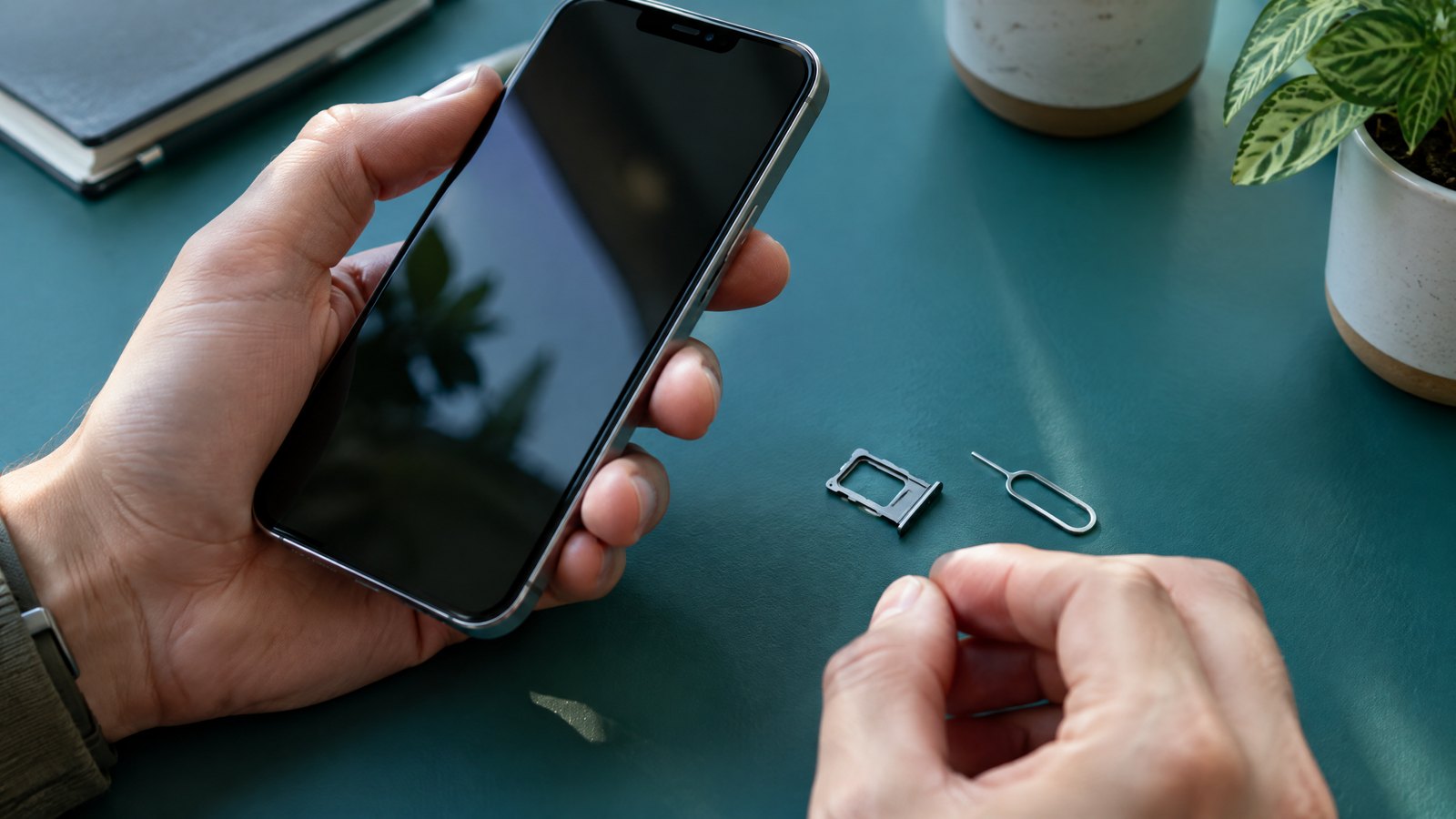
The useful smartphone technology trends 2026 are not a race to collect the most futuristic labels. They are the changes that alter a phone's day-to-day usefulness: a camera that finishes a shot well, a battery and charger that fit your routine, a mobile connection that works where you travel, and software that remains supported. Some of those capabilities are already real and selectable. Others are standards, launch announcements or region-specific services that deserve a pause before they become a reason to spend more. For an Indian buyer, that distinction matters. A feature can be technically genuine yet unavailable on a particular model, plan, language, carrier or in the exact places where the phone will be used. This guide treats 2026 as a practical checkpoint, not a promise that every handset has the same AI, satellite, charging or next-generation network experience. It explains what to verify, what a label cannot prove and how to turn a trend into a sensible shortlist.
This article is part of the consumer technology guide library.
The 2026 view: capability matters more than a trend label
A smartphone is a system, not one breakthrough. Its chip, modem, cameras, display, battery, operating system and carrier connection make trade-offs together. For example, a brighter display can be helpful in afternoon sunlight, but it cannot tell you whether the phone will stay comfortable to hold, whether the camera is reliable at night, or whether the software will receive security fixes. The headline feature is a starting question, not a verdict.
A useful way to read 2026 claims is to sort them into three buckets. First, there are features you can confirm on the exact retail model: supported bands, storage, camera controls, charging protocol, update policy and accessibility settings. Second, there are services that require another party, such as a carrier, satellite provider or cloud account. Third, there are standards and roadmaps. A new standard can be important without being a present benefit on the phone in your hand.
That approach also prevents a false choice between a budget phone and a flagship. A commuter who depends on maps, payments, calls and battery through a long day may gain more from dependable connectivity and support than from a feature demonstrated once on a stage. A creator may instead value predictable video, storage and thermal behaviour. Start with the problem to solve, then see whether a claimed trend is actually part of the solution.
| Area | What you can verify today | What should remain a question |
|---|---|---|
| AI features | The exact tool, supported language, account requirement and whether it works in your normal workflow | Whether it runs locally, needs data, remains available after an update or produces dependable output |
| Mobile connectivity | The phone's bands, SIM or eSIM support, your plan and repeat experience in your own locations | A status icon, a national rollout headline or a single speed reading |
| Satellite features | The model, country or region eligibility and the specific messaging or emergency function | Whether it replaces ordinary mobile coverage or works through buildings and trees |
| Wireless charging | The exact phone, charger and certification or compatibility listing | That a magnetic accessory or a wattage printed on a box gives the same result on every phone |
On-device and cloud AI: ask where the work happens
AI is the trend most likely to become vague marketing. Current phone software can assist with writing, translation, search, photo work, summaries and voice interactions, but those descriptions do not answer the questions that affect a person using the feature. Does the task still work without data? Is a photo, document or screen sent to a service? Which languages are supported? Does it need a personal account, and can a child or work account use it? Those are practical product questions, not technical nit-picking.
Treat on-device AI and cloud-assisted AI as different arrangements. On-device processing means a task can be handled by the phone's own hardware; it may help with responsiveness or keep some work local, but the actual behaviour depends on the app and feature. Cloud-assisted processing can draw on remote services and may offer different capabilities, but it needs connectivity and can have account, country or language conditions. A phone may use a mixture of both, so an NPU or AI-ready badge does not by itself describe the privacy, speed or offline behaviour of every tool.
Google's current mobile-assistant help notes that availability can vary by language, country and account type, and it cautions that responses may be inaccurate or inappropriate. That is a valuable consumer limit: do not choose a phone on the assumption that an assistant will be a factual authority, a replacement for a professional, or a guaranteed automation layer. Before paying extra, try the specific workflow that matters to you, such as summarising a note, searching a photo library or transcribing a voice memo, with your preferred language and permissions.
The trend worth following is not a promise that phones will independently do every task. It is better integration of local hardware, apps and services, subject to clear controls. In 2026, the stronger buying question is whether a feature saves you time repeatedly and transparently, rather than whether it has an AI label.
Connectivity in 2026: deployed 5G versus 5G-Advanced and satellite
For most people, a good mobile connection is still more useful than a newer logo. Check whether the exact phone supports the frequencies and carrier features you use, whether the plan is eligible, and how service behaves in the places that matter: at home, in an office, on a regular route and when visiting family. Walls, crowds, spectrum, backhaul and network load can all change the result. A 5G icon does not identify the band in use, the network core or a fixed speed.
5G-Advanced is real as a standards evolution, not a universal handset experience. 3GPP describes Release 18 as further improvements to the 5G-Advanced system, including work around satellite access, energy efficiency, AI and machine learning, positioning and immersive communications. That confirms technical work and a vocabulary for industry; it does not confirm that a given Indian carrier has deployed a feature, that a particular handset supports it, or that the feature improves a specific app today. Treat a 5G-Advanced claim as a request for model, carrier and local-service detail.
Satellite connectivity is also real in tightly defined situations, but it is not a pocket-sized replacement for a tower network. Apple's India support guidance for compatible iPhones describes connecting when there is no mobile network or Wi-Fi coverage, and says country or region availability applies. It also says messages may take 30 seconds or longer in ideal conditions and can take minutes or fail when foliage, terrain or structures interfere. Those limits are more useful than a dramatic satellite badge: identify the exact feature, country eligibility and service terms before relying on it for a trip.
For a student travelling by bus or a professional making calls between cities, repeatability should win over a peak screenshot. TRAI provides MySpeed as a consumer speed-testing service. Use any test as a record of a moment, then compare the same places and times before drawing conclusions. It can help you ask better questions of a carrier; it cannot turn one measurement into a promise of coverage everywhere.
Charging, batteries and repair: prefer compatible systems over peak claims
Charging has become a compatibility decision as much as a wattage decision. A high number on a charger is not useful if the phone uses another protocol, limits power under heat, or needs a proprietary accessory for its maximum mode. Keep the charger that comes with the phone, if any, separate from the phone's own supported charging specification. Then consider cable quality, adapter safety, warranty and how easily you can replace worn accessories locally.
Qi2 is a genuine wireless-charging standard family rather than a generic name for any magnetic ring. The Wireless Power Consortium says Qi2 brought 15W charging for certified mobile devices and that Qi2 25W, based on version 2.2.1, launched in July 2025. It also says only products that pass its testing can display the Qi or Qi2 logo. That makes certification worth checking on both the phone and accessory; it does not make every magnetically attached case, puck or power bank Qi2-certified.
Wireless charging remains a convenience choice with physical limits. Alignment, case thickness, heat and the phone's own charge-management rules affect what happens at the desk or bedside. A fast advertised wireless mode is not a guarantee of a particular temperature, time or battery life in your room. If a cable is more practical for a daily top-up, that is not falling behind a trend. It is choosing the lower-friction tool for your routine.
Battery technology should be judged over ownership, not only on day one. Look for information about battery care, charging controls, service options and software support. If you use UPI, navigation and hotspot data through long days, carry a sensible charging plan rather than assuming a newer silicon or a higher refresh display will automatically deliver the same endurance for everyone.
Displays and foldables: buy the shape that suits your work
Displays are becoming more adaptive, bright and visually polished, but the right screen is the one you can read and use comfortably. Compare outdoor legibility, text size, touch response, accidental-touch behaviour, eye comfort settings and whether the refresh-rate option changes in the apps you use. A very high refresh number can make scrolling feel smoother, but it does not make every app, game or video source behave the same way.
Foldables are a form-factor choice, not a default upgrade path. Their appeal is understandable: a larger canvas can help with reading documents, maps, split-screen work or a more compact carry shape. The trade-offs are equally concrete: thickness, weight, the feel of the inner screen, cover-screen usefulness, case options, repair terms and how you handle the hinge in daily life. Do not infer a universal durability result from an advertisement or a single review unit.
Before choosing one, hold the model you would actually buy and run familiar tasks. Can you type a long reply? Is the outer screen enough for quick calls and payments? Does it fit the pocket, bag and car mount you use? What are the authorised service options near you? Those answers are more durable than a forecast that foldable designs will become common.
Cameras and processors: evaluate outcomes, not isolated specifications
Camera hardware and processing now work as a pipeline. Lens, sensor, stabilisation, processor, image signal processor and software decide the final photo together. More megapixels can offer flexibility in certain modes, but they do not guarantee a better moving subject, a cleaner night image or natural skin tones. The practical question is whether the phone produces the kind of photo or video you need with little effort in the conditions you encounter.
Use relevant examples when comparing phones: a child moving indoors, a document under mixed light, a short video at a family function, a street scene after sunset or a video call on mobile data. Look at focus reliability, shutter delay, exposure consistency, audio, storage use and how quickly the phone becomes warm during extended capture. This is a comparison checklist, not a claim that any model has been hands-on tested by this article.
The processor matters because it coordinates everyday work: apps, games, camera processing, security functions and the modem. But benchmark rankings and launch-day performance charts cannot predict your own thermals, battery drain or software behaviour. Choose enough performance headroom for your apps and expected ownership period, then give comparable weight to storage, update support and serviceability.
How to assess a phone for your life in India
Build a short, evidence-first checklist before comparing prices. Confirm the exact model number, storage version and retail warranty. Read the maker's India support information for operating-system and security-update terms rather than relying on a reseller's wording. For connectivity, confirm the SIM or eSIM arrangement, local carrier compatibility and the places where you regularly lose service. For charging, confirm what is included and what a replacement accessory costs. These details usually shape ownership more than a distant roadmap.
Next, separate capability from access. An AI tool may need a supported language or personal account. A satellite feature may have a geographic condition. A high-speed wireless-charging mode may need a certified accessory. A network feature may require carrier deployment. If the answer to any of these is unclear, count the feature as unconfirmed, not as a benefit. This is especially important with imported variants, where radio support, warranty and service availability can differ from the local model.
Finally, make the decision reversible where possible. Buy from a source with clear return and warranty terms, keep an invoice, and set up screen lock, updates, backups and account recovery on day one. A future-facing phone is not one that promises every 2026 trend; it is one that keeps doing the ordinary things safely and reliably while its verified features remain useful.
Smartphone technology trends 2026: FAQs
These answers separate a technical standard or feature category from the availability and performance of a particular phone, carrier or app. Always check the exact model and local terms before treating a trend as a purchase requirement.
What are the biggest smartphone technology trends in 2026?
The most relevant areas are AI features, evolving 5G and satellite connectivity, faster standardised wireless charging, adaptive displays, foldable designs, computational cameras and longer-term software support. Their real value depends on the exact phone, region, account, carrier and accessory, not the trend name alone.
Is 5G-Advanced available on every 5G phone?
No. 5G-Advanced describes an evolution in the 3GPP standards. A 5G label does not establish that a phone supports a particular Release 18 capability, that a carrier has deployed it, or that it is active in your location. Check model and carrier documentation for a specific feature.
Will satellite connectivity replace mobile coverage?
No. Satellite functions are designed for defined situations and can have regional, device and feature restrictions. Clear access to the sky and surrounding conditions matter, and messages can be slower than ordinary mobile messaging. Treat it as a limited supplementary connection, not a substitute for normal coverage.
Should I buy a phone just for AI or Qi2 charging?
Only if the exact feature fits a repeated need and you can verify its conditions. For AI, check language, account, connection and data-handling behaviour. For Qi2, check the specific phone and accessory certification or compatibility. A reliable battery, support policy and everyday connectivity may be more valuable.
Source notes
Reporting record
techduopulse stores source destinations privately. Public notes remain non-clickable so every visitor journey stays on this website.
Mobile AI availability and reliability limitation source note
Primary source · On-device and cloud AI: ask where the work happens5G-Advanced Release 18 scope source note
Primary source · Connectivity in 2026: deployed 5G versus 5G-Advanced and satelliteSatellite connection conditions and limitations source note
Primary source · Connectivity in 2026: deployed 5G versus 5G-Advanced and satelliteConsumer speed-test service source note
Primary source · Connectivity in 2026: deployed 5G versus 5G-Advanced and satelliteQi2 and Qi2 25W certification source note
Primary source · Charging, batteries and repair: prefer compatible systems over peak claimsVersion 1: original TechDuoPulse India-focused 2026 smartphone-trends analysis. Separates verifiable phone capabilities from standards, regional services and forecasts; adds primary-source limits for AI availability, 5G-Advanced, satellite messaging, Qi2 and consumer speed checks.