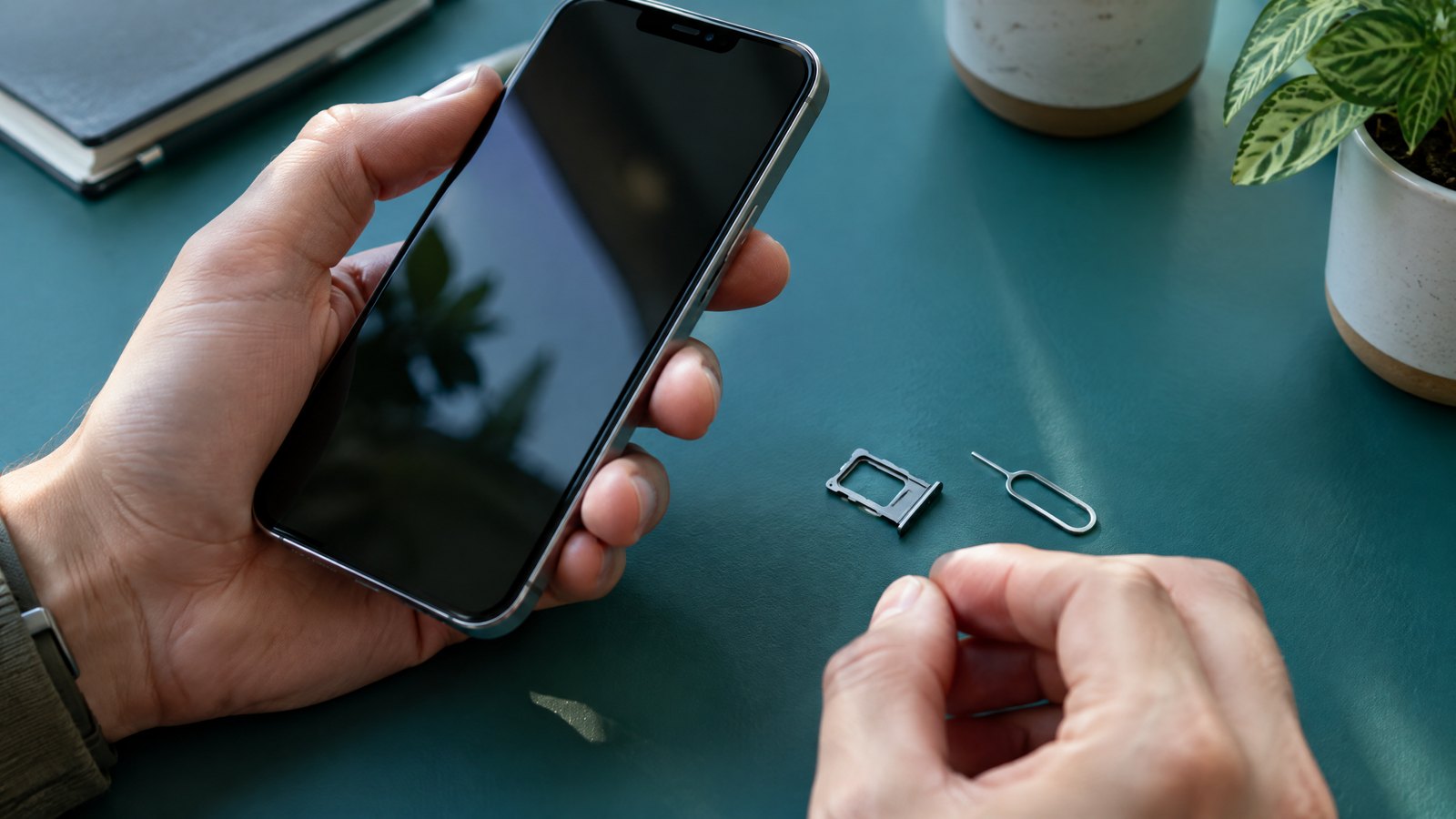
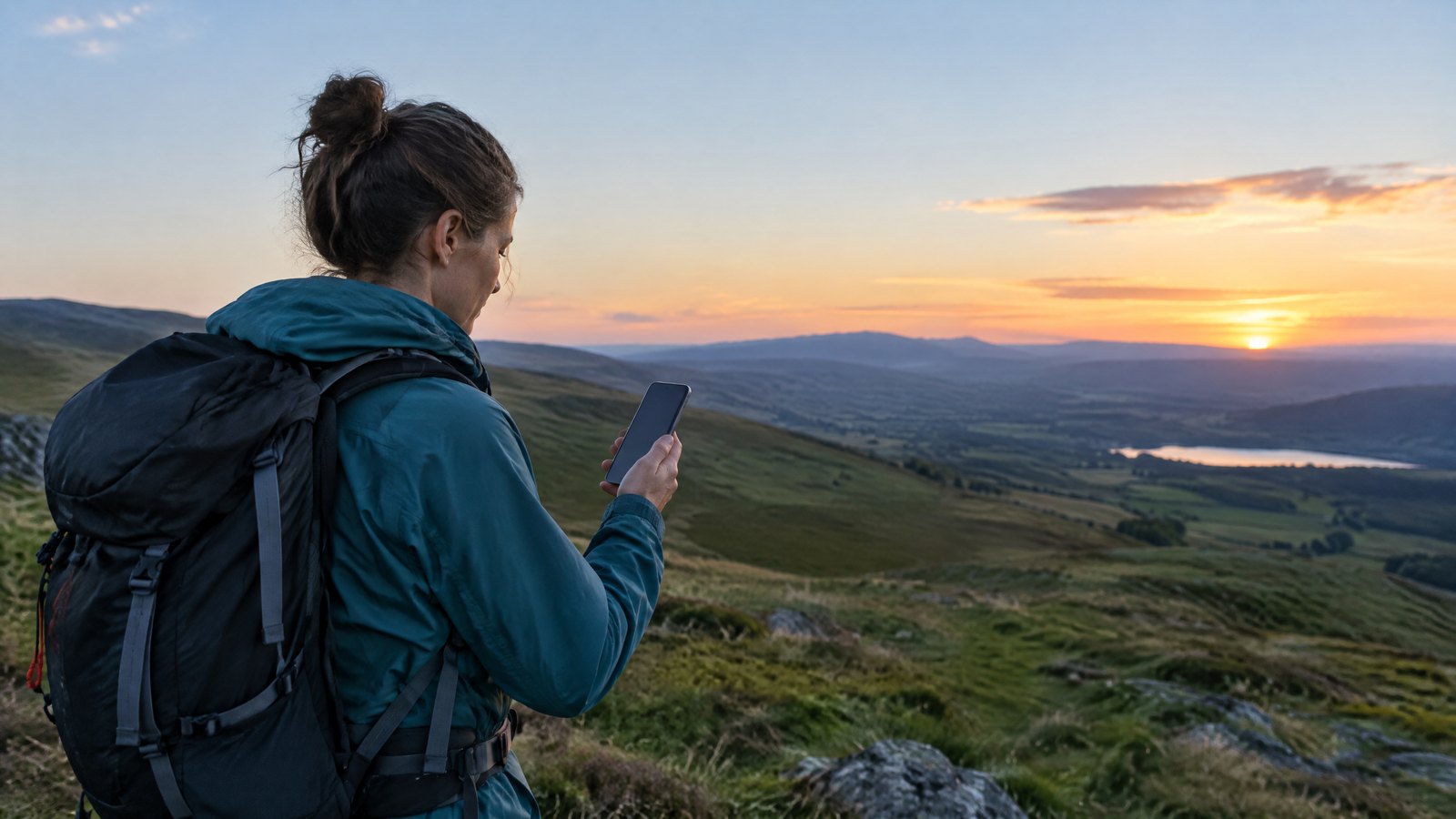
A satellite symbol or a launch announcement does not turn a phone into a pocket internet terminal. On supported phones, satellite connectivity is usually a narrow fallback for a place with neither cellular signal nor Wi-Fi. It can be valuable when a person needs help, but the exact job matters: an emergency SOS exchange, a message to family, a location update and ordinary data are not interchangeable. For someone planning a trek, road trip or work visit away from coverage in India, the useful question is not simply whether a phone has satellite hardware. It is whether that exact model, software, purchase region and service are officially active where the phone will be used, and whether the user can reach an open view of the sky when it matters.
This article is part of the consumer technology guide library.
Satellite connectivity in a smartphone is a feature family, not one service
A phone can use a satellite link for several very different tasks. Emergency SOS is a guided way to send essential information to emergency responders, or to an emergency relay, after ordinary routes are unavailable. Personal satellite messaging is a separate consumer feature where it is offered. Location sharing and roadside assistance can be separate features again. A carrier may also market its own satellite option with its own plan and coverage rules. The word satellite alone says almost nothing about which of those functions you can use.
That distinction prevents a dangerous assumption: a device that can send an emergency text is not automatically able to make a voice call, open a map, stream a video or keep every chat app online. Apple describes specific off-grid functions on compatible iPhones, including emergency texting, roadside assistance, messages and location sharing; it does not describe that feature set as unrestricted mobile data. Treat each promised function as a small, named service, not as a replacement for your normal SIM connection.
This is also different from buying a dedicated satellite phone or a satellite-broadband terminal. Those products can have different antennas, plans, approvals and operating expectations. A slim smartphone has to send a weak signal over a long path with a small built-in antenna, so the service is deliberately designed around limited exchanges. The phone’s modem is one component in a larger system; the broader explanation of that hardware is in the linked smartphone guide.
| Label on a feature page | Reason it may be useful | What not to assume |
|---|---|---|
| Emergency SOS | A structured text request for help after normal emergency contact cannot connect | A normal voice call, a guaranteed rescue response or general internet access |
| Messages or location via satellite | A limited way to tell chosen people where you are when the feature is active | That every messaging app, attachment or live map will work |
| Carrier satellite offer | A carrier-defined fallback service in its supported markets | That it is included with every plan or enabled on every phone sold there |
Emergency SOS starts after normal ways to call for help fail
Satellite SOS is a last-resort communications path, not a shortcut around ordinary emergency calling. Apple tells users to try the local emergency number first, because a call may still connect even when the normal carrier service appears unavailable. Its satellite flow is for a situation with neither cellular nor Wi-Fi coverage. Google gives Pixel users the same basic sequence: try the local emergency number, then use Satellite SOS from the dialler if there is no mobile or Wi-Fi network.
The interaction is text-led for a practical reason. A short questionnaire can carry the type of emergency, the people involved and location-related information without requiring a long conversation over a constrained link. On supported iPhones, Apple says the initial emergency exchange can include questionnaire answers, location including elevation, battery level, Medical ID and emergency-contact information if those were set up. That can help a dispatcher understand the request, but it is not proof that help will arrive at a particular time or that every local emergency centre handles the service in the same way.
For an India-focused safety plan, keep the ordinary parts ready as well: a charged phone, a power source, downloaded maps where lawful and useful, a route shared with a trusted person, and a way to get help before entering a no-coverage area. A satellite option can be an extra layer only once the device maker confirms it for your exact country and phone. It should never be the sole reason to travel beyond your preparation or experience.
- Try the local emergency route or available cellular and Wi-Fi options first.
- If the phone offers a supported satellite emergency flow, describe the situation accurately in its prompts.
- Move only if it is safe to do so, following the phone’s positioning instructions toward an open view.
- Stay available for replies; do not assume that pressing send completes the emergency response.
SOS, personal messages and data have different limits
An emergency feature and a personal messaging feature may look similar because both use short text, but they answer different needs. SOS aims to reach emergency services or a relay. Personal messaging and location sharing, where offered, are for a user’s own contacts. Roadside assistance is another distinct relationship with a provider. Each may have its own country list, software requirement, fee period and on-screen route. A buyer should read the exact feature name in the maker’s support page rather than relying on the word satellite in a shop listing.
The safest default is to assume that ordinary mobile data is unavailable unless a provider explicitly says otherwise for the model, plan and place. A navigation app may still show an offline map stored on the phone, but that does not mean it can fetch new traffic, send a photo or make an internet call. Likewise, a message that eventually sends is not evidence that a large file or a work app can connect. Low bandwidth and satellite movement are part of why these phone features favour concise, purpose-built exchanges.
There is a useful practical test before a trip, but it is not a real emergency test: use an official demonstration mode if the manufacturer provides one and only in a country where the feature is offered. Apple’s demo explains the pointing process without contacting emergency services. It cannot verify that the service will be activated for an Indian journey, that a particular carrier will participate, or that conditions on the day will be favourable.
Clear sky means an outdoor line of sight, not a brighter balcony
A satellite connection needs the phone to see the sky and, for Apple’s current guidance, the horizon as well. Trees with light foliage can slow a connection. Dense foliage, hills, mountains, canyons and tall structures can block it. Google gives a matching warning for Pixel Satellite SOS: trees, terrain and buildings can block the path, and the user may need to move to a place with a clear view of the sky. A room with a large window, a covered balcony or a narrow valley can still be a poor place to try.
Time is part of the limit. Apple says that even with a direct view of the sky and horizon, a message can take 30 seconds or more; it may take several minutes under light or medium foliage, at higher latitudes or where local conditions affect signal quality. Google says connection and response times vary with location, site conditions and other factors, and tells users to remain outside with a clear sky view for replies. These are service descriptions, not performance promises.
Imagine a hiker on an open ridge in Uttarakhand and another under dense forest on the same route. The first person may have a better physical view, but still needs an officially active feature and time to follow the phone’s prompts. The second person may need to reach a safer open area before any connection is possible. Neither situation supports a guarantee. Clear sky improves the opportunity to connect; it does not create regional service approval or guarantee a reply.
- Go outside if it is safe, with as much open sky and horizon as possible.
- Keep the phone in hand and follow its direction or positioning prompts instead of guessing.
- Expect obstructions and message length to affect waiting time.
- Preserve battery and remain where a reply can be received when it is safe to do so.
Model, software and purchase region can decide whether the button exists
A product family name is not enough. Apple’s current Emergency SOS support page names iPhone 14 or later, all models, but also requires a compatible iOS version and lists countries where the feature is available. It separately notes purchase-market restrictions for certain iPhone models. A traveller may therefore have a technically capable handset while still lacking the feature because the software, purchased model or current country does not meet the conditions.
Google’s current Pixel help page says Satellite SOS is available on Pixel devices from Pixel 9 onward, except Pixel 9a. It also says the service activates only after necessary software and APIs are updated and the device is registered with the satellite network. For that flow, Google Messages must remain the default messaging app. Those are concrete examples of why a box specification is only the start of the check, not the finish.
Before leaving coverage, update the phone while you still have ordinary internet, then open the manufacturer’s safety or satellite settings. Look for the named service, its country availability and any demo. Do not sideload a region-specific app, change the phone’s region simply to expose a menu, or treat an unofficial tutorial as activation. Those actions cannot supply service authorization, emergency integration or a compatible satellite network.
What the current India picture does and does not establish
India’s satellite communications policy and commercial satellite internet developments should not be read as an automatic switch-on for a phone’s built-in SOS feature. TRAI’s April 2026 consultation paper discusses a proposed Satellite Communication Network authorisation and spectrum-assignment framework. It notes the direct-to-device idea of satellite communication with ordinary smartphones, but a consultation is not a public confirmation that a named retail phone feature is live nationwide.
A Government of India satellite-internet backgrounder describes authorisations, spectrum and satellite-broadband developments. That is important context for the sector, yet satellite broadband licensing is different from proof that a particular handset can send emergency SOS, personal messages or general data directly to a satellite in India. Do not equate a satellite operator’s Indian licence, an operator’s broadband service, or a global phone launch with activation for your own phone.
Apple’s Emergency SOS availability list, checked for this article, names specific countries and regions and does not name India. That is a limitation of the published Apple list, not evidence that every future satellite service will be unavailable in India. Google’s general Pixel support page similarly requires readers to check feature locations; the retrieved text does not establish India activation for Pixel Satellite SOS. The correct conclusion is narrow: verify the current official availability page for the exact feature immediately before relying on it in India, and do not infer availability from hardware alone.
A practical check before you buy a phone or leave coverage
Start with the exact model number, not just the series name. Check the phone maker’s support page for that model, the country in which the phone was bought, the country in which it will be used, the minimum software version and the named feature. Then check whether the feature is emergency-only, personal messaging, location sharing, roadside help or a carrier service. If the information is missing or contradictory, plan as if it is unavailable rather than making a purchase or travel decision around it.
Next, read the service conditions. A free introductory period, carrier bundle or device promotion can change, and an emergency service may have a different condition from personal messages. Ask what happens after the included period, whether an active SIM or particular plan is required, and whether the terms list a supported Indian region. Keep a screenshot or offline note of the official instructions, but remember that a saved page cannot override a real-time network or regulatory limit.
Finally, practise only the official demo and do it in a safe open place where the service is actually available. Learn what the direction guidance looks like, where the Safety settings are and how to keep emergency contacts and medical details current. This is a preparation step, not a simulated rescue or a coverage test. The phone-security guide can help with protecting the device and accounts that hold those emergency details.
- Match the exact phone model and purchase region to the manufacturer’s active-feature list.
- Separate an emergency SOS claim from messages, location sharing, roadside assistance and any carrier data offer.
- Confirm the country, software version, plan conditions and any cost or expiry terms.
- Plan for an open outdoor view, but do not treat it as a connection guarantee.
- Maintain ordinary safety and communication plans for every trip.
Satellite connectivity smartphones: common questions
Feature names and availability can change, so these answers explain the decision points rather than promising service in a particular village, mountain pass or disaster. Check the official support material for the exact model and region before depending on a satellite feature.
Can a satellite-connected smartphone give me normal mobile data?
Do not assume so. A phone may support a specific emergency text, location update or messaging function without supporting open internet access. Look for an explicit statement from the phone maker or carrier about the named model, plan and country; otherwise treat ordinary data, voice and app access as unavailable.
Does a clear sky guarantee that a satellite SOS message will send?
No. An open outdoor view is a physical requirement, but trees, terrain, buildings, message length, satellite availability and local conditions can still affect connection and response time. The service must also be enabled for the phone and region. Clear sky improves the chance to connect; it is not a guarantee.
Which phones have emergency satellite features?
Manufacturer support currently identifies iPhone 14 or later for Apple Emergency SOS, subject to software, purchase-market and country conditions. Google identifies Pixel devices from Pixel 9 onward except Pixel 9a for its Satellite SOS flow, subject to activation and location conditions. Those examples are not an India availability list and should not be used to infer support for another handset.
Will Emergency SOS via satellite work in India?
Do not rely on it without a current official confirmation for your exact model and feature. Apple’s published Emergency SOS availability list checked for this article does not name India. India’s satellite policy and licensing developments do not by themselves activate a phone feature. Check the manufacturer and, where relevant, the carrier immediately before travel.
Is a smartphone satellite feature the same as a satellite phone?
No. A smartphone feature is often a limited, software-guided service built around particular functions such as SOS or messages. A dedicated satellite phone is a separate product category with different equipment and service arrangements. Compare the supported task, country terms, fees and operating conditions instead of comparing the names alone.
Source notes
Reporting record
techduopulse stores source destinations privately. Public notes remain non-clickable so every visitor journey stays on this website.
Satellite emergency fallback and availability source note
Primary source · Emergency SOS starts after normal ways to call for help failIndia satellite-to-device policy context source note
Primary source · What the current India picture does and does not establishOff-grid feature scope, clear-sky and message-time limitation source note
Primary source · Clear sky means an outdoor line of sight, not a brighter balconyPixel model, positioning, obstruction and software condition source note
Primary source · Model, software and purchase region can decide whether the button existsIndia satellite-service authorisation and spectrum context source note
Primary source · What the current India picture does and does not establishNon-terrestrial network architecture and moving-satellite context source note
Primary source · Satellite connectivity in a smartphone is a feature family, not one serviceVersion 1: original India-first explainer that separates emergency SOS, personal messaging and ordinary data claims; sets clear-sky, model, purchase-region and current India-availability limits beside practical trip preparation.