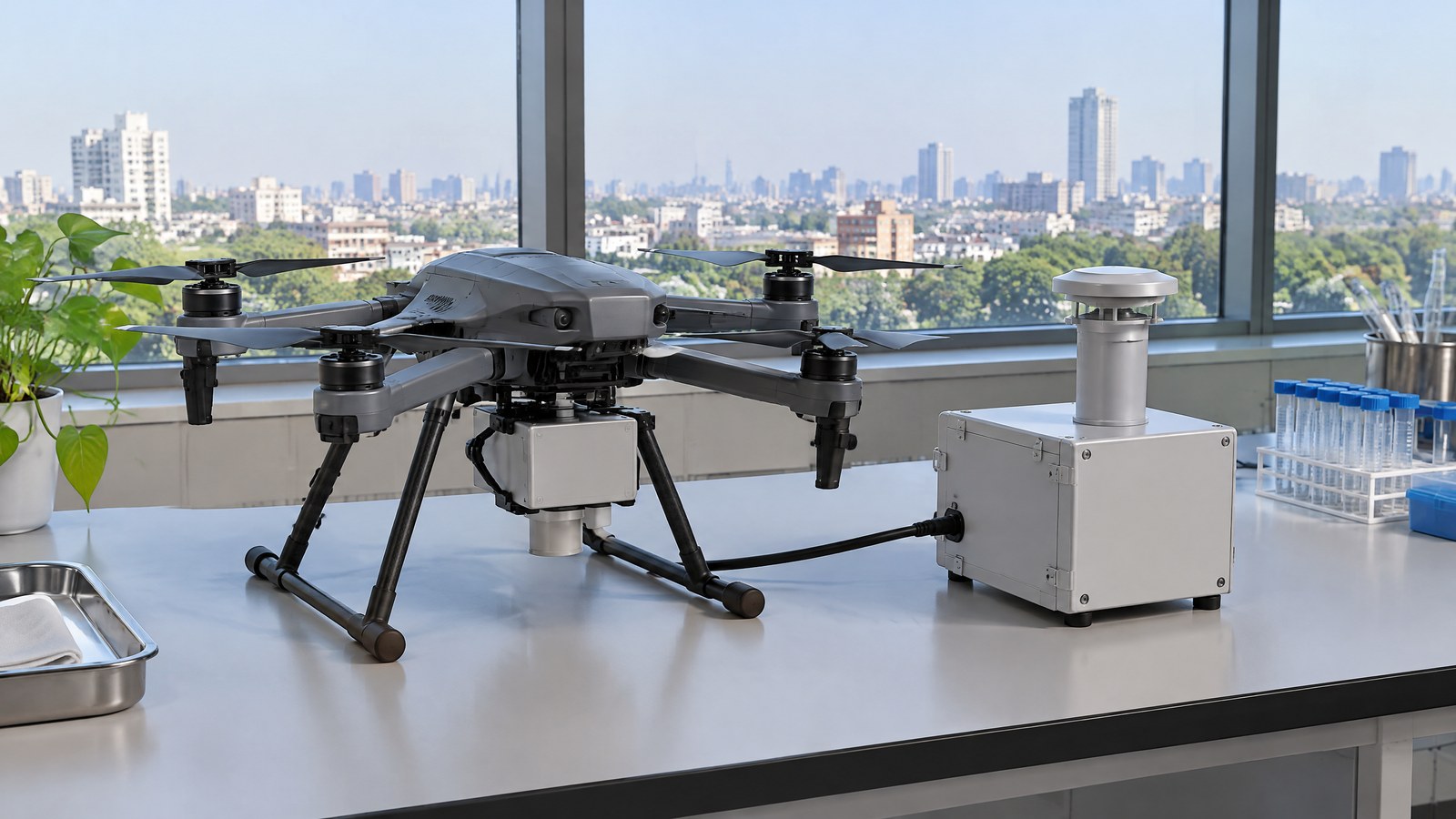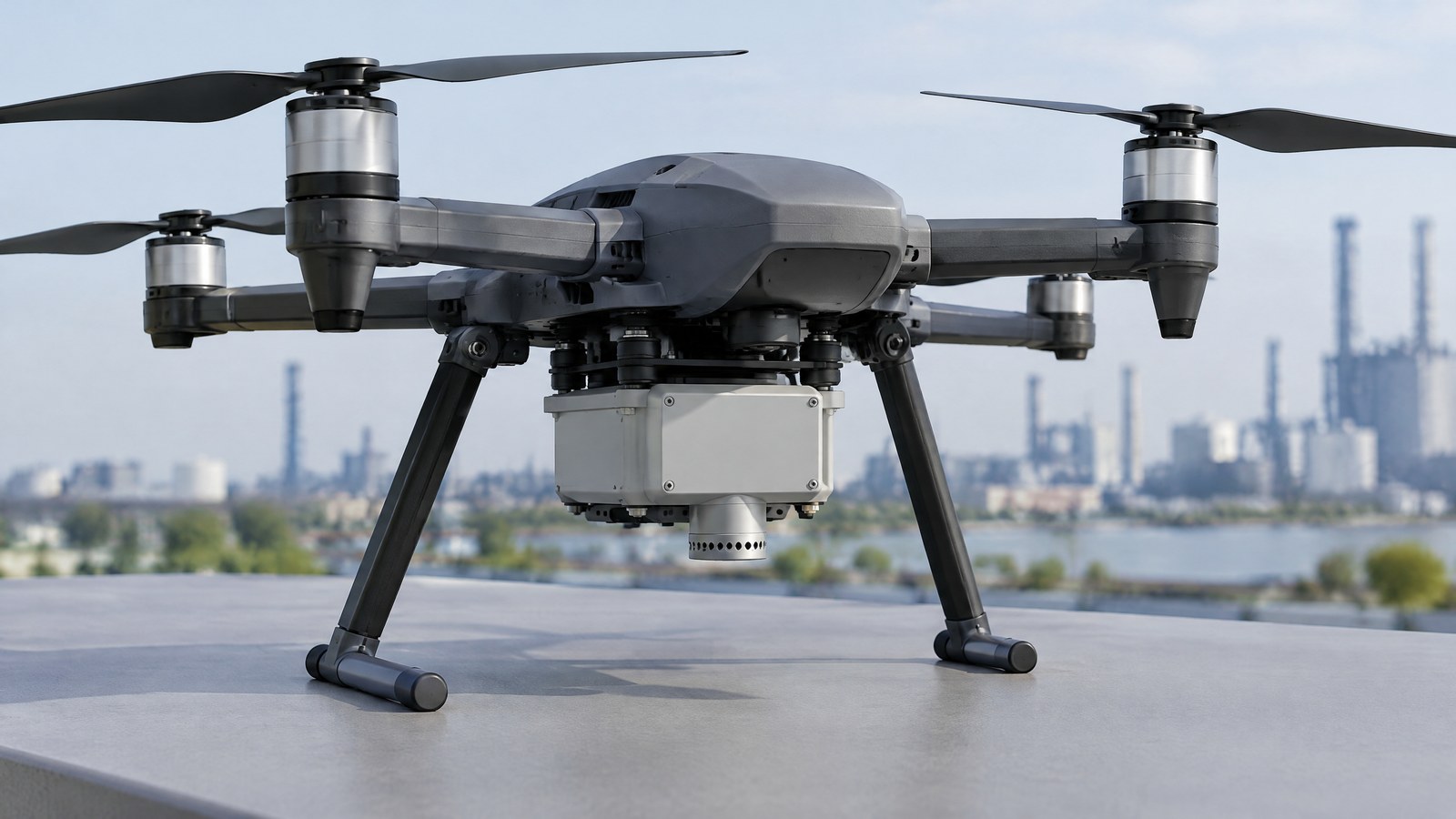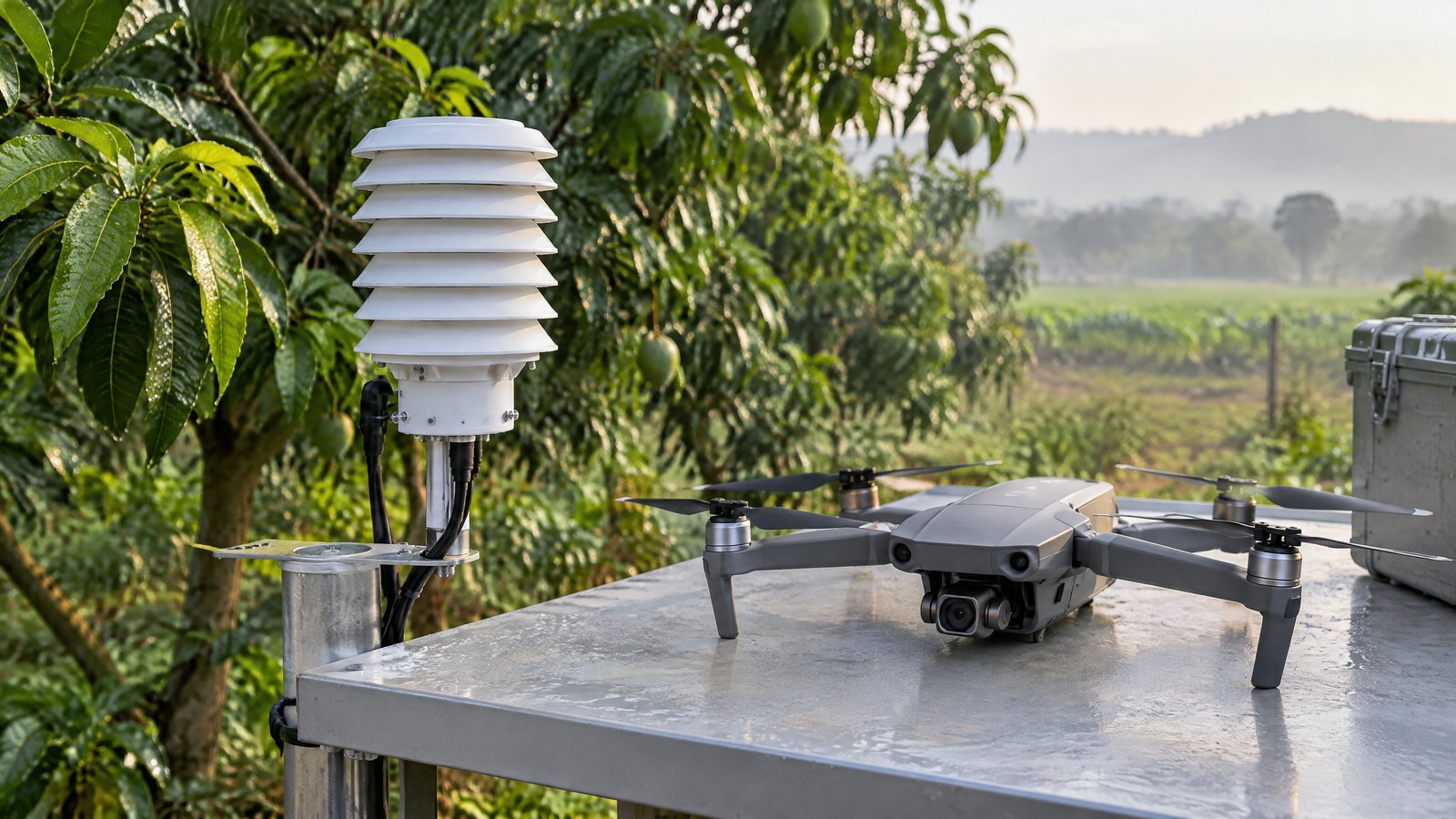
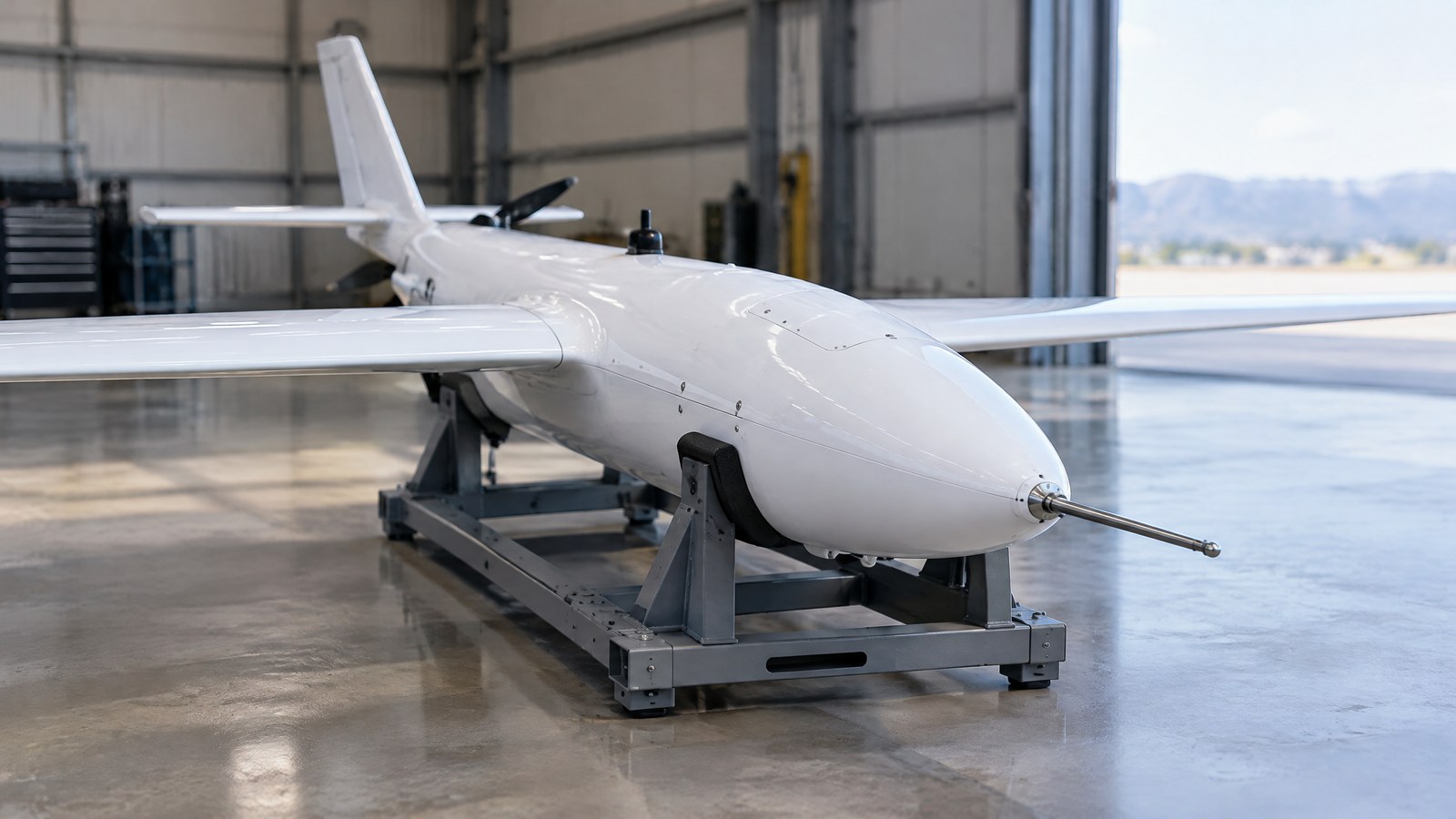
Watching a fixed-wing drone cover ground quickly can hide the variable that keeps its wings working: speed through the air. A Pitot/differential-pressure airspeed sensor gives a civilian operator one way to understand that local-air movement, but it is not a permit, a safety verdict or a substitute for responsible piloting. AI-generated editorial illustration of generic civilian drone hardware, not a photograph of a named product or an actual inspection. This drone airspeed sensor for fixed wing explained guide focuses on the measurement, not on configuring a drone. It separates airspeed from motion over the ground, describes the limits that can make a pressure-derived number misleading, and places the sensor in a lawful civilian inspection, mapping or environmental-observation context for readers in India.
This article is part of the computer hardware technology guide library.
How a Pitot/Differential-Pressure Airspeed Sensor Works on a Fixed-Wing Drone
A fixed-wing drone needs airflow relative to its wings; the distance it moves across a map is a different measurement. A Pitot/static arrangement samples total pressure at a forward-facing opening and compares it with static pressure from the surrounding air. The difference is dynamic pressure. An air-data instrument or digital pressure sensor can turn that difference into an airspeed estimate using the pressure–velocity relationship [1] [2].
The word “differential” matters. This is not simply a sensor measuring atmospheric pressure at one point. It compares two pressure conditions so that the pressure increase associated with motion through the air can be isolated. The general pressure-sensor distinction between absolute, gauge and differential measurement is useful background, but a fixed-wing airspeed system has its own airflow path, installation and aircraft-specific assumptions.
Airspeed means motion through air, not speed over the ground
Airspeed is the relative velocity between the aircraft and the surrounding air. Groundspeed is motion relative to the ground. NASA expresses their relationship, with direction included, as airspeed = groundspeed − wind speed [3]. In still air, the two can match. With wind, they can differ even when the drone appears to maintain the same track over land.
This distinction prevents a common misunderstanding. A positioning receiver can describe how quickly an aircraft is moving over the earth; a Pitot/differential-pressure airspeed sensor responds to air flowing around the aircraft. Neither reading is automatically “more correct.” They describe different reference frames and can be useful alongside other information. A displayed value is still an estimate, not proof that the aircraft, the weather or the planned activity is safe.
From pressure difference to an airspeed estimate
As airflow enters a correctly functioning Pitot opening, it is brought to rest at the sensing point and produces total pressure. The static reference represents ambient pressure. Subtracting static pressure from total pressure yields dynamic pressure, which rises with the square of airspeed under the usual incompressible-flow approximation. That square relationship is why a small pressure difference is not the same thing as a small uncertainty in an airspeed value [1] [2].
Density also matters to the conversion. The 2024 small-UAV research paper by Chen and colleagues describes a correction factor for Pitot-static calibration and identifies temperature and pressure variation as factors affecting the calculation [2]. It is evidence for the principle, not a promise that every drone, sensor or weather condition will produce the same accuracy. The authors’ wind-tunnel performance results apply to their own prototype and processing method, not to consumer equipment generally.
What can make the reading unreliable
The measurement begins at exposed openings, so physical blockage is a real limitation. The FAA notes that moisture, dirt and insects can obstruct pitot or static openings. In a conventional pitot-static system, a blocked pitot opening with a clear drain can make the airspeed indication drop to zero; a blocked static source makes the indication inaccurate [1]. The precise effect in a particular drone depends on its design, so a general explanation cannot diagnose a specific aircraft.
Low pressure difference is another reason to avoid false precision. Because the inferred speed depends on the square root of dynamic pressure, noise, offsets and changing conditions become more influential when the differential signal is small. The UAV paper’s focus on noise modelling and filtering is a reminder that a pressure measurement is not automatically a clean airspeed fact [2]. That research does not establish a universal low-speed threshold, a field result or a recommended setting.
The probe and its surrounding airflow are part of the measurement system, not a separate afterthought. Damage, contamination, poor condition, local turbulence or a mismatch between the sensed airflow and the air around the wings can reduce confidence in the result. The responsible response to an implausible or uncertain indication is to follow the aircraft maker’s approved documentation and the applicable operating process, rather than attempt an improvised adjustment from a general article.
Why the sensor belongs in a wider evidence picture
An airspeed sensor observes one physical quantity: pressure difference associated with local airflow. It does not identify obstacles, measure distance to terrain, confirm a map’s positional accuracy, determine battery condition, detect every weather hazard or authorise a flight. A camera, GNSS receiver, inertial sensors, weather information, maintenance records and a competent person may each answer different questions; none makes the others unnecessary.
This is especially important when a drone carries an inspection or mapping payload. A payload result might help document a surface or a field pattern, while an airspeed reading provides flight-awareness context. Combining signals can be useful, but a sensor fusion label does not remove uncertainty or create a professional conclusion. A civilian sensor system should be described by what it measures, what assumptions it needs and what decision it cannot make alone.
Important Points / Key Information
A Pitot/differential-pressure airspeed sensor is best understood as an air-data input for a fixed-wing aircraft. It estimates movement through air, which is relevant to aerodynamic context, but it is not the same as groundspeed and it does not determine whether a mission should proceed. For a named drone, only the manufacturer’s approved documentation can establish its intended sensor behaviour, maintenance requirements and applicable limitations.
India compliance is separate from the measurement principle. Rule 21 of the Drone Rules, 2021 requires a remote pilot to verify Digital Sky for notifications or restrictions applicable to the intended area before beginning an unmanned-aircraft operation [4]. The official DigitalSky portal presents airspace-zone information, flight-plan tools and links to the Drone Rules [5]. Zoning can change, and this article is not a substitute for checking the live official resources, applicable rules, project permissions or other responsibilities before a civilian operation.
Key Takeaways
- A Pitot/differential-pressure airspeed sensor compares total and static pressure to estimate a fixed-wing drone’s speed through the surrounding air.
- Airspeed and groundspeed describe different reference frames; wind can make their values differ.
- Blockage, a small differential signal, changing air conditions and the complete installation can limit confidence in a reading.
- The sensor supports awareness of one measurement only. It cannot replace pilot responsibility, qualified assessment, maintenance requirements or current official India compliance checks.
- Use current Digital Sky information and applicable official rules for a proposed civilian operation; an educational sensor explainer is not operational approval.
A consumer checklist for interpreting claims
When reading a product description or an operational report, first ask what is actually being reported: differential pressure, indicated airspeed, calculated airspeed or groundspeed. Then ask what reference and assumptions are involved, whether the stated number is a live display or a logged estimate, and whether the system reports sensor health or uncertainty. A single headline specification rarely answers all of those questions.
Avoid turning a sensor presence into an accuracy guarantee. The useful evidence is model-specific: the approved aircraft documentation, the stated operating envelope, the maintenance history and the conditions of the task. For any decision affecting people, property, infrastructure or crop management, keep the limits visible and seek the relevant qualified assessment instead of treating a flight reading as an engineering, environmental or agronomic verdict.
Examples / Supporting Information
The following situations are illustrative civilian contexts, not reports of testing, field deployments or flight instructions. They show why airspeed is a distinct piece of information for fixed-wing aircraft without claiming that a particular sensor makes an activity safe, permitted or accurate.
Authorised mapping: separating the flight measurement from the map result
Imagine an authorised fixed-wing survey of a broad farm or watershed where imagery is collected for a later mapping workflow. The airspeed input could describe the aircraft’s movement through the local air while a positioning system records a different estimate of movement over the ground. A headwind or tailwind can alter the relationship between those values [3]. That does not establish the positional accuracy, completeness or fitness of the finished map.
The careful report would keep the categories separate: what the air-data system measured, what the positioning system estimated and how the imagery or derived map was independently checked. A Pitot system cannot validate ground control, interpret crops or certify a land boundary. It is flight-awareness evidence, not a survey instrument.
Environmental observation: context rather than a weather verdict
In a hypothetical authorised environmental-observation flight, a fixed-wing platform might carry a camera or an atmospheric sampling payload. The pressure-derived airspeed estimate can provide context about air movement at the aircraft, but it cannot independently identify wind conditions across a study area or prove the quality of another sensor’s data. Airspeed is relative to the air at the aircraft; it is not a complete weather assessment [3].
For that reason, an environmental interpretation needs its own measurement plan, quality controls and appropriate domain expertise. A reader should not infer that adding an airspeed sensor turns a civilian drone into a validated environmental instrument or removes the need for site permissions and current airspace checks.
Infrastructure observation: one input, different professional decisions
Consider a lawful visual observation of a long roof, solar installation or other accessible asset. The airspeed sensor may be relevant to the aircraft’s own air-data picture, while the camera record may show a feature worth a closer look. Neither signal diagnoses a structural, electrical or maintenance condition. A qualified assessor must determine whether a visible feature has significance and whether a ground-based or close inspection is appropriate.
This division of responsibility is practical rather than restrictive. It prevents an aircraft measurement from being used to overstate what a payload image means, and it keeps the pilot’s responsibility distinct from the asset professional’s assessment. In India, both the site authority and current official airspace information remain relevant even where the physical sensor is working normally [4] [5].
Conclusion
A Pitot/differential-pressure airspeed sensor helps explain a fixed-wing drone’s movement through air by comparing total and static pressure. That is valuable context because wind means a drone’s airspeed can differ from its speed over the ground. The reading remains conditional on pressure, density, airflow and the health of the sensing path, so it should never be presented as a stand-alone truth or assurance of safety.
For civilian readers in India, the sensible boundary is clear: understand what the sensor measures, retain the limits around it, and keep technical interpretation separate from permission and professional judgment. Before any proposed operation, consult the current official Digital Sky information and applicable requirements. A good airspeed reading can inform awareness; it cannot replace responsible piloting, qualified assessment or live regulatory verification.
Source notes
Reporting record
techduopulse stores source destinations privately. Public notes remain non-clickable so every visitor journey stays on this website.
Explains the pitot-static airspeed indication, dynamic and static pressure relationship, and the effects of pitot or static blockage.
Primary source · Measurement principle and blockage limitationsDescribes a small-UAV pressure-based airspeed model, calibration correction factors and the limits of prototype-specific wind-tunnel evidence.
Secondary source · Pressure-to-airspeed estimation and uncertaintyDefines airspeed and groundspeed using wind-relative velocity and explains why aerodynamic forces depend on motion through air.
Primary source · Airspeed versus groundspeedRules 19–24 cover the Digital Sky airspace map, mandatory pre-flight verification, zone permissions, dynamic zoning and temporary red zones.
Primary source · India official compliance checkOfficial portal for airspace-zone information, flight-plan tools and Drone Rules links.
Primary source · India current official resourcesInitial civilian drone-sensor explainer; sources and AI-generated illustrative imagery reviewed before publication.