SEO Title: Pressure Sensor: Types, Working Principle and Uses Meta Description: Learn how pressure sensors work, compare gauge, absolute and differential types, and see their uses in phones, vehicles, factories and healthcare.
This article is part of the software engineering technologies guide library.
What is a pressure sensor?
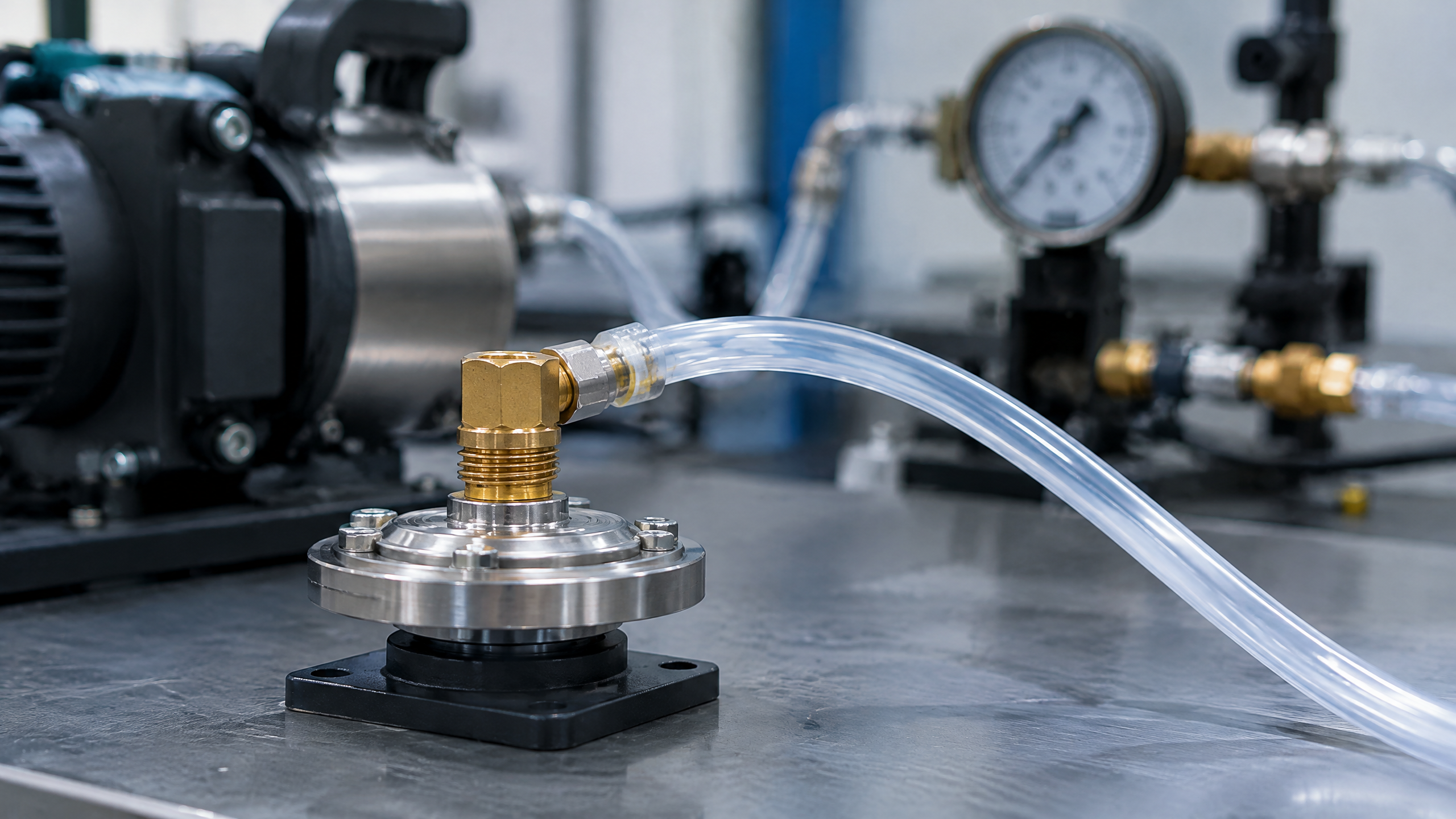
A pressure sensor is a sensing device that detects pressure and produces an output that electronics or an instrument can use. In many designs, pressure acts on a thin flexible diaphragm. The diaphragm moves or strains by a very small amount; a sensing element detects that change; and signal-conditioning electronics convert it into a voltage, current, frequency or digital value. The value can then be displayed, logged or used by a controller. [1]
The phrase pressure transducer is often used alongside pressure sensor. A careful practical distinction is that the sensor is the pressure-sensitive part, while a transducer converts a physical quantity into a usable signal. In real-world documentation, however, the terms are not always used with a strict boundary. When comparing equipment, check the stated output, reference type and calibration details rather than relying on the label alone.
How does a pressure sensor work?
Think of the working principle as a short chain:
Pressure → diaphragm movement or strain → electrical-property change → conditioned signal → pressure reading
If more pressure reaches one side of a diaphragm, it deforms. What happens next depends on the sensing technology:
In a piezoresistive or strain-gauge pressure sensor, deformation changes electrical resistance. A Wheatstone bridge is commonly used to detect the small resistance change, and the resulting signal needs conditioning. Temperature effects and compensation matter because they can influence the reading. [1][2]
In a capacitive pressure sensor, pressure changes the spacing between a diaphragm and a fixed electrode, changing capacitance. The electronics measure that change and calculate a pressure value. [1][2]
In a piezoelectric pressure sensor, strain produces electric charge. This can make the technology useful where pressure changes quickly, such as dynamic events. It is not, however, a universal substitute for measuring steady pressure; shock, vibration and temperature can also affect its behaviour. [1]
The output is only meaningful when the instrument knows which reference is in use. That is why a tyre, a barometer and a filter-monitoring system can all use pressure sensors but report very different kinds of pressure.
Absolute, gauge and differential pressure: which pressure is being measured?
The same number can mean different things if the reference is not stated. These three terms are central to understanding a pressure reading. [1]
| Measurement reference | What it compares | Everyday way to think about it |
|---|---|---|
| Absolute pressure | Pressure against a vacuum reference | Useful where atmospheric pressure itself matters, such as barometric or altitude-related measurement |
| Gauge pressure | Pressure against the surrounding atmosphere | Familiar for a tyre or many pressurised systems |
| Differential pressure | Pressure at one point against pressure at another point | Useful for comparing two sides of a filter, vessel or connected system |
Atmospheric pressure can change with weather and altitude. So a gauge reading and an absolute reading are not interchangeable simply because both are labelled “pressure.” Before interpreting a value, ask: what is the reference, what is the unit, and where was the sensor placed?
Main pressure sensor types
### Piezoresistive and strain-gauge sensors
These sensors use a resistance change caused by strain in or near a diaphragm. They are common in pressure measurement because the small mechanical deformation can be turned into an electrical signal through bridge-based circuitry. Their final performance depends on the sensor and on details such as temperature compensation, excitation and signal conditioning. [1][2]
### Capacitive pressure sensors
A capacitive design detects a pressure-driven change in capacitance between parts of the sensing structure. Depending on its construction and reference, a capacitive cell can support relative, absolute or differential measurements. [1][2] It is still important to check the complete instrument specification rather than assuming that every capacitive design behaves the same way.
### Piezoelectric pressure sensors
Piezoelectric elements generate charge when strained. Their fast response can suit dynamic pressure changes, but dynamic measurement is a different task from measuring a stable condition over time. Vibration, temperature and shock are practical considerations, so the application and test conditions must be clear. [1][2]
Other pressure-sensing constructions exist, but these three mechanisms illustrate the central idea: pressure first changes a physical structure or property, and electronics then make that change readable.
Pressure sensor applications in daily life and industry
Pressure sensing becomes useful when a system needs to observe, control or document a fluid, gas or surrounding atmosphere. Examples include:
Vehicles: tyre-pressure monitoring and engine or fluid-system measurements can rely on pressure information.
Phones and wearables: a barometric sensor can contribute to altitude or environmental context; it should not be mistaken for a survey-grade altitude instrument without the relevant system design and calibration.
Water and pumping systems: pressure can help a controller observe operating conditions in pipework or tanks.
Factories and pneumatic automation: compressed-air systems, hydraulic systems and process lines may use pressure readings for monitoring or control.
HVAC and filtration: differential pressure can help compare conditions across parts of an air-handling or filtration system.
Healthcare equipment: pressure measurement is used in specialised equipment, but any clinical interpretation, maintenance or testing must follow the manufacturer’s procedures and qualified professional requirements.
For an embedded project, choosing the right application starts with defining the medium (air, water, another fluid or gas), expected conditions, measurement reference and required output. A sensor selected merely because it has a familiar module format may not be appropriate for a particular system.
Accuracy, installation and calibration: why a pressure number can mislead
A pressure sensor does not create a perfect number on its own. A finished reading can be affected by the sensing element, electronics, reference choice, temperature, the physical connection, installation forces and the conditions in the measured system. Flow, fluid compressibility and time-varying events can all matter. [1][3]
For example, measuring a rapid pulse is not the same as measuring a stable tank condition. A sensor intended for dynamic events may need a fast response, while a system tracking steady pressure may prioritise stability and appropriate calibration. Neither approach is universally “more accurate”; suitability depends on the measurement task.
Calibration compares an instrument’s indication with an appropriate reference or standard and establishes the relationship needed for the intended measurement. It is part of measurement traceability, not a one-time promise that every future reading will be correct. NIST’s pressure and vacuum calibration work covers both absolute and differential measurements across a broad range and includes instruments such as capacitance diaphragm gauges and piston gauges. [3]
For users, the practical lessons are straightforward:
Read the manual and confirm whether the value is absolute, gauge or differential.
Use the specified units and conversion method; do not assume a display is in the units you expect.
Mount and connect the sensor as the manufacturer specifies, keeping the actual process conditions in mind.
Consider temperature, vibration, flow and changing pressure when judging a reading.
For consequential or regulated measurements, use the required calibration process and competent personnel.
Do not test, adjust or disconnect pressure sensors on pressurised, vehicle-critical, medical or industrial safety systems unless you are authorised and following the applicable procedure. This explainer cannot determine whether a particular setup is safe or suitable.
A simple way to read any pressure-sensor specification
When you encounter a datasheet or instrument label, work through these questions:
What is measured? Air, a gas, liquid or pressure difference?
What is the reference? Absolute, gauge or differential?
What is the expected condition? Mostly steady, or changing quickly?
What is the output? Analogue voltage/current, frequency or digital data?
What affects the system? Temperature, vibration, mechanical mounting, line conditions and electronics?
How will it be checked? A suitable reference, documented calibration or a defined maintenance procedure?
This approach is more dependable than trying to identify the “best” pressure sensor in the abstract. The best fit is determined by the application, not by a universal ranking.
Frequently asked questions
What is the pressure sensor meaning in Hindi?
A pressure sensor can be described as दाब सेंसर: a device that detects pressure and converts it into a signal or readable value. In practice, it is still important to identify whether the device measures absolute, gauge or differential pressure.
Pressure sensor working principle in Hindi: how does it work?
In simple terms: दाब डायफ्राम या sensing element पर असर डालता है, वह थोड़ा बदलता है, और यह बदलाव electrical signal में बदल जाता है। The electronics then process the signal into a pressure reading. The exact mechanism may be piezoresistive, capacitive or piezoelectric. [1][2]
What are the main pressure sensor types?
Common types include piezoresistive/strain-gauge, capacitive and piezoelectric pressure sensors. They differ in the physical property they measure and in how they respond to steady or changing conditions. The reference can also be absolute, gauge or differential. [1][2]
What is the difference between a pressure sensor and a pressure transducer?
A sensor detects pressure; a transducer converts a physical quantity into a usable signal. In industry, the labels can overlap, so compare the device’s reference, output signal and calibration information instead of assuming a fixed terminology difference.
Pressure sensor testing kaise kare?
For a low-risk educational setup, begin with the manufacturer’s manual, verify the supply and signal connections, and compare readings only under a known, appropriate condition or against a suitable reference. Do not use improvised testing on pressurised, automotive, medical or safety-critical systems. Calibration or fault diagnosis for those systems should follow the approved procedure and be handled by qualified personnel.
Is a pressure sensor India-specific?
No. The measurement principles are the same everywhere. What can vary is the application: local weather and altitude, vehicle or pump use, industrial process requirements, available standards and the language used in instructions. India-based readers should still use the device documentation and applicable local requirements for their particular installation.
Related reading
/article/temperature-sensor-types-working-principle
/article/humidity-sensor-types-working
/article/flow-sensor-working-principle
/article/force-sensor-working-principle
Source notes
Reporting record
techduopulse stores source destinations privately. Public notes remain non-clickable so every visitor journey stays on this website.
https://www.ni.com/en/shop/data-acquisition/sensor-fundamentals/measuring-pressure-with-bridge-based-and-other-pressure-sensors.html
Primary source · Research source 1https://pmc.ncbi.nlm.nih.gov/articles/PMC10818584/
Primary source · Research source 2https://www.nist.gov/programs-projects/pressurevacuum-calibrations
Primary source · Research source 3https://www.swayamprabha.gov.in/SP_resources/titles/34867/10579/2
Primary source · Research source 4New India-focused sensor explainer covering pressure sensor, working principles, uses and limitations.