An oxidation-reduction potential sensor, usually called an ORP sensor, turns a water sample’s combined electron-transfer conditions into a millivolt reading. That compact number can add valuable process context, but it becomes misleading when treated as a contaminant test, a drinking-water verdict, or proof of sterilisation.
On this page 8 sections
- What an ORP Sensor Measures—and What It Does Not
- The Electrode Pair Behind the Millivolts
- Why pH, Reference Choice and Sample Conditions Change Interpretation
- Why Clean-Looking Water Can Still Produce an Uncertain ORP Reading
- Where ORP Fits in Water Monitoring in India
- Important Points / Key Information
- Examples / Supporting Information
- Conclusion
Part of our emerging technology science guide library
What an ORP Sensor Measures—and What It Does Not
ORP means oxidation-reduction potential, also called redox potential. In water, oxidising species tend to accept electrons and reducing species tend to donate them; an ORP sensor reports the electrical potential established at an electrode surface by the mixture of redox-active species in the sample. The result is displayed in millivolts, relative to the probe’s reference electrode, rather than as the concentration of one chemical. Hamilton’s technical explanation describes ORP as the combined effect of the oxidising and reducing couples present, not a species-specific measurement [3].
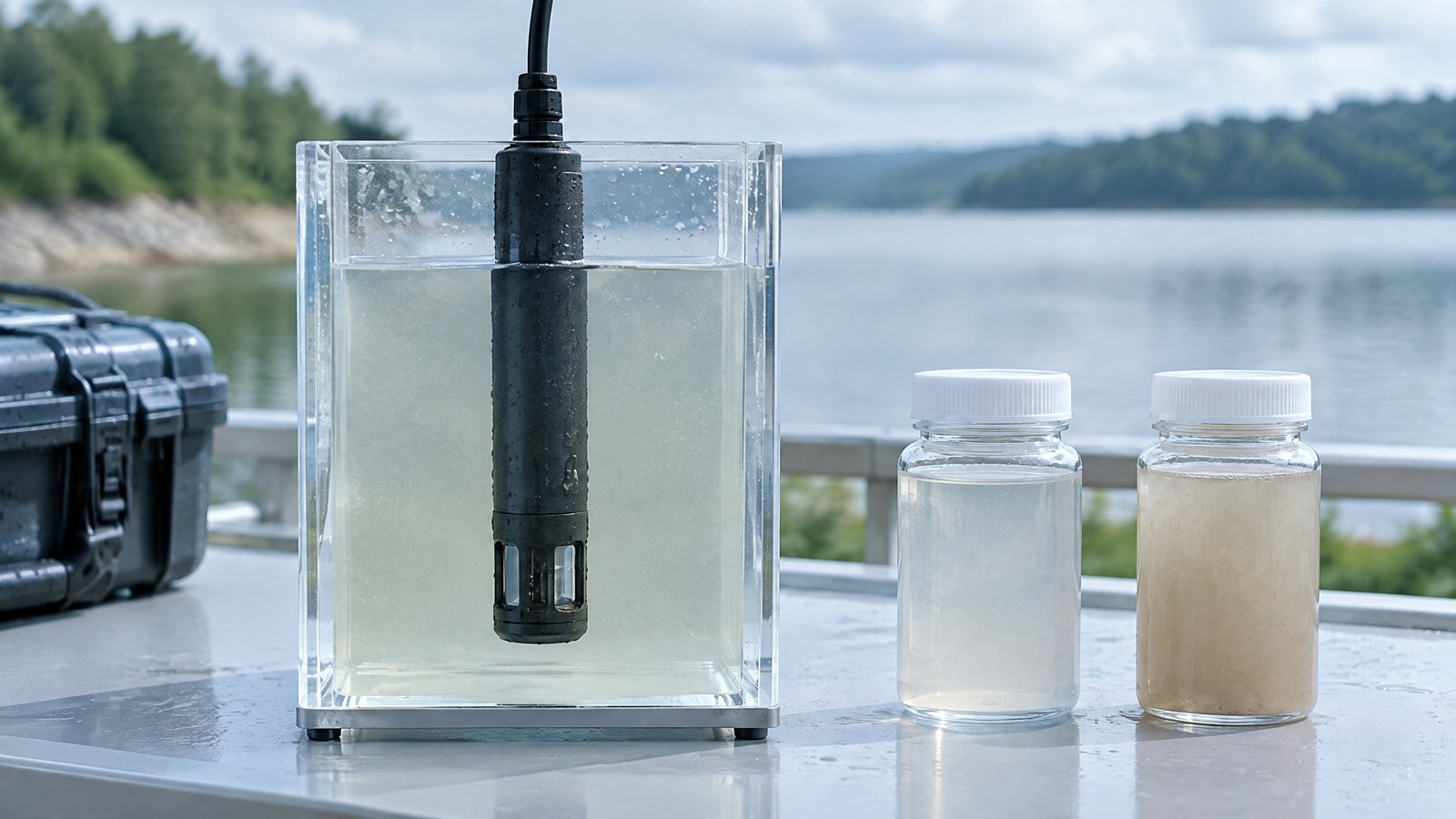
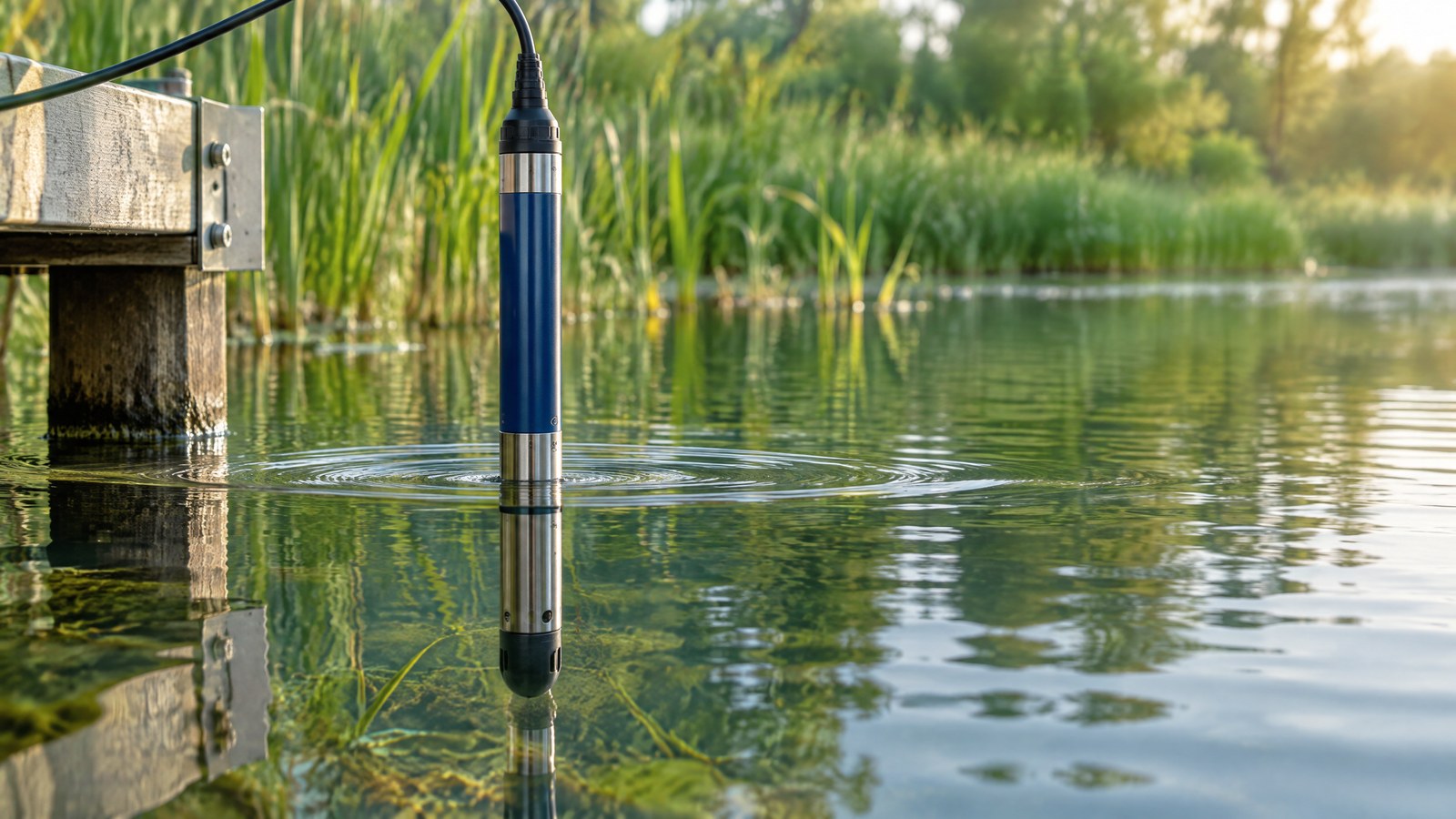
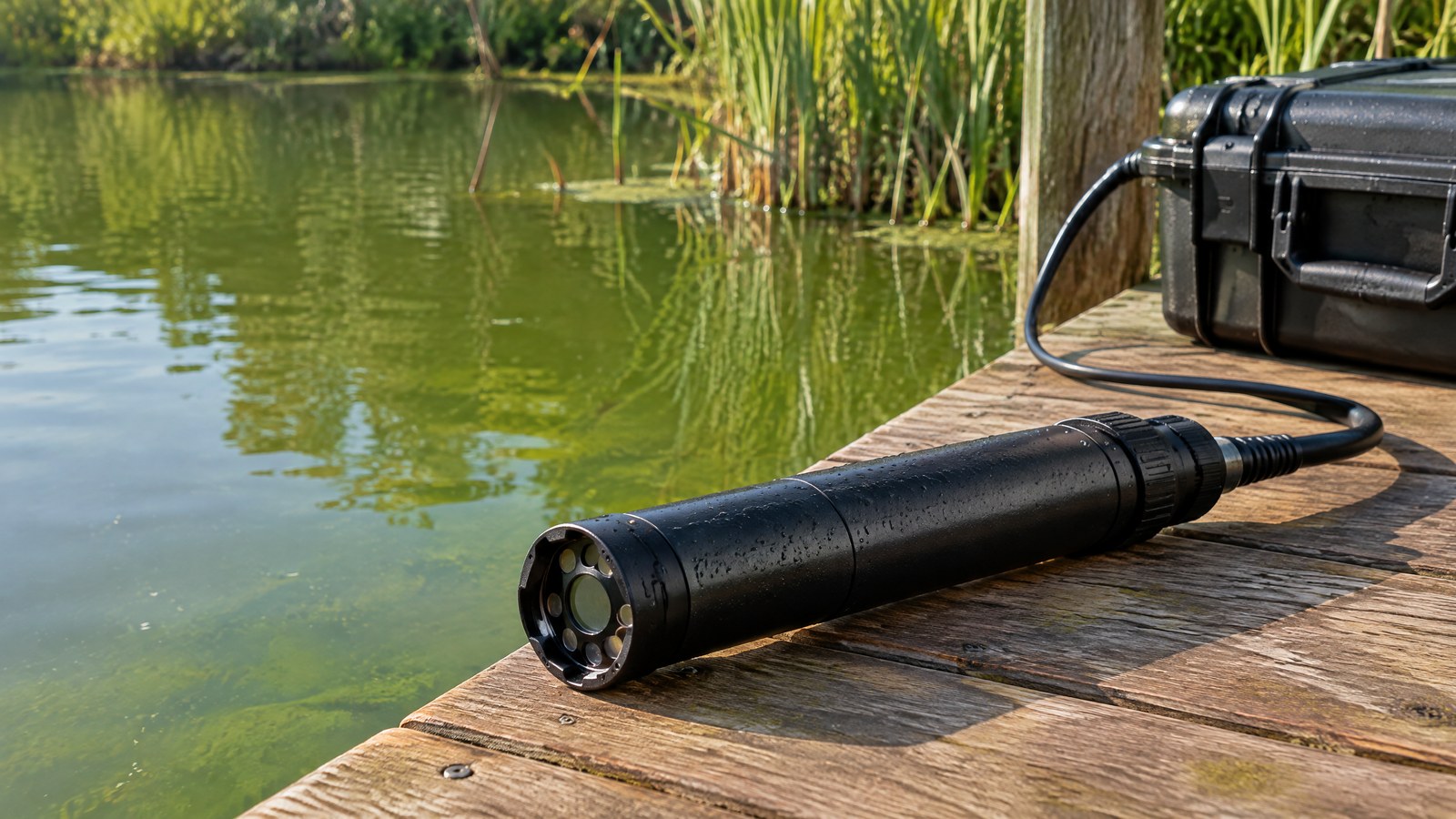
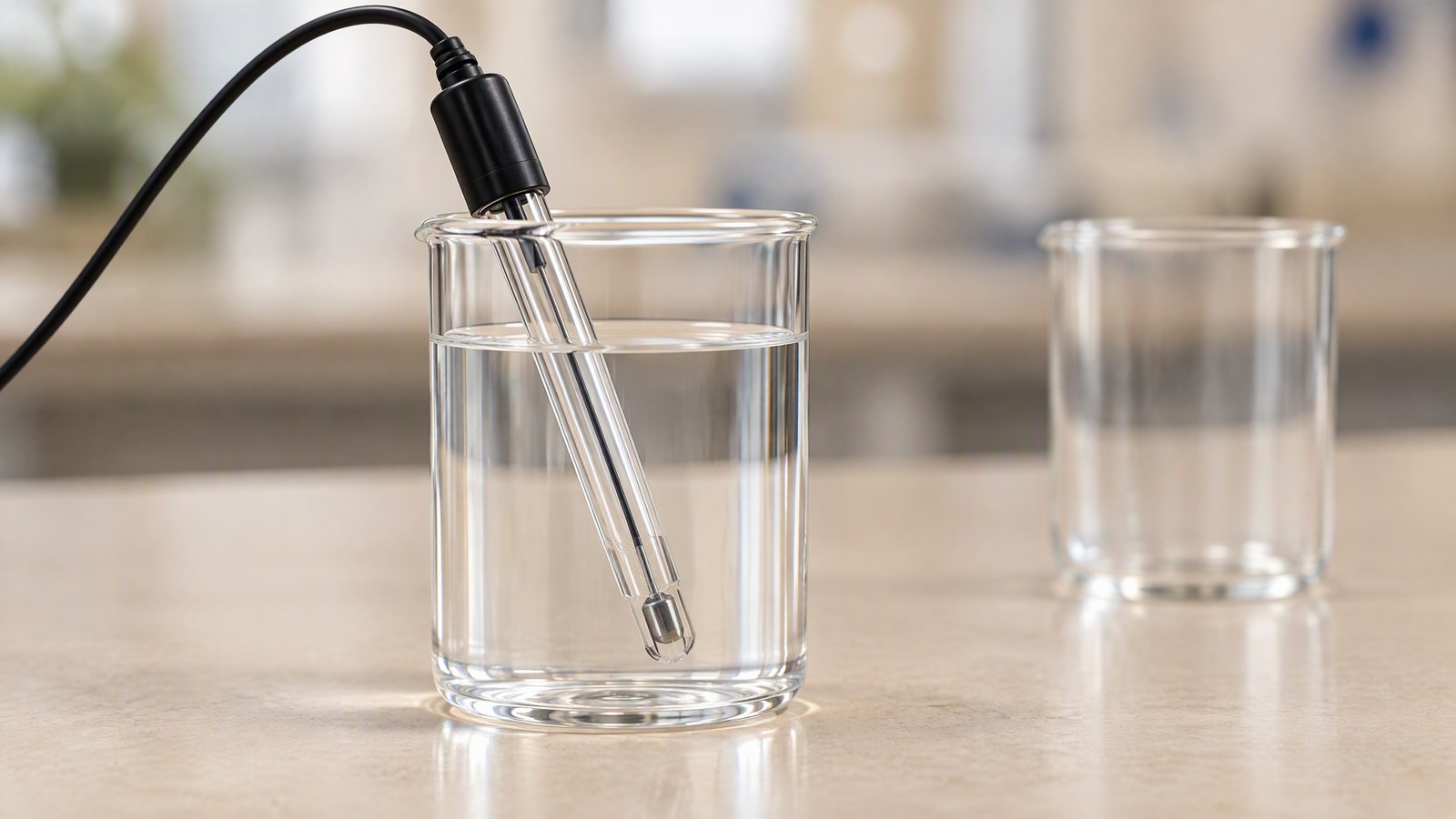
AI-generated editorial illustration of generic ORP probe hardware in a water-monitoring context, not a photograph of a tested product or an actual field measurement.
This distinction is the most useful starting point. A higher positive or lower, potentially negative, reading can describe the direction of the water’s measured redox environment in context, but it cannot name the chemical responsible. It cannot by itself identify chlorine, sulphide, a metal, a pathogen, a pesticide or any other individual contaminant. Nor can it establish that water is sterile, safe to drink, free of toxins, or suitable for people, livestock or aquatic life. Standard Methods similarly cautions that redox potential is an intensity factor, not the system’s oxidising or reducing capacity [2].
The Electrode Pair Behind the Millivolts
A conventional ORP probe has two electrochemical roles. The measuring, or indicator, electrode is commonly an inert noble metal such as platinum; it offers a surface at which electron-transfer reactions in the sample can establish a potential. The reference electrode is designed to provide a stable comparison potential and is commonly based on silver/silver chloride with an electrolyte and a liquid junction. The meter reports the potential difference between them [3].
The sensor therefore does not create a universal chemical score. It observes how its particular electrode pair responds to the sample at that moment. Probe design matters: a stand-alone ORP electrode and a multiparameter or combination pH/ORP assembly can share the same broad principle, while their reference arrangements, sensing surfaces and instrument reporting conventions can differ. The named reference electrode is part of what makes a millivolt value interpretable, especially when readings are compared across instruments or reports [4].
Why pH, Reference Choice and Sample Conditions Change Interpretation
ORP is not pH in another unit. pH concerns hydrogen-ion activity and acidity or alkalinity, while ORP concerns electrode potential associated with redox chemistry. The two often interact because many redox reactions involve both electrons and protons. Standard Methods notes that reactions in aqueous media can be pH- and Eh-dependent, so pH and redox information are often interpreted together rather than substituted for one another [2].
The reference system also sets the reporting baseline. The term Eh is conventionally tied to a standard hydrogen electrode, whereas practical water instruments often use other reference electrodes. YSI explains that the resulting voltage offset matters when a reading is converted or compared to an Eh value [4]. A report that gives only a number while omitting the reference basis, pH, temperature, sampling conditions and measurement context leaves important interpretive gaps.
Temperature, contact time, surface condition and water composition can also affect a practical result. A stable-looking number is not automatically a chemically complete answer: natural water can contain multiple redox couples that do not reach the electrode equally or quickly. That is why one isolated ORP result should be treated as context for qualified interpretation, not as a universal diagnostic threshold.
Why Clean-Looking Water Can Still Produce an Uncertain ORP Reading
The apparent simplicity of a millivolt display hides several limitations. In natural water, conditions required for an electrode measurement to equal a thermodynamic Eh value—reversible equilibrium, fast electrode kinetics and no interfering surface reactions—are rarely fully met, according to Standard Methods [2]. Multiple redox couples, slow electron exchange and reactions at the electrode surface can all limit what a single reading means.
Probe condition matters as well. YSI notes that deposits, oil, grease or other organic material on a platinum sensing surface can slow its response or produce an erroneous result, while samples with very little redox-active material can yield readings of limited meaning [4]. This is not a reason to dismiss ORP. It is a reason to pair a trend with known site conditions and other measurements, then have an appropriately qualified person assess changes that matter for a water system.
Where ORP Fits in Water Monitoring in India
In India-focused water monitoring, ORP can be useful as one contextual channel in a non-potable treatment process, a groundwater or surface-water investigation, a campus water system, or a farm or aquaculture monitoring programme. The U.S. Environmental Protection Agency’s field procedure explicitly addresses ORP measurement in groundwater, surface water and certain wastewater, illustrating the range of aqueous settings in which the parameter is used [1]. Its value rises when the monitoring question is clear: for example, whether a known process is moving away from its established redox behaviour.
A practical monitoring record is stronger when an ORP trend is viewed alongside pH, temperature, dissolved oxygen where relevant, sampling location, time and observations about the system. This protects against an attractive but unsafe shortcut: treating a single positive ORP value as a certificate of disinfection or a single negative value as a diagnosis of a specific pollutant. Decisions about potable water, treatment changes, releases, crop inputs, livestock, aquaculture or public health require methods and professional interpretation appropriate to that decision.
Important Points / Key Information
The most reliable way to use an ORP sensor is to ask a narrow question about changing redox conditions and then preserve the surrounding context. It is not a shortcut for contaminant identification or safety certification.
Key Takeaways
- An ORP sensor measures a mixed electrode potential in millivolts relative to a reference electrode; it does not directly measure a single chemical concentration [3].
- pH, the reference basis, temperature, electrode condition and the sample’s redox-active chemistry shape the meaning of a reading [2] [4].
- ORP alone cannot prove sterilisation, drinking-water safety, absence of toxins or the identity of a contaminant.
- A well-documented trend, interpreted with related measurements and site knowledge, is usually more informative than one isolated number [4].
Information That Should Travel With a Reading
For a reader, operator or reviewer to understand an ORP result later, the surrounding record matters. Useful context includes the sample or process location, sampling time, temperature, pH, instrument and reference basis, whether the value had stabilised, and what was known about the process or recent change. These details do not make ORP species-specific, but they make it less likely that a number will be detached from the conditions that produced it.
The same caution applies to comparisons. A difference between two readings may reflect a meaningful shift in the water, but it may also reflect reference conventions, probe fouling, response time or differing sample conditions. A qualified reviewer can decide which explanation needs follow-up; the sensor alone cannot choose among them.
Examples / Supporting Information
The following examples show how ORP can be informative without turning a general indicator into a claim about safety or a particular chemical concentration.
A Sourced Process Example
YSI gives a concrete interpretation example: excess chlorine in wastewater effluent can be associated with a large positive ORP value, while hydrogen sulphide can be associated with a large negative value [4]. The lesson is not that either sign uniquely identifies chlorine or sulphide in every water sample. It is that ORP becomes more useful when a known, dominant redox-active species or process gives the reading a defined context.
That example also explains why a process can use ORP as a monitoring input while still relying on other measurements and controls. The same numerical reading may carry different implications in a different water matrix, at a different pH, or with different competing redox reactions.
Hypothetical India Monitoring Scenario
Hypothetical: a monitoring team records a sustained ORP shift in a non-potable farm reservoir during a period of changing inflow. Rather than declaring that the water has become safe, unsafe, disinfected or contaminated by one named substance, the team would preserve the ORP trend with pH, temperature, dissolved-oxygen results where applicable and location notes. The shift can then be treated as a prompt to examine the system with suitable sampling and qualified review.
This is the appropriate scale of the sensor’s contribution. ORP can help direct attention to changing electron-transfer conditions; it cannot replace contaminant-specific laboratory analysis, a microbiological assessment, or professional decisions about human, animal or environmental exposure.
Conclusion
An ORP sensor is best understood as an electrochemical context instrument. Its platinum or other noble-metal sensing surface and reference electrode turn a sample’s combined redox behaviour into a millivolt value, which can be useful for following a known process or investigating a change. But the number is reference-dependent, often pH-sensitive and non-specific, so it cannot certify sterilisation, water safety or contaminant identity.
For water monitoring, the defensible question is not “What does this one ORP number prove?” but “What does this trend add when read with pH, temperature, site history and appropriate companion tests?” Keeping that boundary clear makes ORP more useful and reduces the risk of unsafe conclusions.
How we checked thisSources (4)
We keep source links private so your reading stays on techduopulse. Each note names the publisher and document we checked.
EPA field guidance for ORP in aqueous environmental media
Primary source · Where ORP Fits in Water Monitoring in IndiaStandard Methods on ORP interpretation limits
Primary source · Why pH, Reference Choice and Sample Conditions Change InterpretationHamilton explanation of ORP electrodes and mixed potential
Primary source · What an ORP Sensor Measures—and What It Does NotYSI technical cautions for ORP measurements
Primary source · Why Clean-Looking Water Can Still Produce an Uncertain ORP ReadingOwner-approved educational sensor explainer; obsolete private-draft status removed without changing source-backed facts or professional safety boundaries. Original generic AI editorial illustration, not a product or field-test photograph.