A dissolved oxygen sensor turns an invisible part of water chemistry into a reading that can help explain conditions in a stream, pond, tank or treatment process. The useful question is not simply whether the number is high or low, but what the measurement method, water conditions and timing allow it to mean.
On this page 6 sections
Part of our emerging technology science guide library
What a Dissolved-Oxygen Sensor Measures
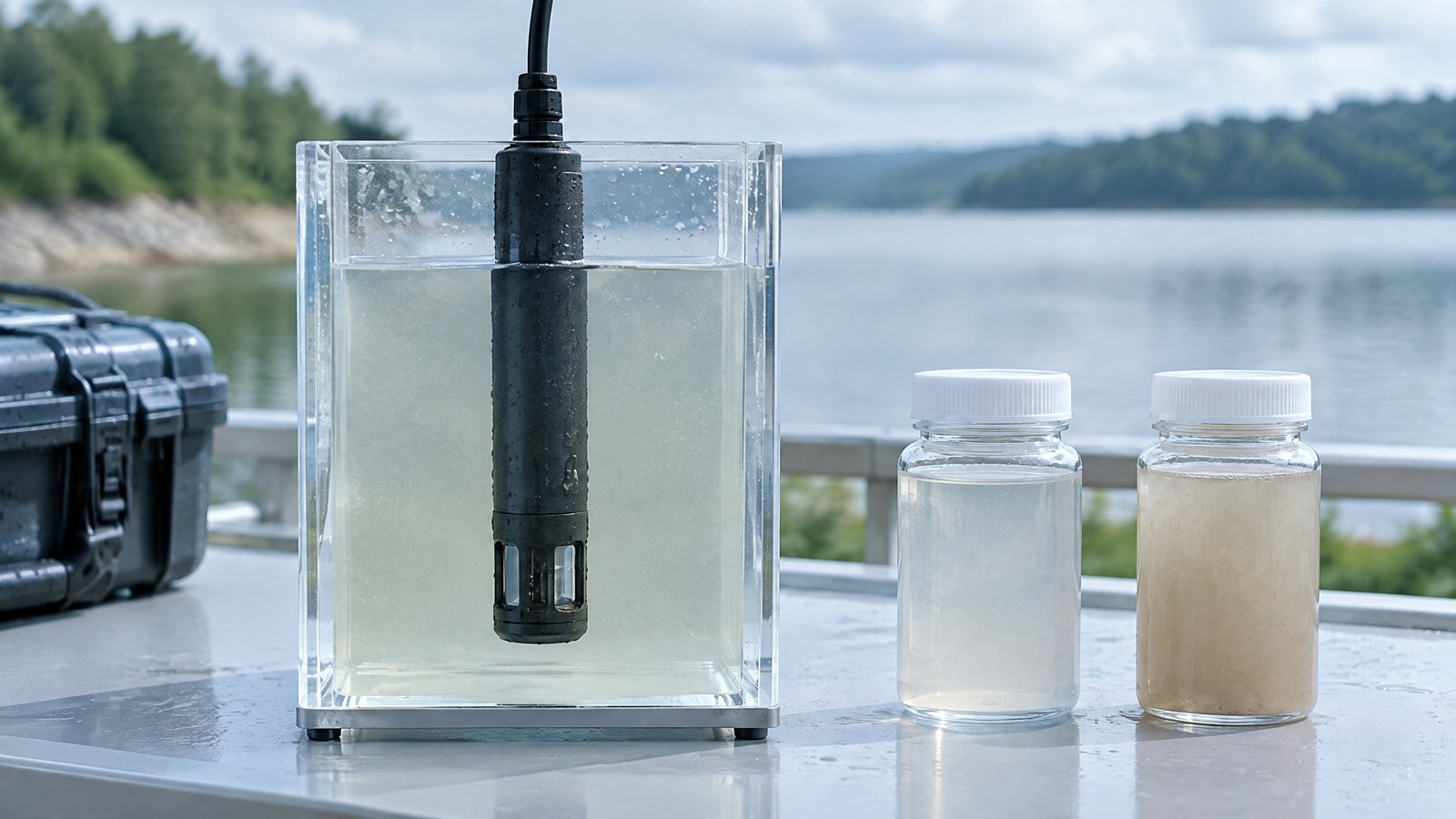
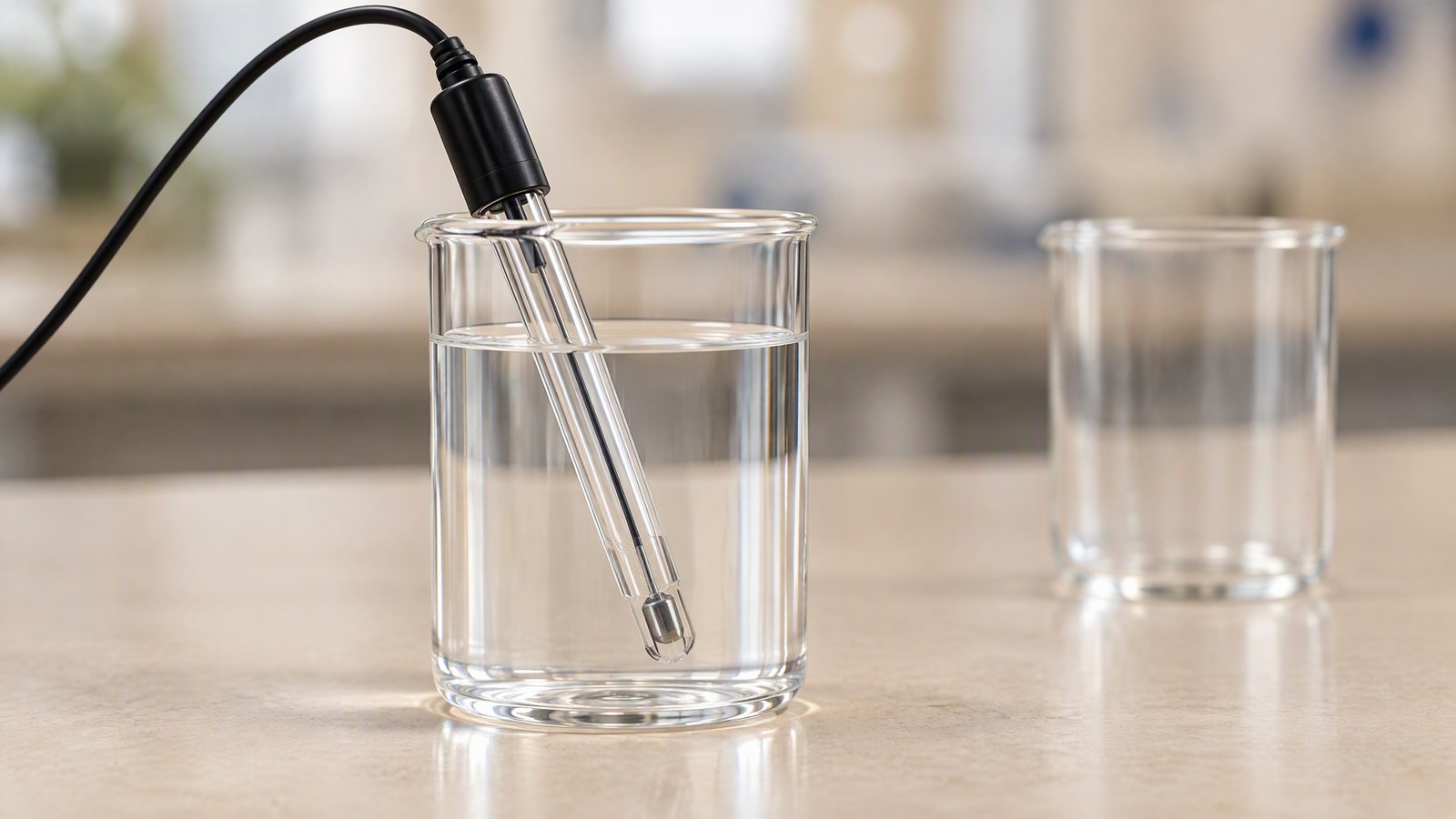
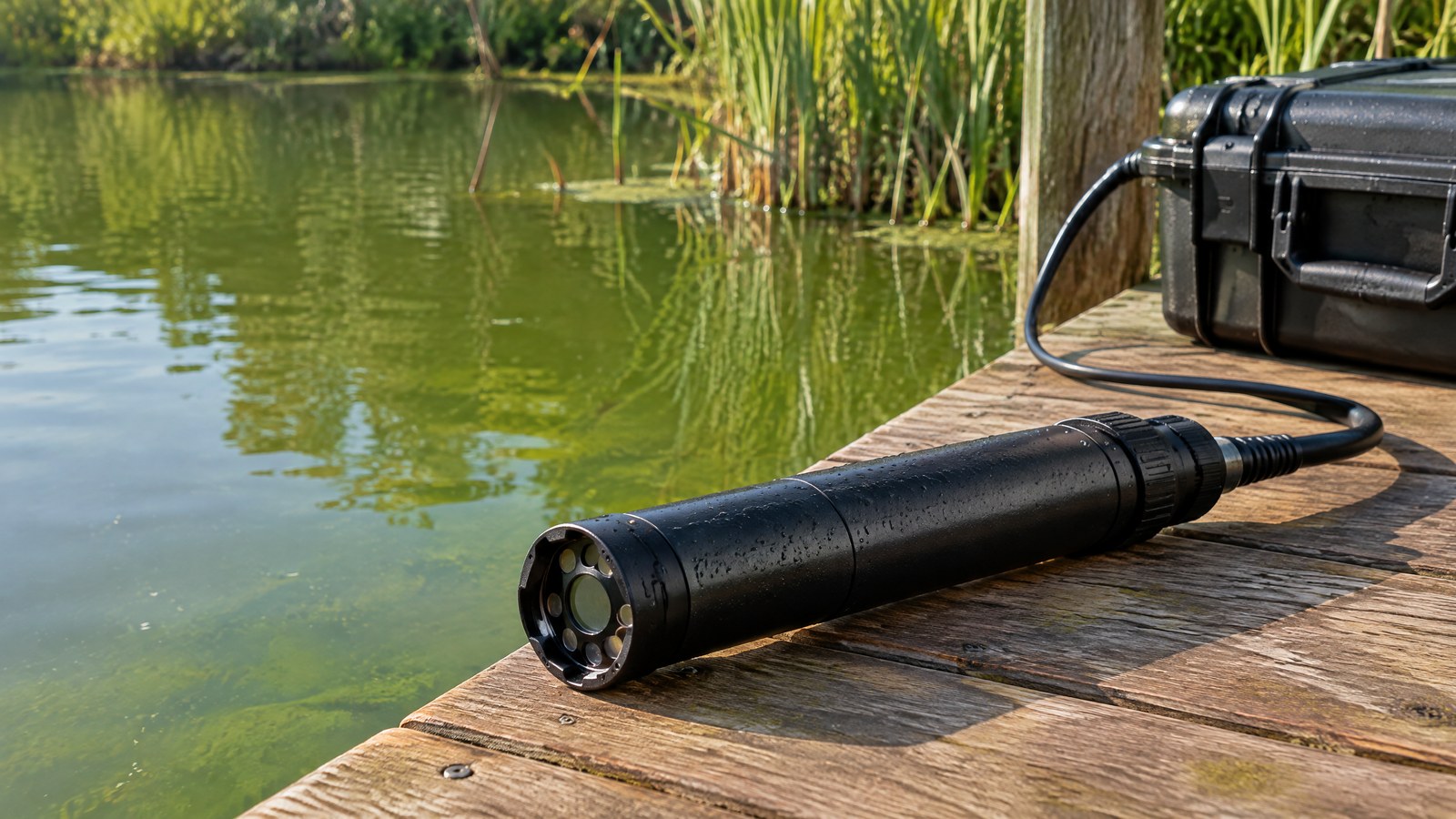
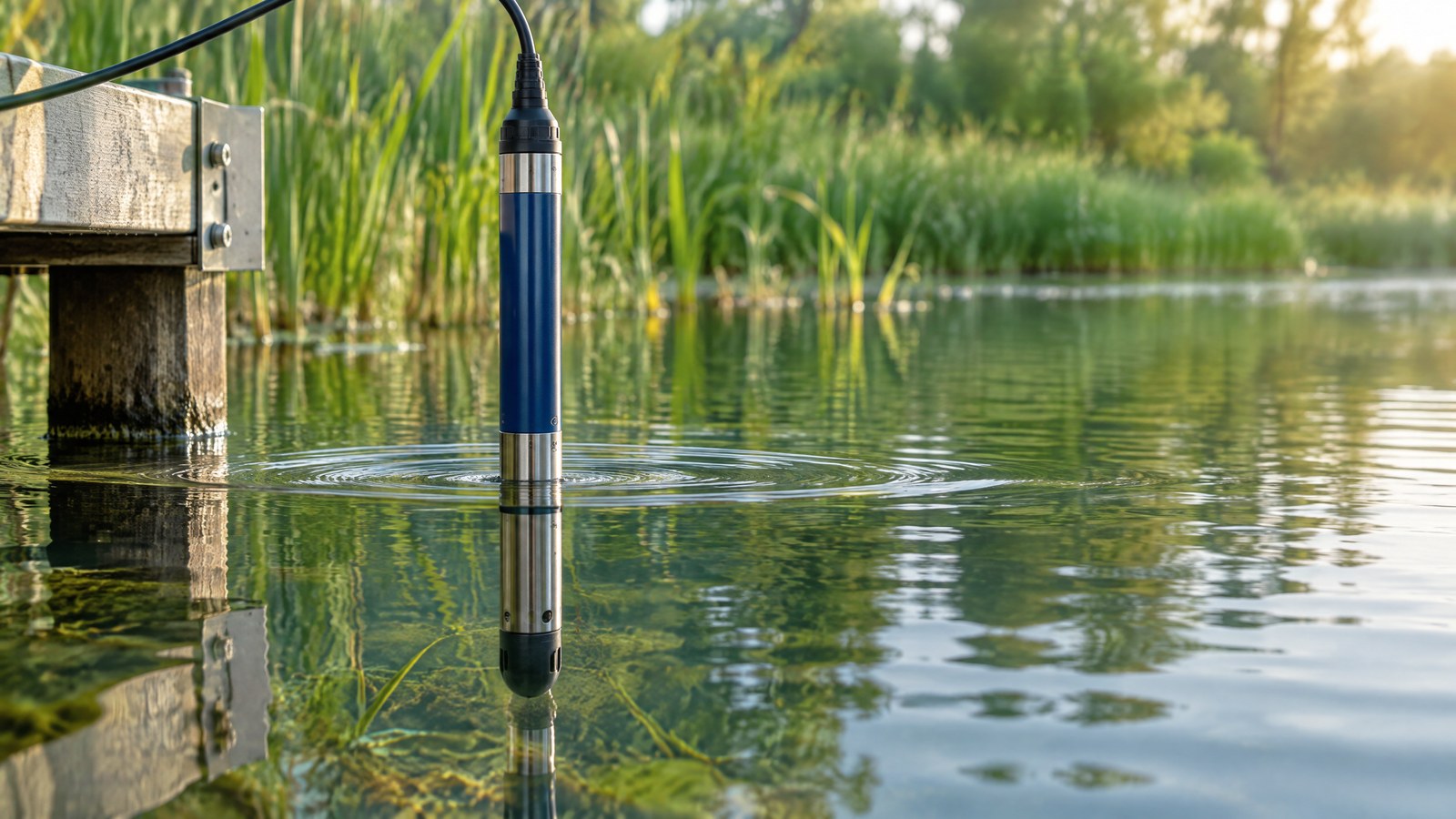
AI-generated editorial illustration of generic dissolved-oxygen sensing hardware in a water-monitoring setting, not a photograph of a tested product or an actual field measurement.
A dissolved-oxygen sensor estimates the oxygen gas dissolved in water, usually presenting a concentration and/or a percentage of saturation. This is different from the oxygen atom already bound inside each water molecule: the reading concerns oxygen that is available in the water column and can vary as conditions change. USGS describes dissolved oxygen as the amount of oxygen dissolved in water and notes that it is relevant to organisms living there [1].
The sensor is therefore a context instrument, not a complete water-quality verdict. A reading can contribute to an investigation of oxygen supply and demand, but it does not by itself establish drinking-water safety, sterility, the absence of contaminants or the health of a particular fish species.
Oxygen dissolved in water is a moving balance
Oxygen can enter surface water from the atmosphere, and water movement can promote exchange at the surface. Photosynthesis can add oxygen in sunlit water, while respiration and decomposition consume it. USGS notes that moving water commonly holds more dissolved oxygen than stagnant water, and that decay of organic material can increase oxygen demand [1].
That balance changes across depth and time. In a pond or lake, a warm surface layer and deeper water can behave differently; in a stream, flow, shade and incoming water can all matter. Treating a single spot reading as a description of an entire water body hides those differences.
How Dissolved-Oxygen Sensors Turn Oxygen into a Reading
Most modern field and process instruments use either an optical sensing element or an electrochemical probe. Both aim to characterize oxygen at the sensor, but their physical mechanisms and practical limitations differ. The method matters when comparing readings, planning maintenance or interpreting a change in a monitoring record.
Optical sensors use oxygen-sensitive light response
In a typical optical dissolved-oxygen sensor, an LED excites a dye layer in the sensor cap. Oxygen affects the dye’s luminescence lifetime, and the instrument compares that response with a reference to determine dissolved oxygen. YSI’s technical explanation states that oxygen is not consumed by this optical measurement, so continuous water flow across the cap is not required for the measurement itself [3].
The optical cap remains a measuring surface, not a magic shield against bad context. Fouling, damage, ageing components, incorrect configuration or an unsuitable installation can still make a result less trustworthy. The instrument’s own instructions and a documented quality-check process remain the appropriate basis for maintenance and verification.
Electrochemical sensors create an electrical signal
Electrochemical dissolved-oxygen probes place electrodes and electrolyte behind an oxygen-permeable membrane. Oxygen diffuses through the membrane and is reduced at the cathode, producing a current that changes with oxygen at the membrane. This family includes polarographic and galvanic designs [3].
Because this measurement consumes oxygen at the sensing surface, movement of water across the membrane is important for many electrochemical arrangements. Membrane condition, electrolyte condition and the sensor’s specified stabilization or calibration requirements can affect the practical result. Those are method-specific issues, not evidence that one technology is universally better.
Why Water Conditions Change the Meaning of a DO Reading
A dissolved-oxygen number describes oxygen under particular conditions; it is not a universal constant for a water body. Temperature, atmospheric pressure, salinity or ionic strength, time of day, depth and mixing can change both the oxygen available and the interpretation of the display.
Temperature, pressure and salinity shape oxygen solubility
Cold water can hold more dissolved oxygen than warm water, which is why a seasonal or afternoon change may need temperature context before it is treated as a new oxygen problem [1]. EPA likewise notes that saturation varies with temperature, pressure and salinity, and that dissolved-oxygen concentration and percent saturation are related but not equivalent [4].
At higher elevation, the surrounding atmospheric pressure differs from that at sea level; dissolved salts also alter oxygen solubility. USGS therefore treats atmospheric pressure and ionic strength as needed information when determining the theoretical dissolved-oxygen amount and describes salinity correction in field work [2]. A nearby electrical-conductivity reading can be useful context in waters where dissolved salts are relevant.
Timing, depth and location can reveal a pattern
Photosynthesis, respiration, mixing and decomposition can create daily and depth-related patterns. EPA notes that the lowest concentrations are often found before dawn and just above sediments, and that measurements over a full day can reveal a diurnal pattern [4]. This is why a carefully described series can be more informative than a single convenient daytime reading.
A monitoring record should preserve the setting around each value: where the sensor was placed, whether the water was flowing or still, water temperature, the selected units, and relevant instrument checks. These details help a qualified reviewer decide whether values from different times or sites can reasonably be compared.
Important Points / Key Information
Key Takeaways: A dissolved-oxygen sensor measures oxygen gas dissolved in water, not overall water safety. Optical probes infer oxygen from a light-sensitive layer, while electrochemical probes infer it from an electrode reaction. Temperature, pressure, salinity, depth and time can change the reading or its interpretation, so a number needs context.
Use the sensor’s output as one line of evidence. For an unexplained change, first separate a real water-condition change from a method, placement, calibration or maintenance issue; then interpret it with the local monitoring objective and other observations.
- State the method and units before comparing results from different instruments or dates.
- Keep concentration and percent saturation distinct; they communicate related information under different environmental conditions.
- Do not apply a universal fish, aquaculture or water-safety threshold to every site, species or purpose.
- Use manufacturer procedures and a qualified water-monitoring professional for decisions that depend on measurement quality or risk.
Examples / Supporting Information
Hypothetical India-use scenario: a community group records lower dissolved oxygen in a shallow farm pond on hot, calm afternoons than in the early morning. That pattern alone does not diagnose a cause or prescribe an intervention. It does show why the group should retain time, temperature, location and instrument context, then ask an appropriately qualified local adviser to interpret a sustained or concerning pattern.
A river or lake programme may use a portable probe for location-specific observations, or a fixed installation for a time series. USGS identifies dissolved oxygen as a routinely measured water-quality condition and explains that water temperature affects concentration through seasonal and daily cycles [1]. EPA similarly explains that a 24-hour sequence can reveal depletion patterns that a single observation misses [4].
For a brackish, coastal or saline-water setting, a concentration display needs special care because salts alter oxygen solubility. USGS describes the role of salinity correction and notes that instruments with a calibrated conductivity sensor can apply a correction automatically when configured for that purpose [2]. That capability does not remove the need to verify the correct mode, sensor condition and site context.
Conclusion
A dissolved-oxygen sensor makes a valuable water condition visible, but it does not reduce water quality to one number. Understanding the difference between optical and electrochemical sensing, and keeping temperature, pressure, salinity, timing and location beside the result, leads to more defensible monitoring conversations.
This is an educational article, not a monitoring protocol or safety certification. Qualified professional review is required for safety-sensitive decisions.
How we checked thisSources (4)
We keep source links private so your reading stays on techduopulse. Each note names the publisher and document we checked.
USGS: dissolved oxygen definition, oxygen sources and temperature context
Primary source · What a Dissolved-Oxygen Sensor MeasuresUSGS technical manual: pressure, temperature and salinity context for dissolved oxygen
Primary source · Why Water Conditions Change the Meaning of a DO ReadingYSI technical explainer: optical and electrochemical dissolved-oxygen sensor mechanisms
Primary source · How Dissolved-Oxygen Sensors Turn Oxygen into a ReadingEPA: saturation context and daily dissolved-oxygen patterns
Primary source · Examples / Supporting InformationOwner-approved educational sensor explainer; obsolete private-draft status removed without changing source-backed facts or professional safety boundaries. Original generic AI editorial illustration, not a product or field-test photograph.