A nitrate ion-selective sensor can make nitrate in water easier to track, but the number only becomes meaningful when you know what the electrode responds to and how the result is labelled. This explainer focuses on the overlooked details—interfering ions, water-matrix effects and nitrate versus nitrate-nitrogen—that prevent an apparently simple reading from being misread.
On this page 4 sections
Part of our emerging technology science guide library
How a nitrate ion-selective sensor produces a water reading
A nitrate ion-selective sensor, often called a nitrate ISE, is an electrochemical probe that estimates dissolved nitrate in an aqueous sample from a voltage difference. Its value is not that it “sees” pollution in a general sense; it is designed to respond mainly to nitrate ions, then relies on calibration and sample context to turn that response into a reported result. [1] [2]
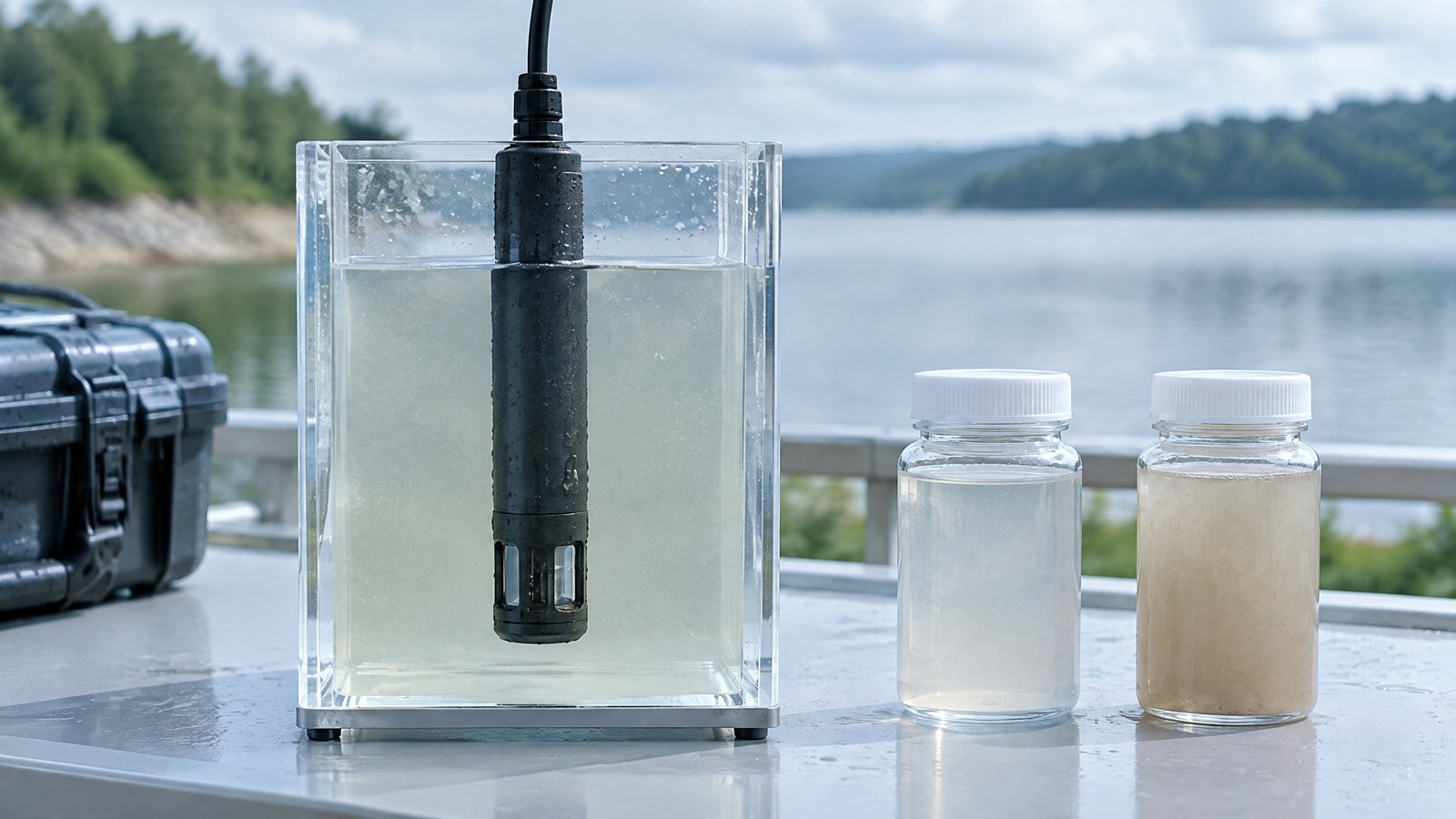
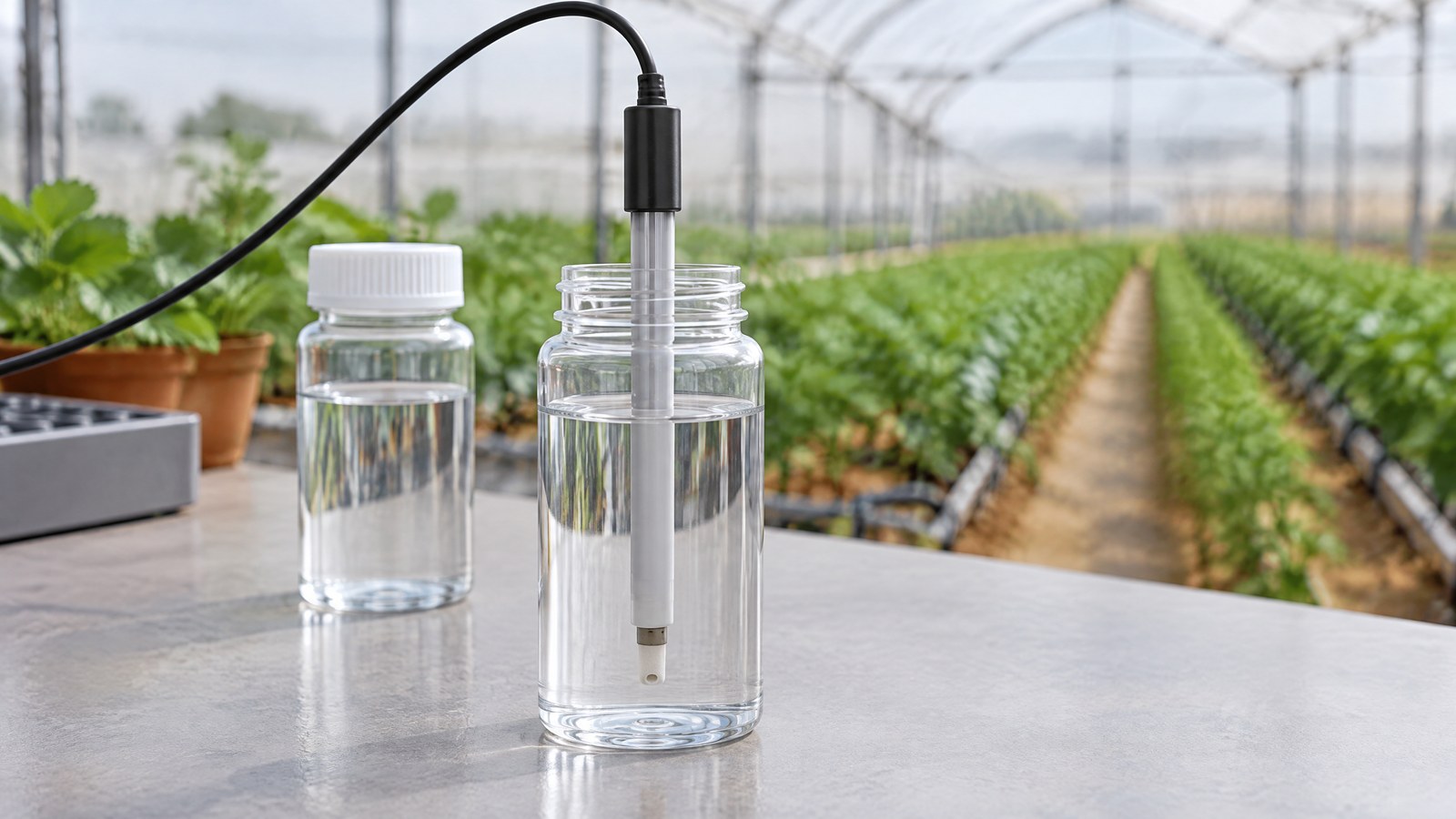
AI-generated editorial illustration of generic nitrate-electrode hardware beside water samples and an agricultural water-monitoring setting, not a photograph of a tested product or an actual field measurement.
A typical measurement system pairs the nitrate-selective sensing element with a reference electrode. At the sensing membrane, nitrate-containing solution and the membrane interact in a way that creates an electrical potential; the meter compares that potential with the stable reference and relates it to nitrate through calibration. Standard Methods describes this as a response to nitrate **ion activity**, a useful reminder that dissolved-water chemistry affects what the electrode experiences. [1] [2]
For a related view of dissolved-ion context, see the internal guide to electrical conductivity sensors in hydroponics. Conductivity and a nitrate ISE answer different questions: conductivity reflects the combined ability of dissolved ions to carry electrical current, whereas a nitrate ISE is intended to be selective for nitrate but can still be influenced by other ions.
The membrane is selective, not perfectly exclusive
“Ion-selective” is more accurate than “ion-exclusive.” A nitrate electrode has a membrane chemistry chosen to favour nitrate, but other anions can produce part of the electrical response or disturb the conditions in which the response is interpreted. EPA Method 9210A identifies bicarbonate, carbonate, phosphate, chloride, bromide, iodide and nitrite among the interferences an analyst may need to consider; the Standard Methods summary likewise flags chloride, bicarbonate, nitrite and several other ions. [1] [2]
That is why a reading cannot be separated from the water matrix. A relatively simple water sample and a mineral-rich, turbid, wastewater or soil-extract sample can present very different combinations of ions and suspended material. A sensor may still be useful for a defined monitoring programme, but qualified interpretation should include the sample type, known co-occurring ions, sample handling, and whether the method has been checked for that matrix. [1]
Relevant sensor forms and what changes their response
Nitrate ISEs may be assembled as a sensing electrode plus a separate reference electrode, or packaged as a combination electrode that brings both half-cells into one housing. Polymer or PVC-based membrane modules are a common design described in manufacturer technical guidance; this is a category of measurement hardware, not a claim that all sensors use the same membrane or behave alike. [3]
The practical distinction is less about the number of housings than about whether the sensing membrane, reference junction and meter are working consistently in the intended sample conditions. Temperature affects electrode potential, membrane condition can change over time, and the way standards and samples are matched can influence the relationship between signal and reported result. [1] [3]
Nitrate versus nitrate-nitrogen: the label changes the number
Before comparing any two nitrate results, check the reported form. **Nitrate** is commonly written as NO₃⁻ and represents the whole nitrate ion. **Nitrate-nitrogen**, written NO₃⁻-N, reports only the nitrogen portion contained in nitrate. They describe the same chemical species from two reporting conventions, so their numerical values are not interchangeable. [4]
The unit relationship is 1 mg/L nitrate-nitrogen = 4.4 mg/L nitrate. A value can therefore look substantially different on two reports even when they describe the same water sample. The report label, unit, analytical method and sampling context should stay with the number whenever it is shared or compared. [4]
Limits of an ion-selective reading
A nitrate ISE reading is an estimate of the nitrate response under a particular method, not a complete verdict on water quality. It does not identify every dissolved contaminant, establish sterility, or show whether water is suitable for drinking, irrigation, aquatic life or any other purpose. Nitrate is colourless, odourless and tasteless in water, but a nitrate result alone cannot stand in for a comprehensive assessment. [4]
For results that affect safety, compliance, farm management or treatment decisions, the defensible question is not simply “what number appeared?” It is whether the instrument and method were appropriate for that matrix, whether quality checks support the result, and whether a qualified laboratory or professional should confirm or interpret it. EPA’s method explicitly expects trained, knowledgeable users and stresses matrix-specific performance and quality controls. [1]
Important Points / Key Information
A nitrate ion-selective sensor is most useful when it is treated as part of a measurement system rather than as a universal water-quality detector. The points below summarise the distinction that matters most for readers comparing water reports or considering a monitoring programme.
- **Key Takeaways**
- A nitrate ISE is a potentiometric sensor: it relates a membrane voltage difference to nitrate after calibration, rather than directly measuring all water contaminants. [1] [2]
- Selectivity has limits. Other anions, pH consistency, temperature, suspended material and the overall sample matrix can affect the apparent nitrate result. [1] [2] [3]
- Always retain the reporting basis. Nitrate as NO₃⁻ and nitrate-nitrogen as NO₃⁻-N are different numerical expressions of the same nitrate chemistry. [4]
- A nitrate reading alone does not certify drinking-water safety, irrigation suitability, absence of toxins, or aquatic-health conditions. Qualified human review is required before any safety-sensitive publication or decision.
Examples / Supporting Information
EPA Method 9210A gives a useful sourced example of where this measurement approach can fit: it covers solubilized nitrate in natural surface water, groundwater, domestic and industrial wastewater, and soil extracts, subject to the method’s trained-user and matrix requirements. That range explains why a nitrate ISE may appear in laboratory or organised environmental-monitoring work, rather than being limited to one kind of water. [1]
**Hypothetical India-use scenario:** A water-monitoring team supporting an irrigation project may want to watch for changes in dissolved nitrate across repeated samples. A nitrate ISE could provide a repeatable nitrate-focused signal when its method is evaluated for the local water matrix. If the result could influence water use, crop inputs or a health-related statement, the team would retain the sample details and reporting basis and seek qualified laboratory or professional interpretation rather than treating a single screen as a final answer.
A second reporting example is purely arithmetic: if one laboratory report says 1 mg/L as nitrate-nitrogen, the corresponding total-nitrate expression is 4.4 mg/L nitrate. Neither form is “more correct”; the risk is comparing the numbers without noticing the label. [4]
Conclusion
A nitrate ion-selective sensor turns a nitrate-sensitive membrane response into a useful water-measurement signal, but the signal makes sense only alongside calibration, temperature, interfering ions and the sample matrix. Its most valuable role is nitrate-focused monitoring with transparent units and context—not a shortcut to broad water-safety conclusions.
When reading a nitrate result, start with four checks: whether it says NO₃⁻ or NO₃⁻-N, the unit used, the sample type, and the analytical context. That small discipline prevents misleading comparisons and leaves safety-sensitive interpretation to qualified human reviewers. [1] [4]
How we checked thisSources (4)
We keep source links private so your reading stays on techduopulse. Each note names the publisher and document we checked.
EPA Method 9210A on nitrate ion-selective electrode measurement
Primary source · How a nitrate ion-selective sensor produces a reading; Important Points / Key Information; Examples / Supporting InformationStandard Methods summary of the nitrate electrode method
Primary source · How a nitrate ion-selective sensor produces a reading; Limits of an ion-selective readingYSI technical guidance on nitrate ISE calibration and measurement
Primary source · Relevant sensor forms and what changes their response; Limits of an ion-selective readingUniversity extension guide to nitrate-nitrogen reporting
Secondary source · Nitrate versus nitrate-nitrogen: the label changes the number; Important Points / Key InformationOwner-approved educational sensor explainer; obsolete private-draft status removed without changing source-backed facts or professional safety boundaries. Original generic AI editorial illustration, not a product or field-test photograph.