
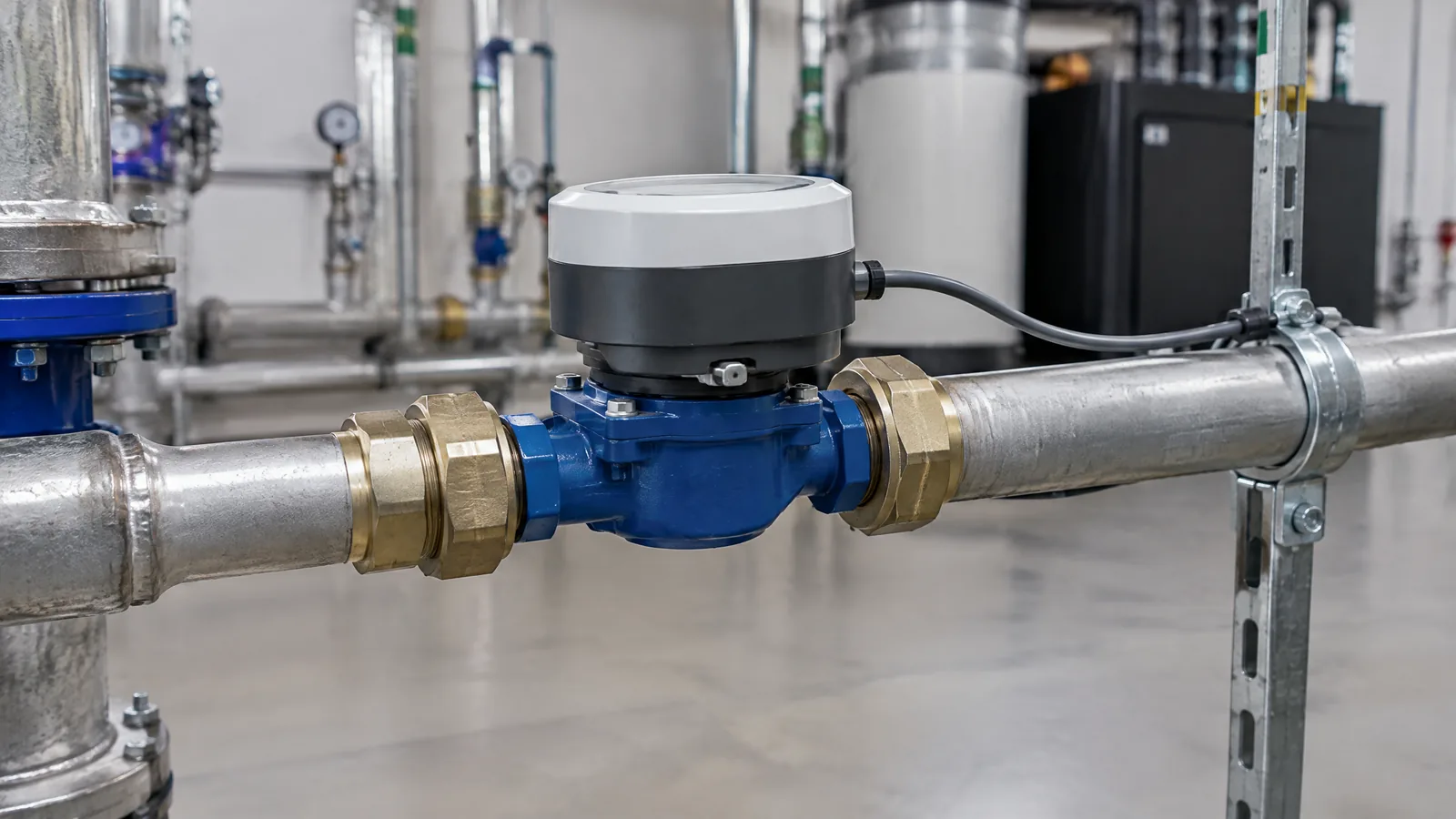
A building manager may notice water use continuing after occupants have gone home, yet still not know whether the cause is a toilet, irrigation schedule, cleaning task or hidden plumbing problem. A smart water meter / flow meter for derived leak anomalies measures water movement or consumption over time, then software flags an unusual pattern for a person to investigate; it does not directly locate a leak.
This article is part of the computer hardware technology guide library.
Key takeaways
- A meter measures flow or water consumption; a leak alert is a software-derived interpretation of that data.
- Continuous or unusual use is a reason to check the building, not proof that a leak exists.
- Smart meters can indicate that a problem may exist, but they cannot identify the leaking pipe or fixture by themselves.
- A useful baseline records normal occupancy, cleaning, irrigation and other scheduled demand before an alert is judged.
- Professional leak-location instruments and inspection may be needed after an alert, especially in larger systems.
What does this building water sensor actually measure?
The physical instrument may be a smart water meter, a flow meter, or a metering system that records volume and flow over time. Depending on the installation, it can provide readings such as accumulated consumption, a time series, or an estimate of current flow. The sensing method can vary; the important question is what the installed device measures, how often it reports, and what conditions its documentation covers.
The leak-alert layer is different. Software compares recent readings with an expected pattern and may flag flow that continues during a normally quiet period or consumption that differs from a building’s usual profile. That output is an anomaly signal. It is not a camera view of a wet wall, a valve-by-valve diagnosis, or a map of the leak.
This distinction matters because a building has many legitimate water loads. A cleaning shift, an irrigation controller, a cooling-tower make-up cycle, a tank refill or a change in occupancy can look unusual when the software has not been configured with that context.
How smart water meter leak detection turns readings into an alert
A practical system usually has three layers: the instrument, the data connection, and the rule or model that interprets the readings. The instrument produces flow or volume data. A gateway or meter network sends that data to a dashboard or building-management workflow. Software then applies a comparison such as time-of-day behaviour, minimum overnight flow, recent history, or a threshold set by the operator.
The most useful baseline is specific to the building. Record normal patterns for occupied and unoccupied periods, planned cleaning, irrigation, equipment operation and seasonal changes. A rule that ignores those schedules may create nuisance alerts. A rule that is too broad may miss a slow change. The alert should therefore be treated as a prompt to check the data and the site, not as an automatic finding.
Before changing a rule, check simple data-quality causes. A missing interval, duplicate reading, communication gap, meter maintenance event or changed reporting period can make a graph look abnormal. Keep the original readings and the alert time so that a facilities team can compare the signal with what was happening in the building.
Why an alert cannot tell you where the leak is
A single upstream meter sees combined demand downstream. If flow remains high, the meter may show that the total pattern is unusual, but it normally cannot separate a leaking toilet from irrigation, a stuck valve, a process load or a break in a particular branch. The same total flow can be produced by several different causes.
The U.S. Department of Energy explicitly distinguishes indication from location: it says smart meters and advanced metering infrastructure cannot locate leaks, although they can help determine whether a leak exists. Location work may require inspection or other instruments chosen for the site. DOE lists examples for small-to-medium systems such as noise loggers, listening sticks and hand-held thermal imaging, and describes other options for larger distribution systems. These are external or optional investigation tools, not built into every smart meter.
Do not present a dashboard alert as proof of water damage, contamination, or a safety condition. When the signal suggests a significant or ongoing problem, follow the building’s approved facilities and plumbing process and use qualified personnel for inspection.
Measurement limits: meter, installation and context
A flow reading is produced under conditions. NIST’s flow-meter work covers the effects of different fluids, temperatures, pressures, flow rates and installation conditions. It also discusses velocity-profile effects from real pipe arrangements and errors associated with transient or pulsatile flow. A bend, valve, reducer, pump cycle or changing demand can therefore affect how a reading should be interpreted.
The right review asks what has been calibrated, where the meter is installed, what range it covers, and whether the data interval is suitable for the behaviour being monitored. A small educational or building-monitoring device should not automatically be treated as a billing, regulatory, or safety-grade instrument. ASME’s PTC 19.5 describes formal flow-measurement methods and alternatives within the context of Performance Test Codes; it is not a reason to assign a professional accuracy claim to an unspecified device.
An ultrasonic or other non-contact instrument may be an optional model-specific choice in some installations, but it is not a universal answer. The supplied engineering course resource describes ultrasonic flow transducers as a non-contact approach in its stated context. Selection still depends on the pipe, fluid, installation and documented performance.
A sensible building investigation workflow
Start by confirming the time window and the meter’s data quality. Compare the alert with occupancy, cleaning, irrigation, tank filling, cooling or process schedules. If the demand is expected, document the reason and adjust the operating baseline only after the change is understood.
If the use remains unexplained, pass the time-stamped readings to the responsible facilities team. They can inspect permitted areas and isolate the investigation according to site procedures. A downstream submeter, where already installed and appropriate, may narrow the branch being reviewed; it is still an instrument and does not by itself prove the exact failure point.
For a persistent signal, use a qualified leak-detection or plumbing service when the site requires it. Keep the alert, meter context, actions taken and outcome together. That record helps distinguish a real recurring anomaly from a one-off scheduled event and improves later rule tuning.
- Confirm the meter timestamp, units, reporting interval and communication status.
- Check planned water use before labelling the pattern unexplained.
- Compare with the building baseline and, if available, relevant submeters.
- Escalate persistent or consequential anomalies through the approved facilities process.
- Record the cause or disposition without claiming that the meter located the leak.
Frequently asked questions
Can a smart water meter detect a leak?
It can help indicate that a leak may exist by revealing unusual or continuous consumption. The alert is derived from meter data, so legitimate building activity and data-quality issues must be considered before treating it as a leak.
Can a water flow meter locate a building leak?
A single upstream meter normally cannot locate the leaking fixture, branch or pipe. It measures combined downstream demand. Location may require inspection, suitable downstream measurement, or separate professional leak-detection instruments.
What can cause a continuous-use alert besides a leak?
Possible explanations include irrigation, cleaning, tank filling, cooling or process demand, a change in occupancy, a valve or fixture problem, and a meter or communications issue. The alert needs site context.
Is a smart meter alert proof of water damage?
No. It is a measurement-pattern warning, not proof of damage or the leak’s location. Follow the building’s approved inspection process and use qualified help when the situation could affect property, operations or safety.
About the image
AI-generated editorial illustration; not an actual product or mission photograph.
Source notes
Reporting record
techduopulse stores source destinations privately. Public notes remain non-clickable so every visitor journey stays on this website.
Source note: NIST flow-meter and air-speed measurement overview
Primary source · Flow-meter performance depends on fluid, temperature, pressure, flow, installation and profile/transient conditions; the page describes turbine, ultrasonic and Coriolis meter…Source note: U.S. DOE FEMP distribution-system leak-detection guidance
Primary source · Smart meters can help determine whether a leak exists but cannot locate leaks; DOE separates facility-level and larger-system technologies and notes combinations may be used.Source note: ASME — PTC 19.5 - Flow Measurement
Context source · The supplementary standard describes flow-measurement techniques and alternative methods for special situations within Performance Test Code contexts.Source note: Saranathan College of Engineering — OIC751 course-resource PDF
Context source · The resource describes flow transducers for air and liquid velocity and ultrasonic flow transducers as a non-contact approach in its stated context.New application page separating a building smart-meter anomaly alert from direct leak sensing and location; adds investigation limits, instrument context, and practical FAQs without duplicating the existing flow-sensor guide.


