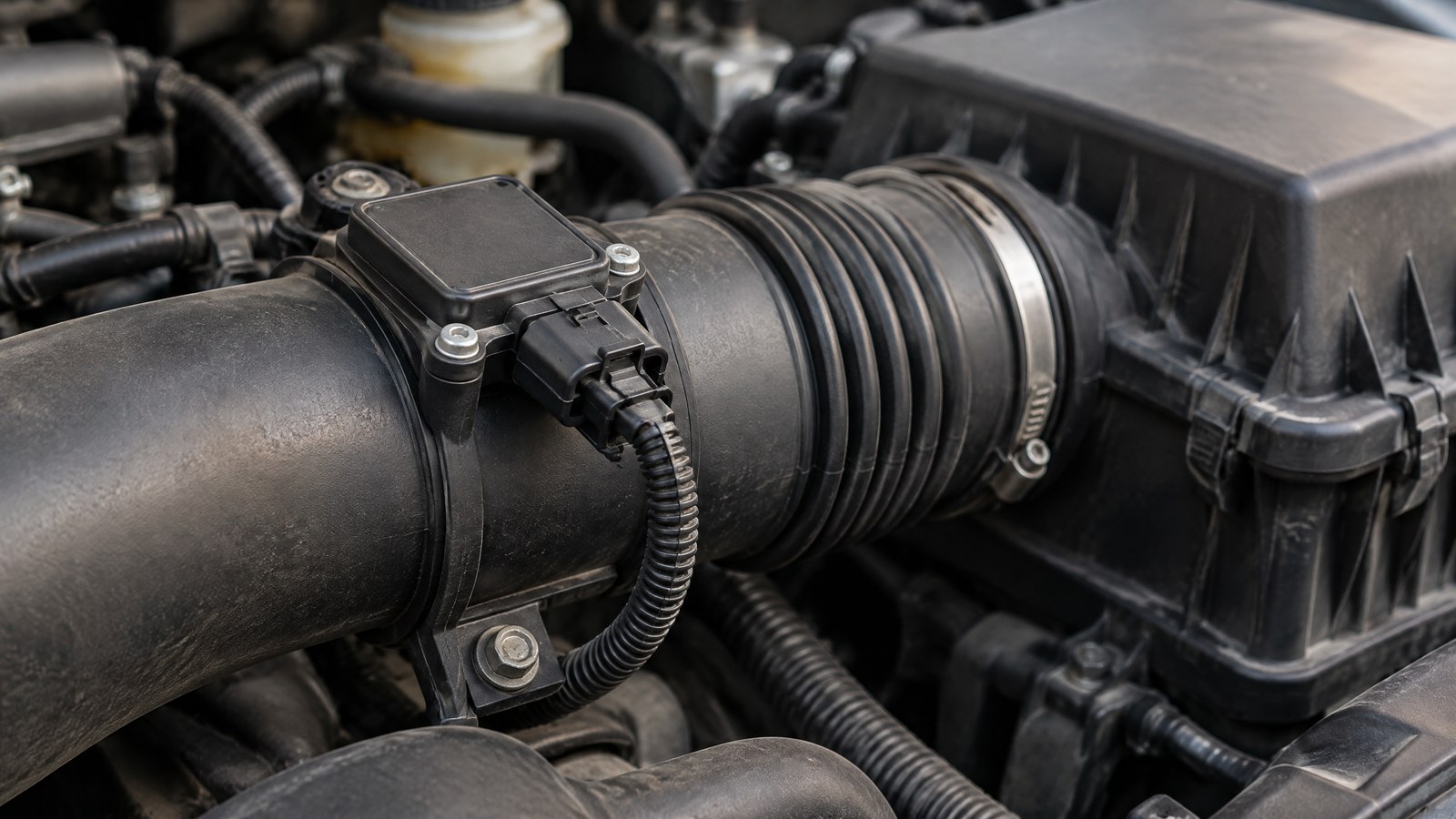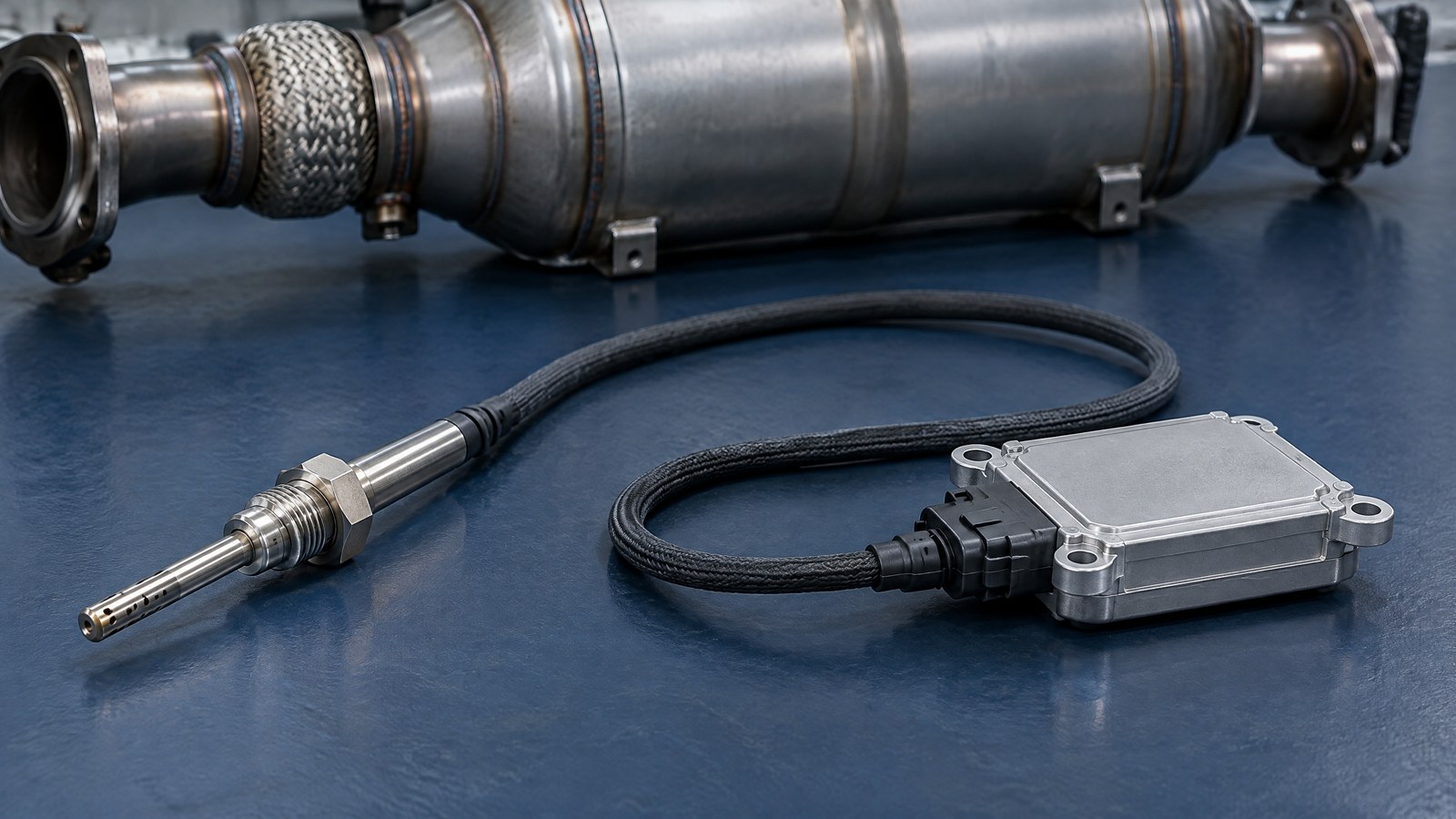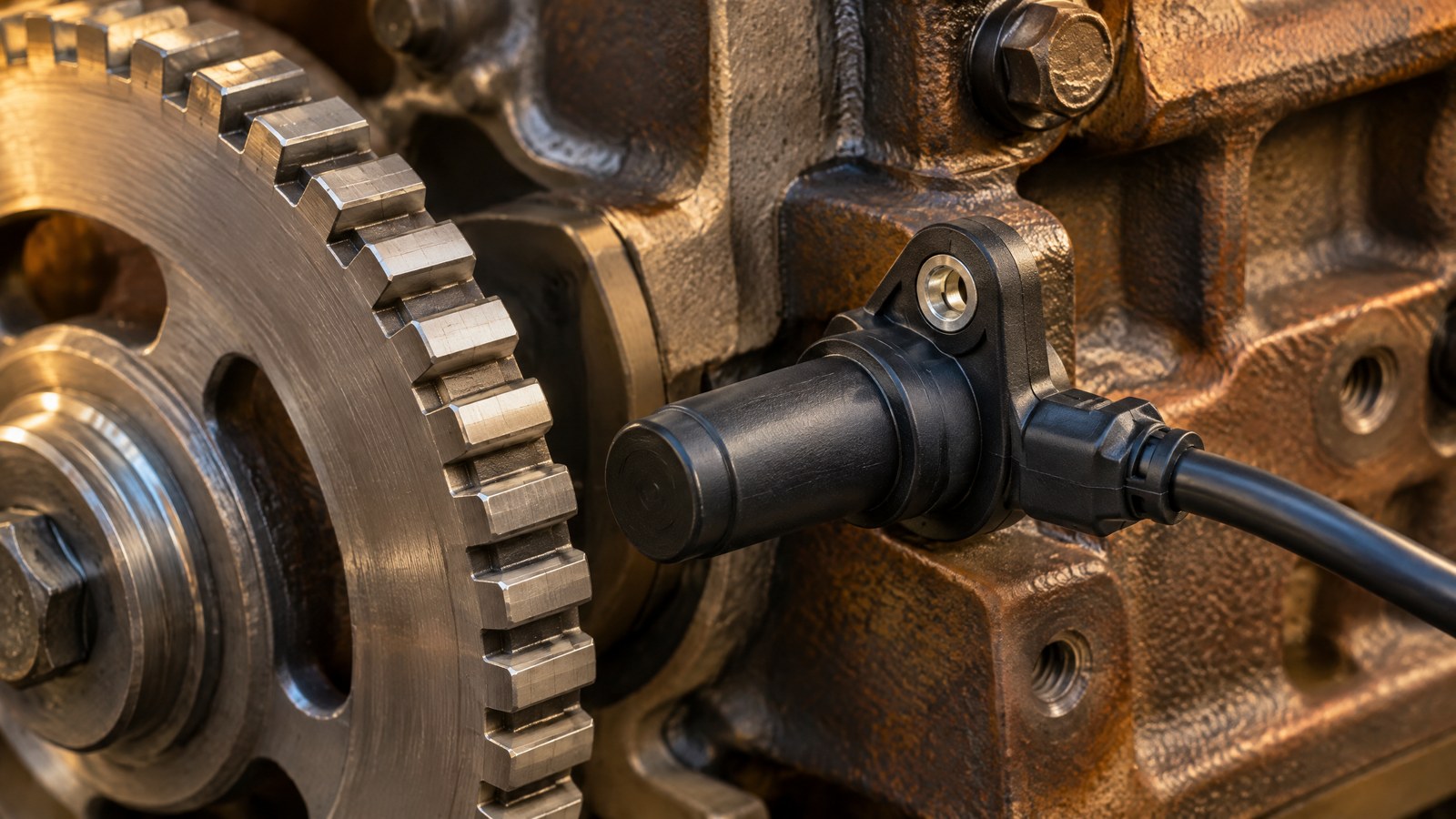
In a petrol or diesel vehicle equipped with one, an oxygen, or lambda, sensor gives the engine controller a view of leftover oxygen in exhaust gas rather than a direct reading of the fuel in the tank. That distinction explains why the sensor matters for combustion control and catalyst monitoring, yet cannot by itself certify fuel quality or measure every pollutant leaving the tailpipe.
On this page 4 sections
Part of our computer hardware technology guide library
Oxygen / Lambda Sensor: Exhaust Feedback, Not a Full Emissions Test
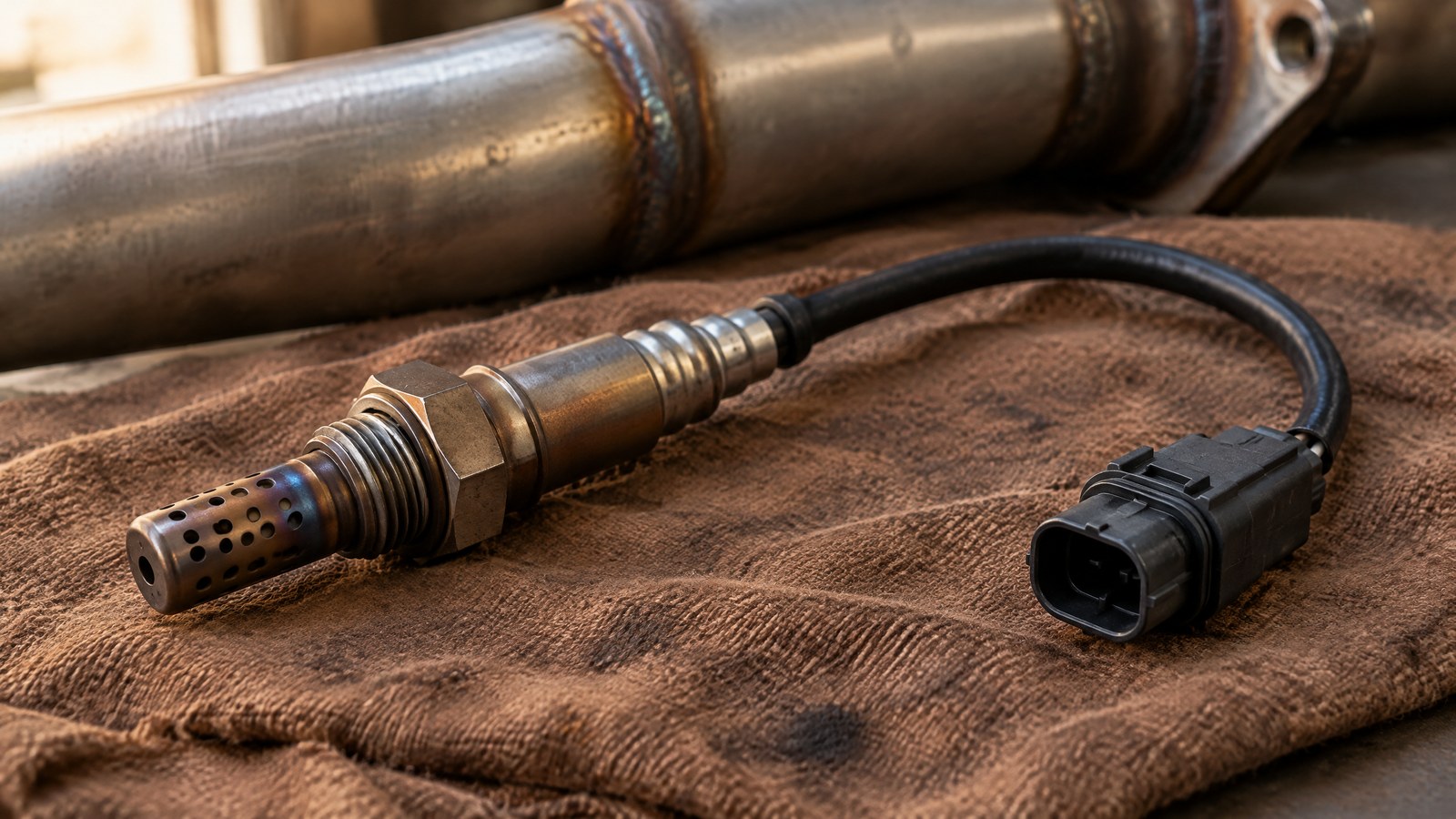
An oxygen/lambda sensor is an exhaust-mounted sensor that helps the engine control unit, or ECU, judge whether combustion is on the lean or rich side of a target mixture. It does this by sensing residual oxygen in exhaust gas. Bosch describes this exhaust feedback as input the ECU uses to optimise the air/fuel mixture for combustion [1]. The sensor is therefore part of a feedback system: it reports one relevant condition, while the ECU considers it alongside other vehicle inputs and its own control logic.
AI-generated editorial illustration of generic oxygen/lambda-sensor hardware in an exhaust-system context, not a photograph of a tested product or an actual field measurement.
Residual oxygen becomes lambda feedback
“Lambda” is a dimensionless way of expressing the air-fuel relationship relative to a stoichiometric reference point. At lambda 1, the mixture is at that reference point; below or above it describes a richer or leaner condition respectively. The important reader-level point is that the sensor responds to oxygen left in the exhaust after combustion. It does not directly identify the petrol, diesel, ethanol blend, contaminant or additive that entered the tank.
After the sensor reaches its operating temperature, its signal can let the ECU refine mixture control where that vehicle’s design uses closed-loop feedback. A modern sensor contains a ceramic sensing element and often an integrated heater because an exhaust location is a demanding thermal environment. Bosch’s switching-type design, for example, combines a measurement cell and central heater in a planar element [1]. Those construction details help explain why a correct interpretation depends on the vehicle’s specific system rather than a generic reading.
Narrowband and wideband sensors answer different questions
A switching-type, often called narrowband, lambda sensor is especially informative close to the stoichiometric transition. Bosch says its signal changes immediately as operation moves from lean to rich at that point [1]. In plain terms, it is well suited to telling the controller which side of the target it is on around that crossover. It is not a precise, universal measure of mixture strength throughout every operating condition.
A wideband sensor is designed for a broader measurement range. Bosch describes a zirconia element with a Nernst measurement cell and an oxygen pump cell, allowing residual oxygen to be determined across a wide range for calculating air-fuel ratio [2]. DENSO similarly distinguishes an air/fuel-ratio sensor from a traditional oxygen sensor by its higher sensitivity and different signal behaviour [3]. In common usage, “wideband,” “air/fuel-ratio sensor” and “lambda sensor” can overlap, so the vehicle documentation and exact part specification matter more than a label alone.
The distinction is not merely a matter of more or fewer wires, a scan-tool screen or a dashboard warning. It is about the information available to the controller. A switching sensor is built to detect the crossover cleanly; a wideband design can supply more continuous information over a broader range. Neither format turns the car into a laboratory-grade tailpipe analyser.
Before and after the catalyst, the question changes
Where a vehicle uses both locations, an upstream sensor is placed before the catalytic converter, where its exhaust-oxygen feedback can help the engine-management system regulate combustion. A downstream sensor is placed after the converter, where its pattern can be compared with the upstream signal as part of catalyst monitoring. The placement changes the context of the data; it does not make one sensor a direct measurement of every harmful exhaust constituent.
A useful technical caution comes from an EPA report on the dual-sensor catalyst-monitor concept. It explains that systems compare the behaviour of sensors before and after the catalyst, including signal amplitude, frequency or phase, to quantify oxygen storage. The report states that this approach measures oxygen storage rather than catalyst efficiency directly, even though oxygen storage can be related to hydrocarbon conversion in the catalyst designs under discussion [4]. The report is a 1996 technical source, so it is best used here for the measurement principle, not as a statement of current Indian regulation or a diagnosis rule for any vehicle.
Important Points / Key Information
Key Takeaways
- The oxygen/lambda sensor measures residual oxygen in exhaust, not fuel quality in the tank or every pollutant at the tailpipe [1].
- Switching sensors are most informative around lambda 1, while wideband designs can determine residual oxygen over a broader range [1] [2].
- A before-and-after-catalyst comparison can support on-board monitoring, but it is an indirect view of catalyst behaviour rather than a complete emissions test [4].
- A warning light, stored fault code or unusual running behaviour needs model-specific professional interpretation; no single oxygen-sensor value proves the cause.
What the reading cannot establish
An oxygen/lambda sensor cannot certify that a fuel batch is genuine or suitable, confirm that an exhaust system meets every applicable emissions requirement, or establish the concentration of all gases and particles in the exhaust. It also cannot independently separate a sensor problem from every possible issue that affects exhaust oxygen, such as a condition elsewhere in the engine-management or exhaust system. This is why treating a code description or a single data point as a final answer can lead to an incorrect repair decision.
The same limit applies to fuel-economy claims. Mixture feedback can contribute to efficient combustion when the complete system is functioning as designed, but one sensor does not predict a particular vehicle’s kilometres per litre. Traffic, ambient conditions, driving pattern, vehicle maintenance and the powertrain design all matter. The role of this article is to explain the sensor’s information, not to promise a consumption result.
Why exact fitment and qualified review matter
DENSO notes that conventional oxygen and air/fuel-ratio sensors produce different signals and cannot simply be exchanged [3]. That is a useful safety and reliability lesson without becoming an installation instruction: an oxygen/lambda sensor is a calibrated component within a vehicle-specific control system. A parts decision or diagnosis should use the manufacturer’s service information for the exact vehicle and be reviewed by a suitably trained technician.
The sensor also works in a very hot part of the vehicle. Do not handle or attempt work on exhaust components until the vehicle is safely cool, and do not bypass emissions controls or disable warning systems. For broader background on how a sensor converts a physical condition into a signal, see the related explainer.
Examples / Supporting Information
Hypothetical India-use scenario: urban stop-and-go driving
Hypothetical example: a petrol car used for short, congested trips in Bengaluru or Delhi may spend a meaningful share of a journey warming up, idling or accelerating and slowing repeatedly. Once its exhaust-feedback system is operating, the ECU can use the oxygen/lambda signal within its own strategy to refine mixture control. That does not mean a driver can look at an oxygen-sensor-related warning and conclude that the fuel, catalyst or sensor alone is at fault. The scenario illustrates why system context matters, especially when trip pattern and temperature vary.
Sourced supporting comparison: signal shape versus measurement range
The manufacturer descriptions provide a practical comparison. Bosch says a switching-type sensor identifies the stoichiometric point with a jump as the mixture crosses lean and rich [1]. Its wideband description says the sensor determines exhaust oxygen over a wide range with a measurement cell and oxygen pump cell [2]. DENSO’s explanation adds that an air/fuel-ratio sensor provides higher sensitivity than a traditional oxygen sensor [3]. Together, these sources support a careful conclusion: the difference is the kind and range of feedback available to the control system, not a promise that one sensor alone will diagnose an entire vehicle.
Interpreting a catalyst-monitoring example carefully
Imagine a workshop evaluating a vehicle that has recorded an emissions-related fault. A qualified professional may consider vehicle-specific diagnostic information, stored data and the relationship between upstream and downstream feedback. The EPA’s dual-sensor explanation shows why that comparison can be relevant to catalyst monitoring, while also showing the limit: it is based on an oxygen-storage-related signal relationship, not a direct sampling of every pollutant [4]. No universal voltage, threshold, drive pattern or replacement decision should be inferred from this overview.
Conclusion
The oxygen/lambda sensor is best understood as an exhaust-feedback device. A switching sensor helps identify movement around a reference mixture, while a wideband design can provide more continuous information over a wider range. Upstream and downstream locations also serve different system questions: combustion feedback before the catalyst and comparative monitoring after it.
That value should not be overstated. The sensor is not a direct fuel-quality detector, a complete emissions test or a stand-alone diagnosis. For a real vehicle concern, use the model-specific service information and qualified human review rather than treating a warning light or a single sensor reading as conclusive.
How we checked thisSources (4)
We keep source links private so your reading stays on techduopulse. Each note names the publisher and document we checked.
Bosch Mobility: switching sensor identifies the stoichiometric crossover
Primary source · Exhaust feedback and switching sensorsBosch Mobility: wideband sensor measures residual oxygen across a wide range
Primary source · Narrowband and wideband comparisonDENSO Europe: air/fuel-ratio sensor and oxygen-sensor distinction
Primary source · Narrowband and wideband comparisonEPA technical report: dual oxygen-sensor catalyst-monitor principle
Primary source · Catalyst monitoring and limitsOwner-approved educational sensor explainer; obsolete private-draft status removed without changing source-backed facts or professional safety boundaries. Original generic AI editorial illustration, not a product or field-test photograph.