A mass air flow (MAF) sensor is an engine-management sensor that reports the mass of incoming air so the controller can calculate fuel delivery. This explainer shows why hot-film and hot-wire designs respond to heat loss rather than simply counting intake volume, and why an airflow-related warning needs diagnosis before a part is blamed.
On this page 6 sections
Part of our computer hardware technology guide library
What a Mass Air Flow Sensor Measures
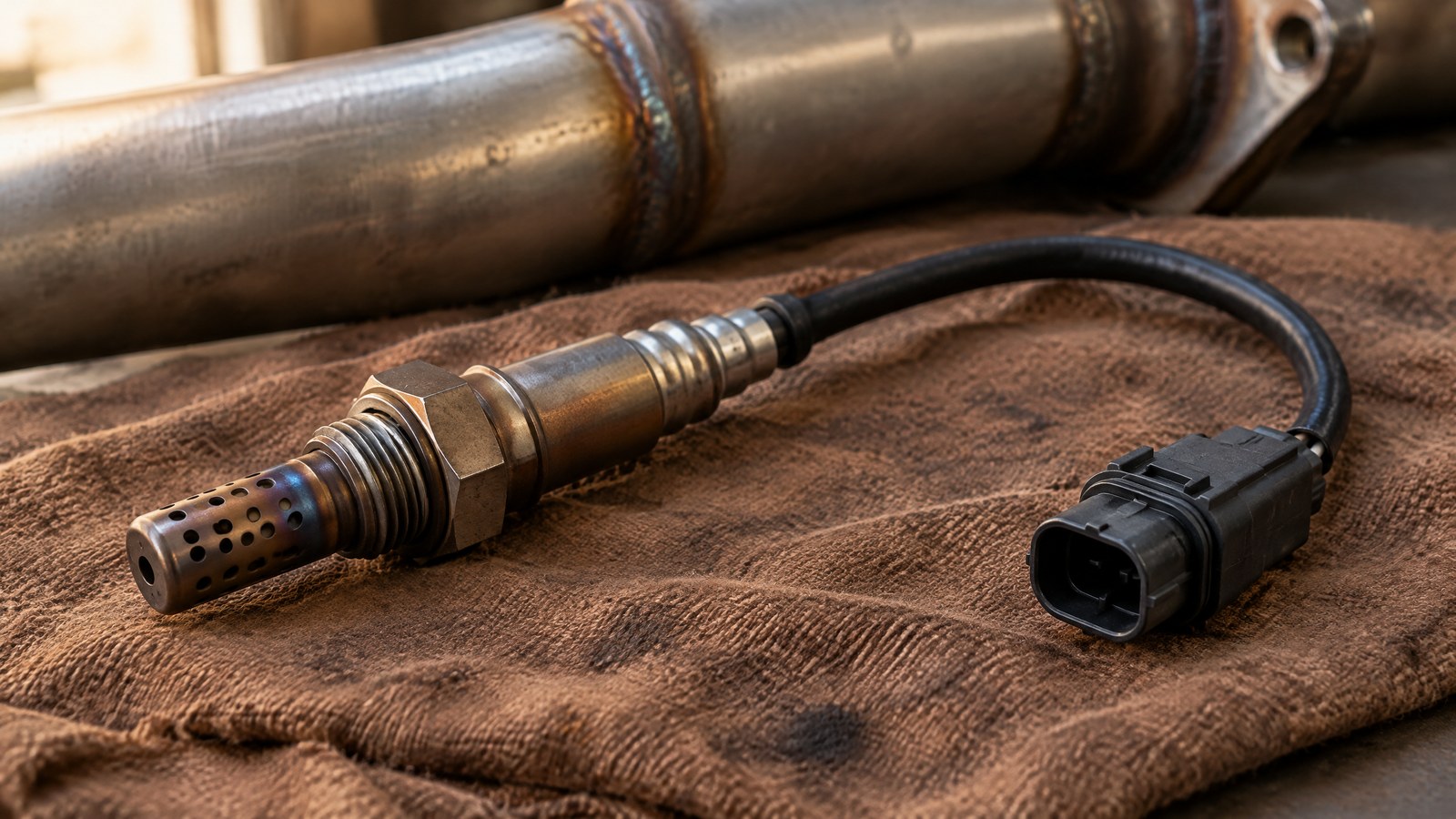
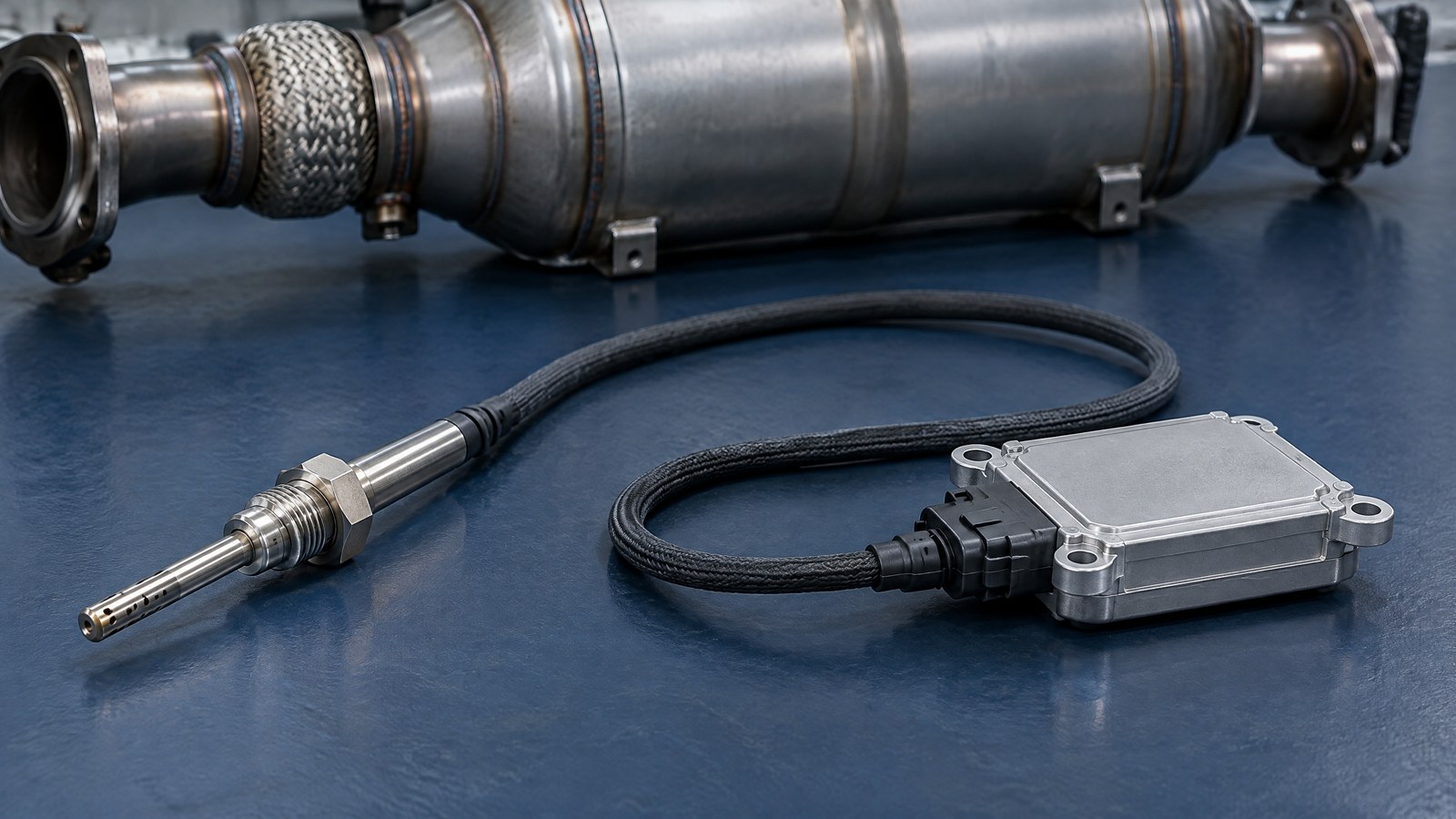
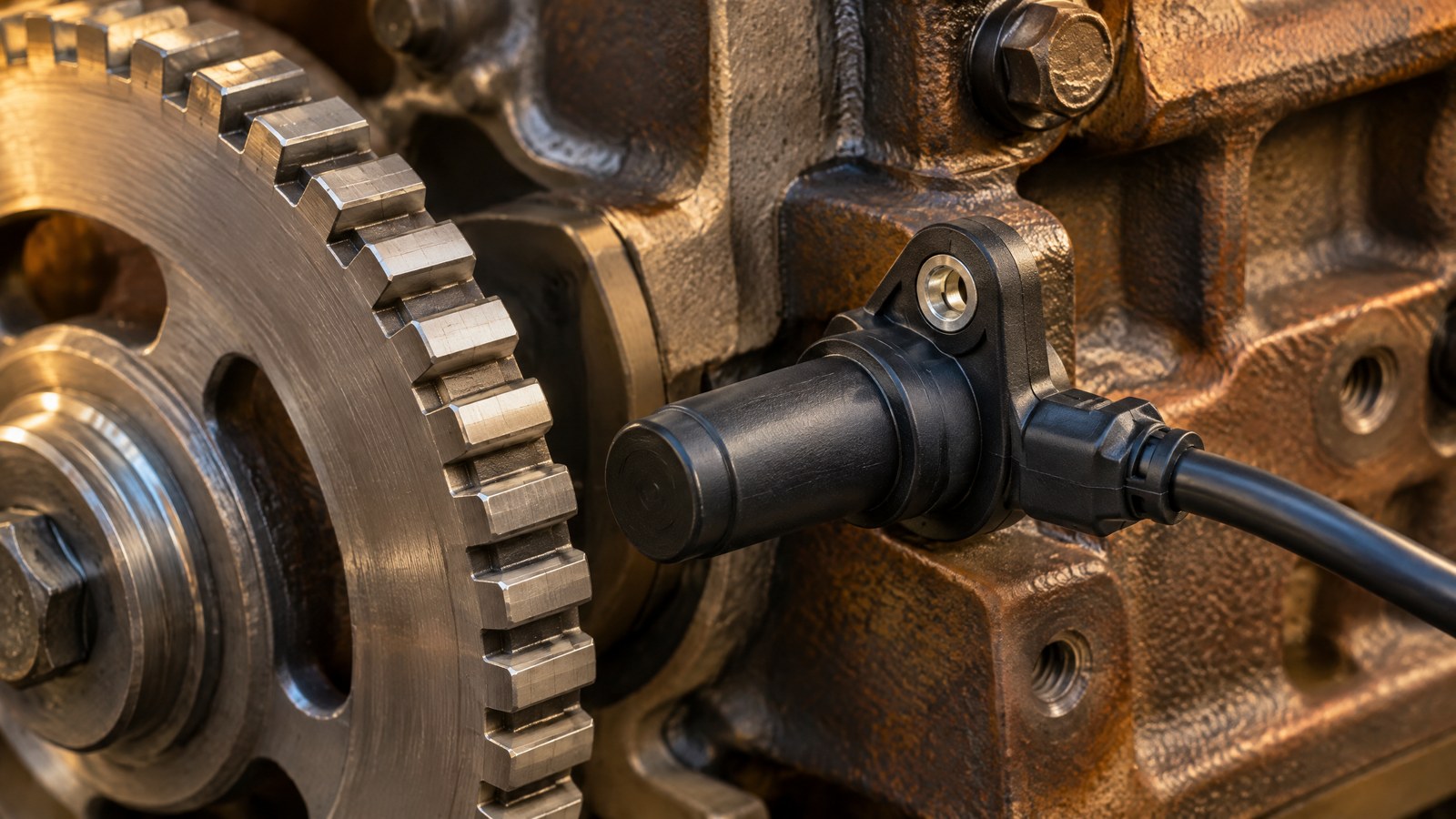
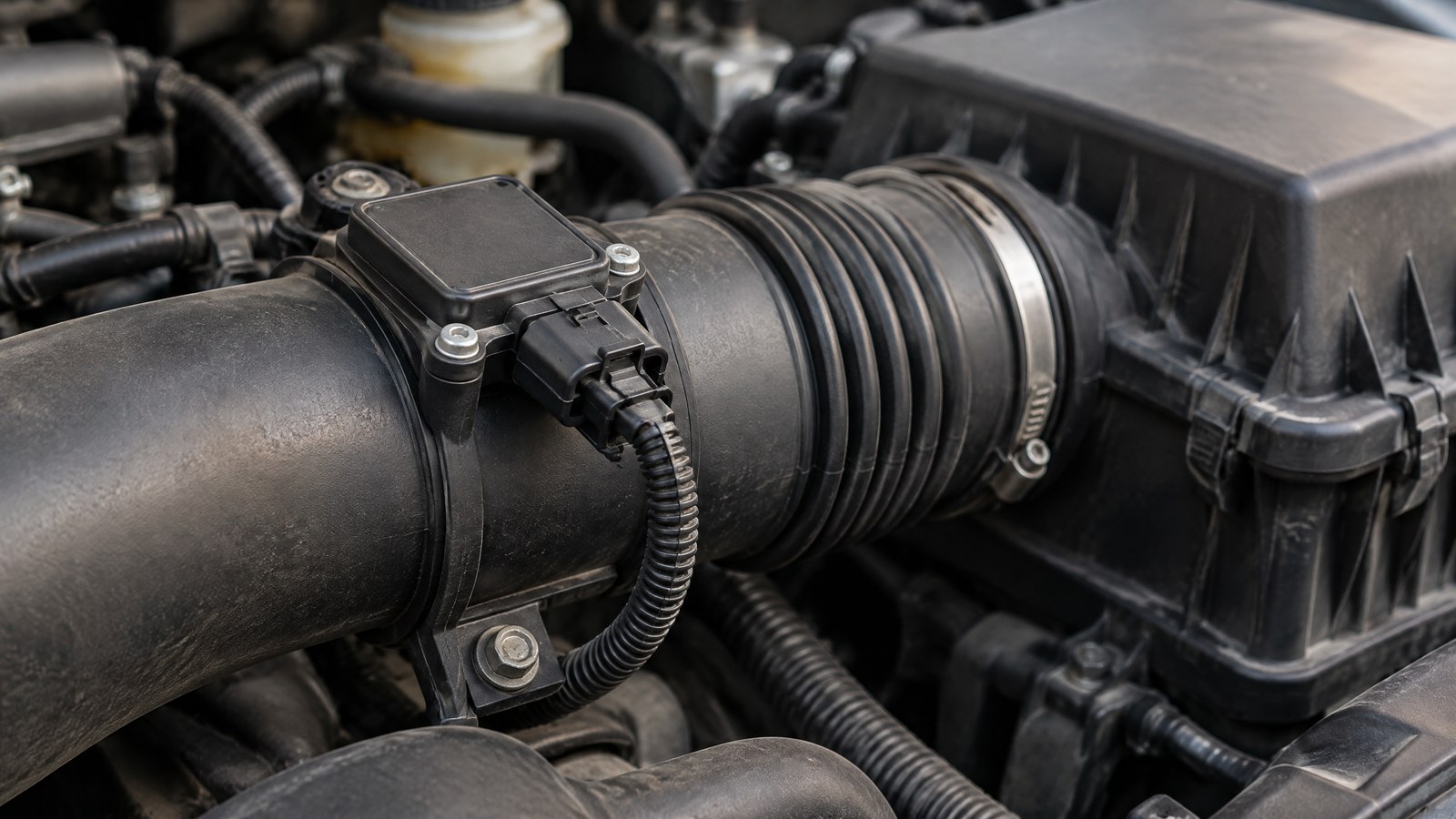
AI-generated editorial illustration of generic intake-air duct and mass air flow sensor hardware, not a photograph of a tested product or an actual field measurement.
A mass air flow sensor measures or calculates how much air mass enters the engine intake over time, then sends that result to the engine controller. The controller uses the signal when scheduling fuel injection. Bosch describes its hot-film meter as calculating air mass from a thermal difference and transmitting the result to the electronic engine control unit [1]; Delphi likewise describes the MAF as an intake-air measurement sent to the ECM [4].
Mass and volume are different. Volume describes the space a parcel of air occupies, while density changes with temperature and pressure. A thermal MAF uses the cooling effect of moving air to infer mass flow, so it gives the controller more useful context than a volume count alone.
Mass Is Not Simply Air Volume
Two equal-looking volumes of air can have different densities and therefore different air mass. The MAF gives the controller a measurement useful for estimating air available to pair with fuel, rather than merely a count of duct volume. DENSO explains that a common plug-in hot-wire design also makes intake-air temperature information available to the ECU so it can judge density and correct fuel quantity [2]. Exact architectures vary by vehicle.
How the Engine Controller Uses the Result
The MAF signal is one part of a larger control picture. With an air-mass estimate, the controller can calculate a fuel quantity for the operating condition. Bosch links this to matching injected fuel mass to air supply in the cylinder [1], and Delphi says the ECM uses the signal for fuel-injection scheduling [4].
How Hot-Film and Hot-Wire MAF Sensors Work
Many MAF sensors are thermal instruments. They keep a sensing element heated in moving intake air and use the air’s cooling effect as measurement information. More airflow changes that thermal response, and electronics turn the change into a signal the controller can use. This differs from mechanically counting duct volume alone [1] [3].
Hot-Film: A Membrane with Measurement Fields
Bosch’s hot-film description uses a heated sensor membrane with resistors on two defined measurement fields. More air across the membrane increases the temperature difference between those fields; integrated electronics calculate air mass from that difference [1]. The membrane, resistors, electronics and housing form one measurement system.
Hot-Wire: Current Needed to Offset Cooling
Delphi describes a common hot-wire arrangement with a heated sensing wire and an unheated reference wire. Airflow cools the heated wire and changes the temperature difference. The sensor changes current to compensate, and its electrical response can be passed to the ECU as a frequency or voltage signal [3].
Designs and controller logic vary. Vehicle-specific documentation is needed for professional electrical assessment, and this article provides no wiring, testing or replacement procedure.
Why the Bypass and Flow Tube Are Part of the Measurement
The sensing element does not always sit in the full intake stream in the same way. DENSO describes a design that routes some air through a bypass measurement area and says its passage design is intended to reduce pulsations and exposure to contaminants [2]. Delphi also distinguishes complete flow-tube units from probe-only designs [4].
Symptoms Are Clues Rather Than Proof
DENSO lists unstable idle, hesitation, stalling and other drivability problems as possible effects when a MAF is damaged or contaminated [2]. Delphi names similar signs and says other ignition and fuel-system faults may look alike [3]. These are reasons to investigate, not a home diagnosis or a reason to buy a sensor.
A diagnostic trouble code can indicate that the controller noticed a circuit or performance concern, but it does not identify the root cause. DENSO notes that a clogged MAF passage may be associated with poor running or stalling and may not set a diagnostic trouble code [2].
Diagnosis Looks at the Whole Intake and Control Context
A qualified review can distinguish among a contaminated or damaged sensing element, a connector or wiring concern, an air-path leak, a problem with the surrounding housing, and other engine-management faults that imitate a MAF problem. These are hypotheses to resolve with manufacturer-specific information, not a remote checklist that confirms one fault.
Do not touch, clean, disconnect or replace an intake-air measuring component solely because an online symptom list seems to match. DENSO warns that cleaning a contaminated sensor may damage delicate hardware [2].
Important Points / Key Information
The points below summarise what a MAF sensor can tell you and what it cannot establish on its own.
Key Takeaways
- A mass air flow sensor supplies intake-air mass information to the engine controller for fuel-delivery calculations [1] [4].
- Hot-film designs infer air mass from temperature differences across a heated membrane; hot-wire designs use the electrical response needed to offset cooling [1] [3].
- Air mass gives more useful context than a simple volume description because density changes with conditions [2].
- A warning light, rough running or a code can justify professional investigation, but none proves the MAF sensor is the failed part [2] [3].
Measurement Limits That Matter
Hypothetical scenario: a commuter car used through dusty traffic and seasonal rain begins to idle unevenly and shows an engine warning. Calling that a “bad MAF sensor” would be premature. The intake-air measurement and its surroundings deserve inspection, while other causes remain possible.
The Indian context does not create a special MAF rule. Airborne dust, heat and service history can affect an intake system, yet a symptom still requires diagnosis rather than a presumption about one part. DENSO identifies poor or incorrectly installed air filtration as a possible route to MAF contamination or damage [2].
Examples / Supporting Information
Bosch gives a useful hot-film mental model: air passes a heated membrane; resistors observe temperatures at two measurement fields; more airflow changes their temperature difference; integrated electronics calculate and send an air-mass result to the engine control unit [1]. This explains the sensing chain, not a particular vehicle’s hardware.
DENSO adds that one common plug-in hot-wire arrangement measures an intake-air bypass and makes temperature information available to help the ECU judge density [2].
Hypothetical India-Use Scenario
If a vehicle shows an engine warning or persistent drivability problem, record the symptom and seek a qualified diagnosis with the exact model and engine information. Ask for the identified cause and supporting evidence rather than authorising a part because a generic symptom list appears to match.
Source-Supported Design Example
Bosch describes a hot-film chain in which air moving over a heated membrane changes the temperature relationship at two measurement fields. Its electronics calculate the air mass and transmit the result to the engine control unit [1].
Delphi’s hot-wire description offers a contrasting example: a heated and unheated sensing wire are compared; airflow cools the heated wire, and the sensor adjusts its current. The resulting response can be represented as frequency or voltage for the ECU [3]. These examples describe technology families rather than an identification guide for any one vehicle.
Conclusion
A mass air flow sensor helps a car estimate incoming air mass by reading a thermal effect and passing a calculated signal to the engine controller. Hot-film and hot-wire designs share that heat-transfer idea but differ in element layout, signal handling and installation context. The mass-versus-volume distinction explains why this sensor is central to fuel calculations.
Its importance should not turn it into a guess. Similar symptoms can have different causes, so the sensor, housing, intake path and other control inputs need model-specific assessment.
How we checked thisSources (4)
We keep source links private so your reading stays on techduopulse. Each note names the publisher and document we checked.
Bosch Mobility hot-film air-mass meter operating principle
Primary source · How Hot-Film and Hot-Wire MAF Sensors WorkDENSO mass air flow sensor location and hot-wire context
Primary source · Mass Is Not Simply Air VolumeDelphi MAF thermal-sensing and diagnostic context
Primary source · Why MAF-Related Faults Are Not a Parts-Guessing ExerciseDelphi MAF-to-ECM function and assembly context
Primary source · What a Mass Air Flow Sensor MeasuresOwner-approved educational sensor explainer; obsolete private-draft status removed without changing source-backed facts or professional safety boundaries. Original generic AI editorial illustration, not a product or field-test photograph.