An oil pressure sensor monitors pressure in part of an engine’s lubrication system and communicates a signal to the vehicle’s warning or control system. Its reading can help flag a problem, but it cannot tell by itself whether the cause is the sensor, its connection, the oil supply, or an internal engine condition.
This article is part of the computer hardware technology guide library.
How an Oil Pressure Sensor Fits Into Engine Monitoring
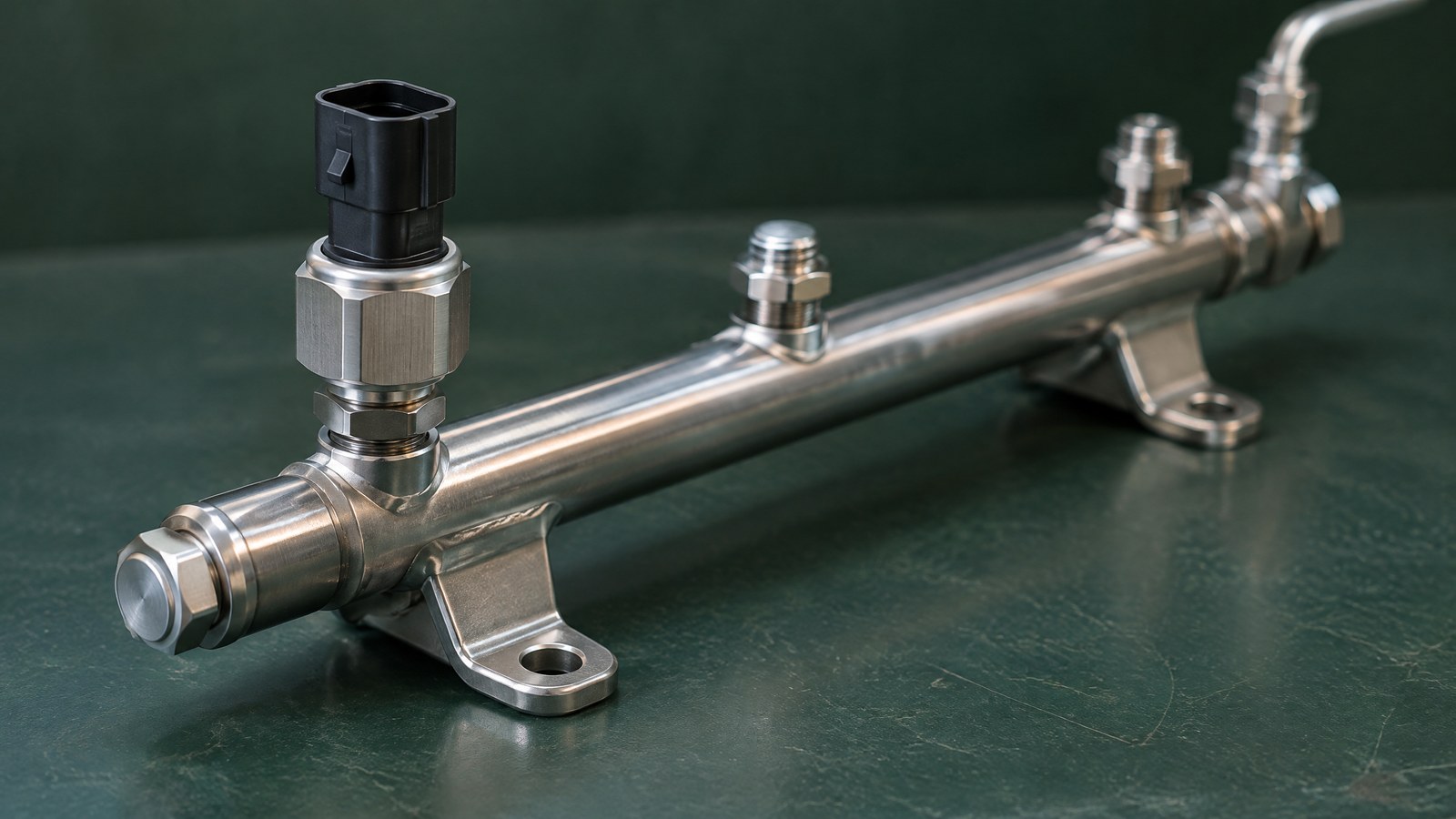
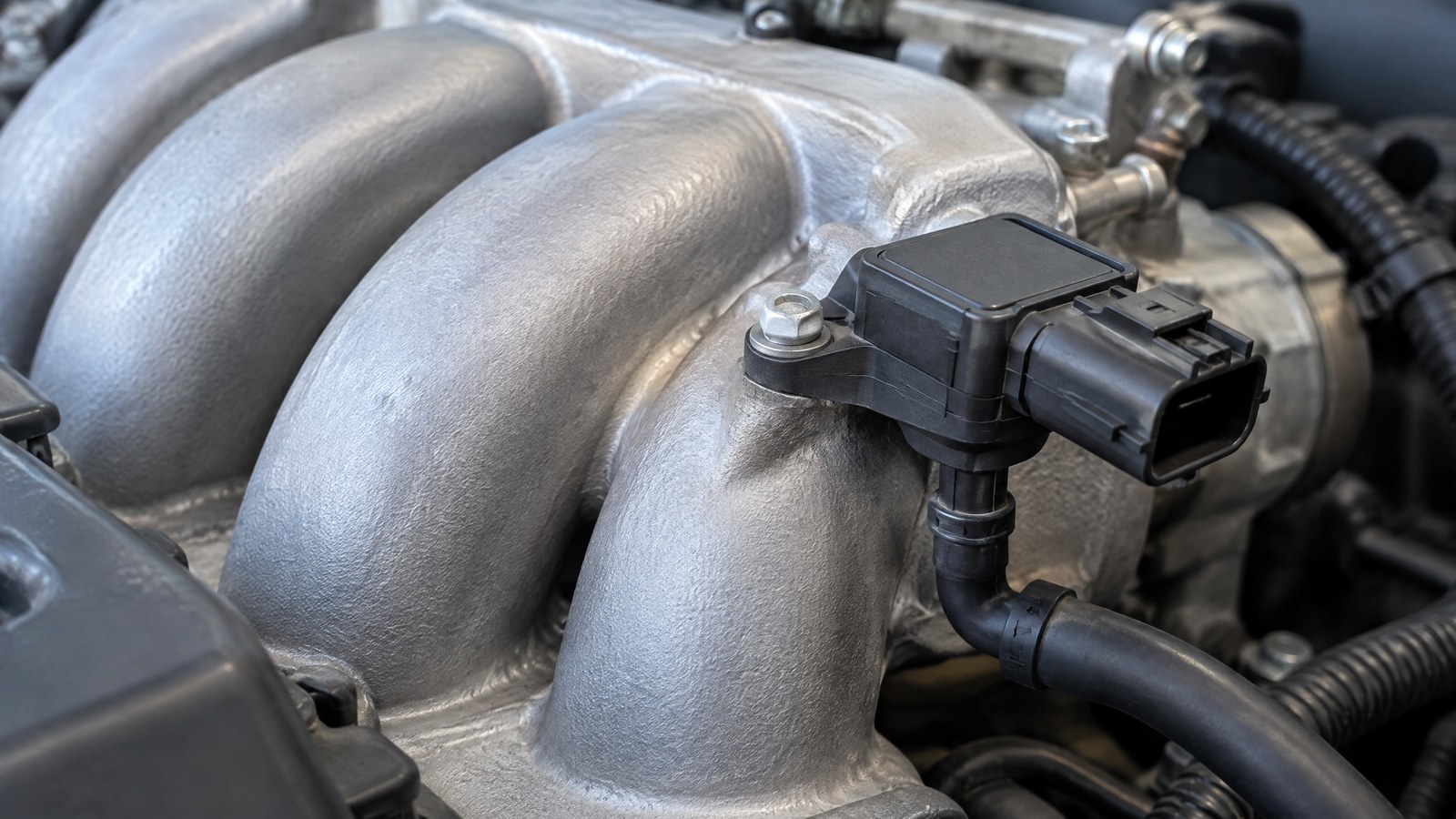
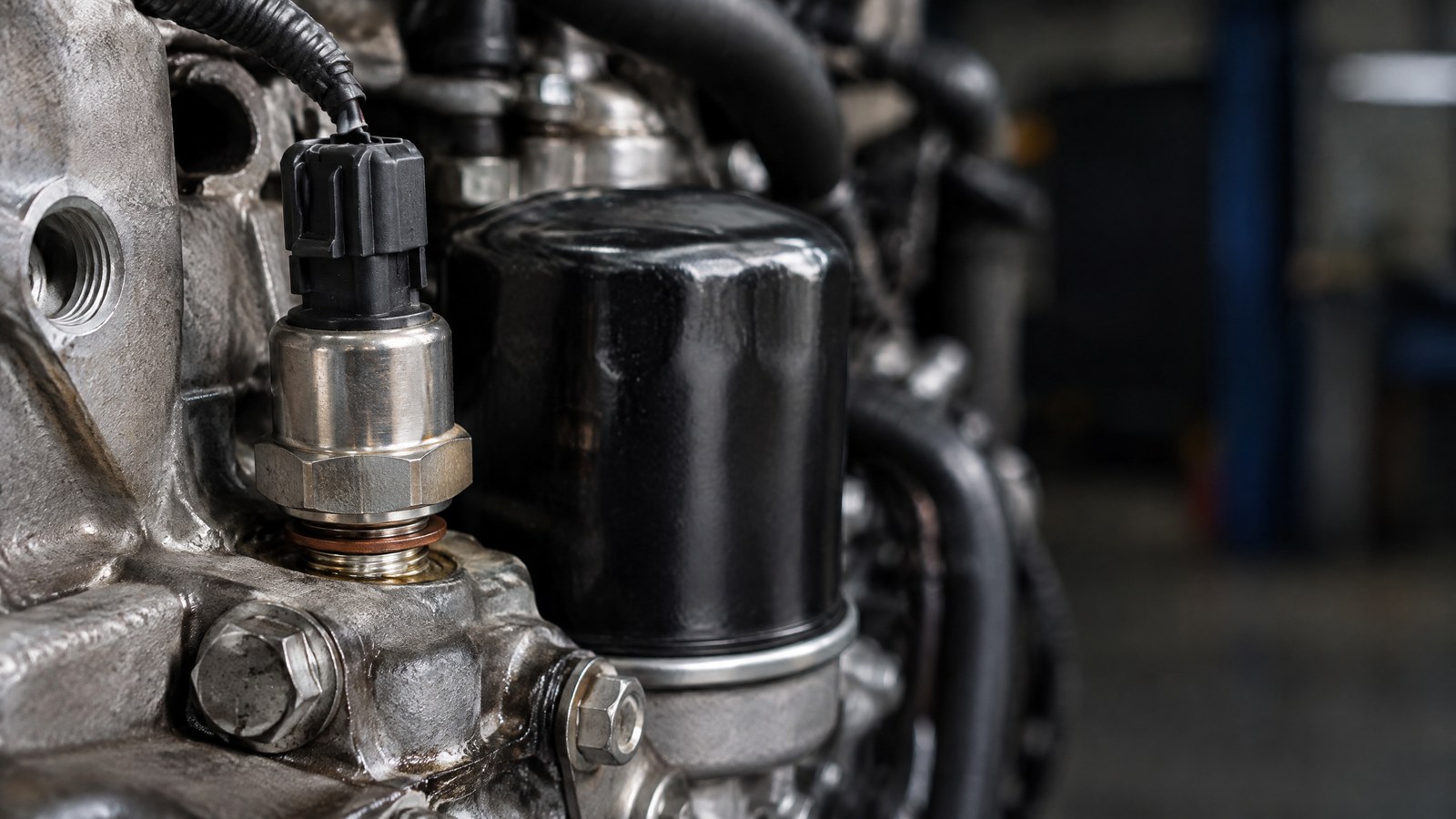
AI-generated editorial illustration of generic oil-pressure-sensor hardware in an engine-lubrication context, not a photograph of a tested product or an actual field measurement.
An engine needs its lubrication system to circulate oil through designed passages. An oil-pressure sensor or switch gives the vehicle information about pressure at its designated mounting point. Bosch describes a pressure-sensor design that measures fuel or oil pressure through the distortion of a sensing membrane and can send readings as an analogue or digital signal [1]. The exact construction, signal type and vehicle response vary by engine and manufacturer.
The useful distinction for a vehicle owner is that the component measures or monitors pressure; it does not create pressure, pump oil, repair a blockage or supply lubrication. A warning can therefore point to a sensor or wiring concern, but it can also reflect a real condition elsewhere in the lubrication system. Treating a warning as proof that one inexpensive part must be replaced can delay the correct assessment.
For the broader principle behind pressure measurement, see the site’s pressure sensor working principle explainer.
Sensor and switch are related but not identical
The term “oil pressure sensor” is often used loosely. Some vehicles use a sensor that provides a changing electrical signal; others use an oil-pressure switch that changes state at a vehicle-specific point to control a warning light or pressure indicator. HELLA describes an oil-pressure switch installed in the engine oil circuit to monitor pressure and turn a warning light or indicator on or off [2].
Neither description should be used to identify a part by appearance alone. Vehicle makers may use different designs, connectors, locations, display logic and service information. The correct name and function come from the vehicle-specific documentation, not from a generic internet listing.
Why a warning deserves prompt attention
A dashboard warning is not a workshop diagnosis, but it should not be ignored. The 2025 Mazda CX-50 owner’s manual states that its engine-oil warning light comes on when engine-oil pressure decreases and tells the driver to stop safely and stop the engine if it illuminates while driving [3]. Other vehicles can show different messages or use different indicator systems, so the owner’s manual remains the first reference for a particular vehicle.
A warning can arise from a sensor, a switch, a connector, a signal path, an oil leak, oil level or a lubrication-system condition. It is unsafe to guess from the warning alone. If the vehicle shows an engine-oil warning or develops unusual engine noise, stop in a safe place where possible, switch off the engine and arrange qualified, vehicle-specific assessment instead of repeatedly restarting or continuing to drive.
Important Points / Key Information
An oil-pressure component is a monitoring device. It provides information about the lubrication system at its measurement point, while the pump, oil passages, filter, seals and internal engine parts perform different physical roles. The signal is useful, but it is not a complete diagnosis.
Key Takeaways
- An oil-pressure sensor can convert pressure at its installation point into an electrical signal for a vehicle system [1].
- An oil-pressure switch can monitor pressure and operate a warning light or indicator, but it is not the same design as every variable-output sensor [2].
- A warning or irregular display can have more than one cause; it does not prove that the sensor must be replaced.
- An active engine-oil warning should be handled according to the relevant owner’s manual and assessed promptly by a qualified professional [3].
Symptoms need context, not a replacement decision
An illuminated oil-pressure warning, a flickering indicator, an unexpected pressure display, visible oil around a component or a stored electrical fault can all justify inspection. These signs may involve the monitoring component or its connection, but they can also accompany a genuine oil-pressure or lubrication issue. HELLA lists a warning light that stays on or fails to illuminate, an inoperative indicator and oil leaks among possible effects of oil-pressure-switch faults [2].
The safest interpretation is narrow: a symptom signals that the vehicle needs the right assessment. It is not an instruction to fit a part, bypass a warning, clear a code repeatedly or use an online pressure value. A qualified workshop can identify the correct vehicle documentation and decide what evidence is appropriate for that engine.
What an owner can do safely
For routine ownership, follow the vehicle maker’s oil-grade, oil-level and maintenance guidance. Keep an eye out for obvious leaks and do not ignore an engine-oil warning. When checking an oil level is allowed by the owner’s handbook, use that handbook’s conditions and method; an oil level is not the same thing as a confirmed oil-pressure reading.
Avoid opening pressurised or hot engine components, disconnecting sensor connectors to experiment, or treating a warning lamp as an inconvenience. The article does not provide circuit testing, mechanical pressure testing, sensor removal, seal selection, torque, reset, calibration or replacement instructions because those procedures depend on the engine and can create safety, leakage or engine-damage risks when performed incorrectly.
Examples / Supporting Information
The examples below explain component roles. They are not repair instructions, universal diagnostic thresholds, fault confirmations or evidence about a particular vehicle.
A simplified monitoring path
In a generic vehicle design, engine oil pressure at a designated location acts on a sensor or switch. The component produces a signal or changes an electrical state. The relevant instrument cluster or control module then presents a warning or uses the information according to the manufacturer’s design. Bosch’s pressure-sensor overview documents a membrane-and-resistance-bridge approach for measuring oil pressure, while HELLA’s switch overview documents a warning-light-oriented switching role [1] [2].
This is why “the warning light is on” is incomplete evidence. A light can be responding to a real pressure condition, an oil-level or lubrication issue that needs attention, a sensor or switch problem, a wiring concern, or a vehicle-specific monitoring condition. The correct next step is to preserve the warning information and get vehicle-specific help rather than assume the component’s identity or failure mode.
Hypothetical India service discussion
**Hypothetical scenario:** an owner notices an engine-oil warning during a normal journey. The safe response is to stop as conditions allow, stop the engine and use the owner’s manual and qualified service support for that vehicle. A responsible service discussion would establish the exact make, model, engine and warning message before identifying whether the issue concerns the monitoring component, its signal path or a lubrication-system condition.
The practical benefit of understanding the sensor’s role is better communication. An owner can ask whether the workshop has identified a genuine pressure concern, a monitoring-signal concern, or another lubrication-system issue. That keeps the discussion focused on evidence rather than on a presumed replacement part or a generic cost estimate.
Conclusion
An oil-pressure sensor or switch helps a vehicle observe a part of its engine-lubrication system, but it does not create oil pressure or diagnose every cause of a warning. Sensor and switch designs can differ, and an oil-pressure warning can reflect several conditions. The safe approach is to follow the vehicle maker’s guidance, stop and protect the engine when an active oil-pressure warning requires it, and use qualified vehicle-specific assessment rather than attempting testing or replacement from a generic guide.
Source notes
Reporting record
techduopulse stores source destinations privately. Public notes remain non-clickable so every visitor journey stays on this website.
Bosch Mobility — oil-pressure measurement principle
Primary source · How an oil pressure sensor fits into engine monitoringHELLA — oil-pressure switch monitoring and warning-light function
Primary source · Sensor and switch are related but not identicalMazda owner manual — engine-oil-warning safety response
Primary source · Why a warning deserves prompt attentionInitial publication of the source-backed oil pressure sensor explainer prepared 28 October 2026; owner-commanded manual release 30 October 2026. Educational only; no repair procedure or pressure values.