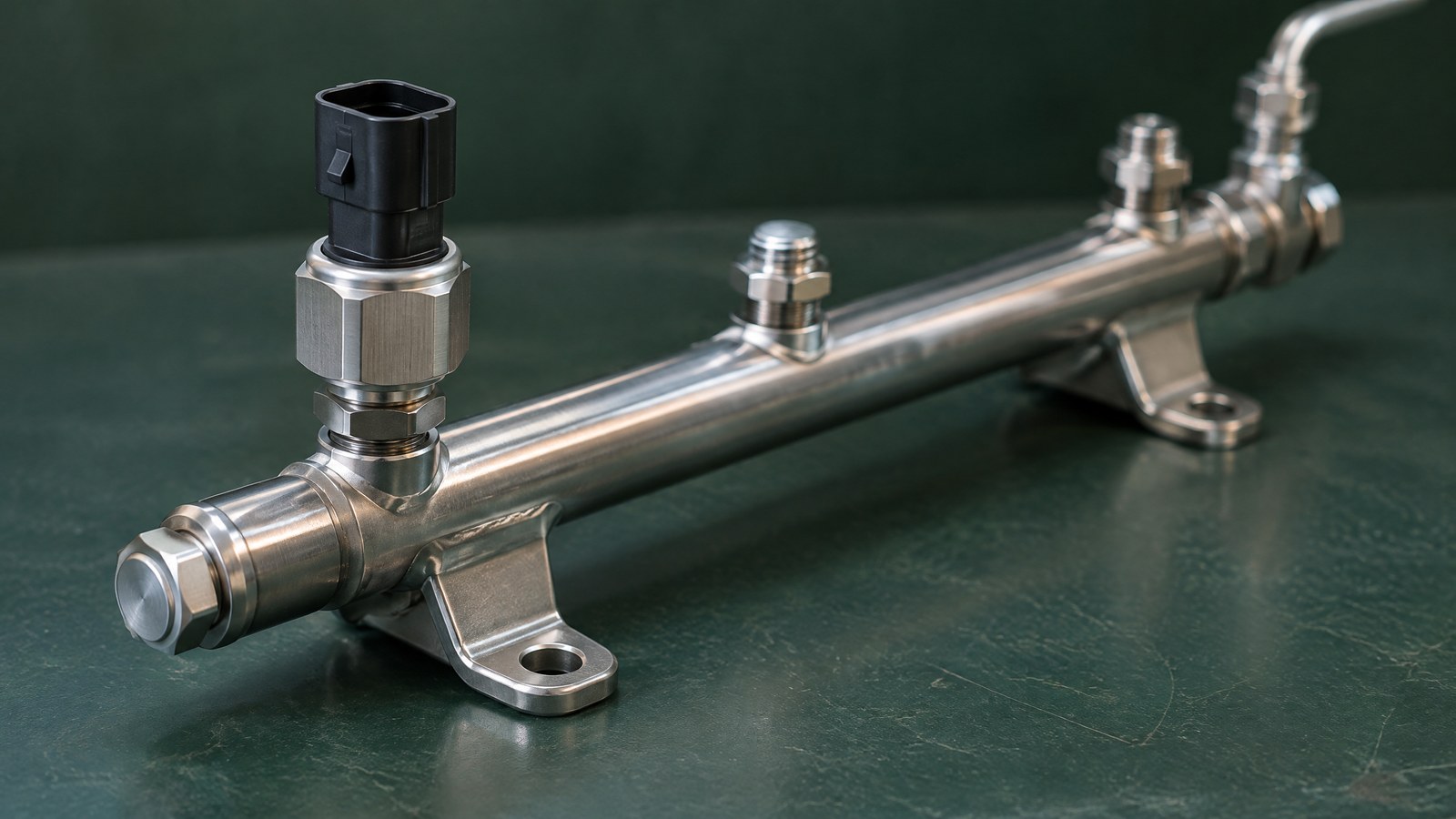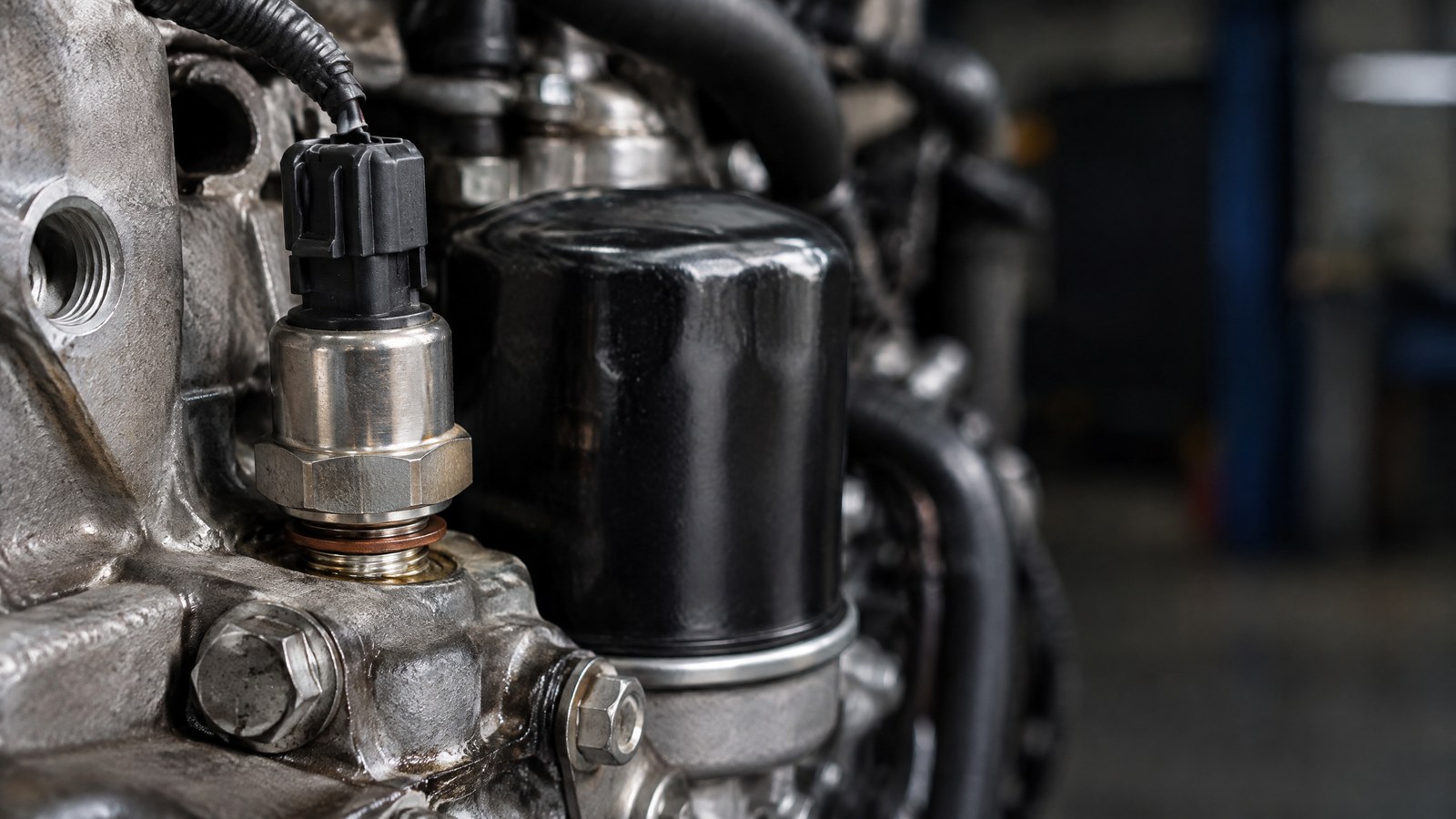
A manifold absolute pressure sensor gives an engine-control system a live view of pressure in the intake manifold, helping it judge the air conditions under which the engine is operating. Its useful story is not simply ‘more pressure’ or ‘less pressure’: the reading becomes meaningful only when the vehicle combines it with engine speed, temperature and other design-specific information.
This article is part of the computer hardware technology guide library.
How a MAP Sensor Turns Pressure into Engine-Load Context
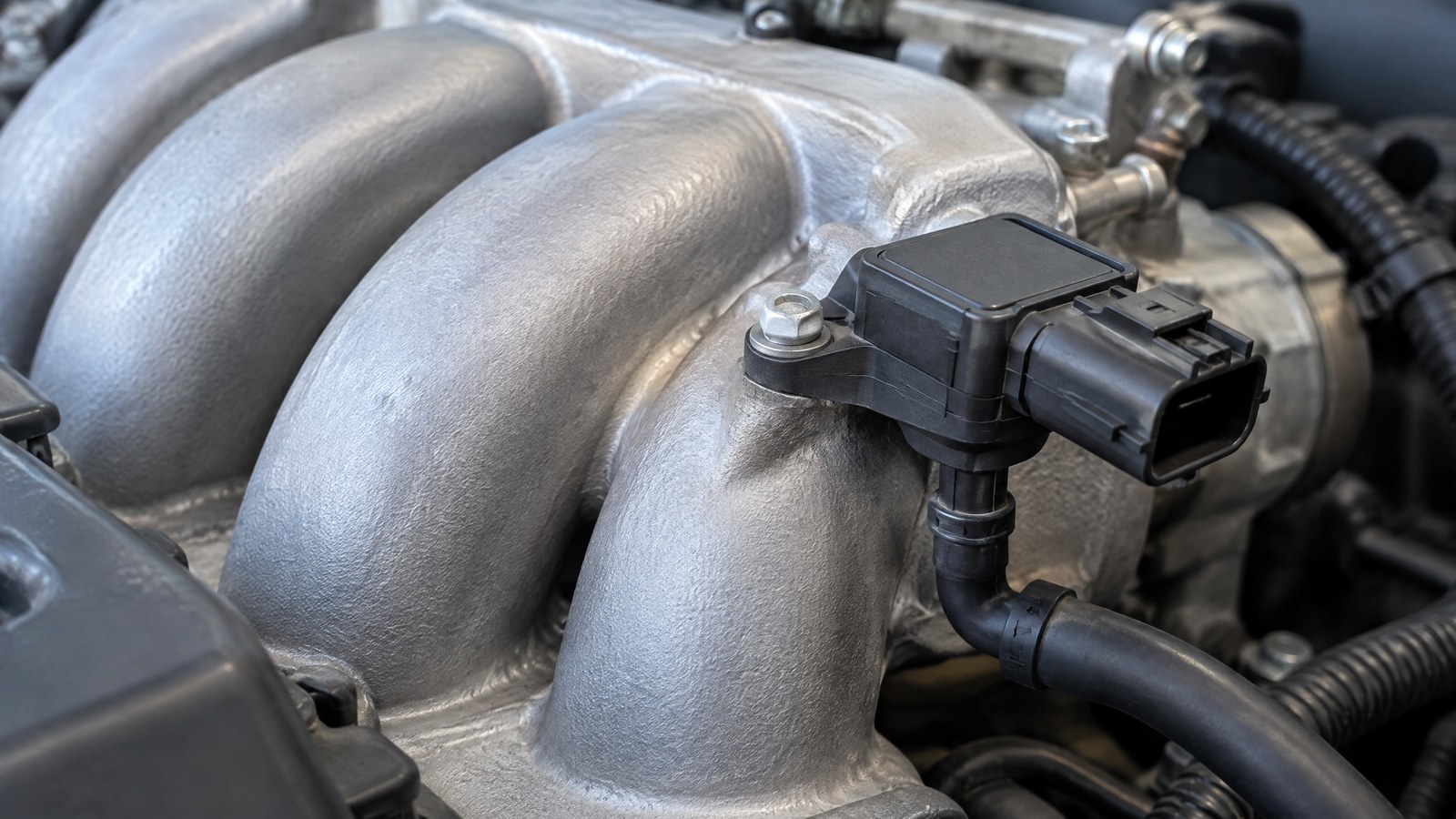
A manifold absolute pressure sensor, usually shortened to MAP sensor, measures the absolute pressure of air in or associated with the intake manifold. ‘Absolute’ means the reading is referenced to a vacuum baseline rather than merely reporting a difference from the air outside the vehicle. In ordinary engine discussion, the result is a pressure signal that gives the engine-control unit useful context about the air available downstream of the throttle. DENSO and Continental describe MAP and T-MAP sensors as measuring intake-manifold pressure behind or downstream of the throttle valve, with the signal used in calculating the air and fuel mixture. [1] [2]
AI-generated editorial illustration of generic intake-manifold hardware and engine-bay context, not a photograph of a tested product or an actual field measurement.
The word ‘load’ can make the role sound more certain than it is. The MAP reading is one clue about conditions in the intake; it is not a direct measurement of road gradient, vehicle weight or driver intent. The control system interprets it alongside other signals and its own model of that particular engine. That is why the same-looking pressure figure should never be treated as a universal verdict about a vehicle’s health.
What the Sensor Measures—and What It Does Not
Inside a MAP sensor, a pressure-sensitive element and supporting electronics convert the pressure at its sensing port into an electrical signal. DENSO describes a compact semiconductor vacuum sensor, while NXP’s archived MAP product information identifies integrated circuitry, thin-film resistor networks and temperature compensation as design features. [1] [3] The component is compact, but its information belongs to a much bigger calculation.
It does not weigh the air entering an engine directly. Nor can it, by itself, identify the cause of an engine warning light, rough running or reduced power. A pressure-port obstruction, an intake leak, a wiring issue, a temperature-related input or another engine-management fault may produce overlapping symptoms. DENSO explicitly lists contamination or humidity at the pressure port, intake-system leaks and wiring faults as possible causes of improper operation. [1]
Why Pressure Helps Estimate Air and Load
For an engine to run as intended, the control system needs a reasoned estimate of the air charge reaching the cylinders. Intake-manifold pressure helps build that estimate because cylinder filling changes with throttle position, engine speed and the pressure conditions in the intake. DENSO says the ECU uses the MAP signal to calculate intake-air volume and manage air-fuel ratio control. [1]
An archived Motorola/NXP application note makes the relationship more explicit: its example mass-air-flow calculation combines MAP with engine displacement, engine speed and charge temperature. [4] That is the useful mental model for a nonexpert reader. A MAP value is a live ingredient in an estimate, not a stand-alone measurement of every gram of air the engine will consume.
At a light throttle opening in a naturally aspirated petrol engine, the manifold is commonly at lower absolute pressure than the outside atmosphere because the throttle restricts incoming air. As the restriction eases, manifold absolute pressure can move closer to ambient pressure. Turbocharged and supercharged systems add another context: pressure upstream or downstream of the throttle can rise above ambient under some operating conditions. Which pressure is sensed, and where, is a vehicle-design question. [1] [2]
Altitude Changes the Backdrop, Not the Meaning of ‘Absolute’
A MAP sensor’s absolute-pressure measurement gives engine software a stable physical quantity to work with even though the surrounding atmosphere is not the same everywhere. NOAA explains that atmospheric pressure falls with elevation because there are fewer air molecules higher up. [5] A drive from a low-elevation city to a hill station therefore takes place against a different ambient-pressure backdrop.
That does not mean every vehicle uses the MAP reading in the same way, or that a reader can infer a repair decision from altitude alone. Manufacturers may pair MAP information with barometric, temperature, airflow, throttle and speed inputs in different ways. The safe takeaway is narrower: altitude is one reason that pressure-based engine context must be interpreted as part of a system rather than as a single fixed number.
MAP vs MAF: Two Different Ways to Inform the ECU
A MAP sensor and a mass air flow, or MAF, sensor can both support fuel and engine-management decisions, but they begin with different information. A MAP sensor reports pressure in the manifold or another specified intake location. A MAF sensor is intended to measure intake airflow—normally expressed as mass flow—rather than the pressure at a specified intake location. Continental’s overview places its MAF sensor after the air filter and lists intake-air temperature, humidity and volume among its information, while it describes MAP/T-MAP sensing behind the throttle. [2]
So MAP is often used with a model: pressure plus temperature, speed and engine geometry can help the ECU infer the air charge. MAF begins closer to an airflow measurement. Neither label tells a reader which component their own car has, whether both are present, or which one is responsible for a concern. Some vehicles use MAP only, some use MAF only, and some use both for different control purposes. The vehicle maker’s documentation is the right reference for the fitted system.
For a broader primer on pressure measurement without repeating this engine-specific focus, see the related internal guide on pressure sensor working principles.
Relevant MAP Sensor Forms and Boundaries
The name MAP is an umbrella for related intake-pressure applications rather than a promise of one identical package. A conventional MAP sensor supplies pressure information. A T-MAP combines pressure sensing with an intake-air-temperature sensor, giving the ECU two relevant inputs in one location. DENSO and Continental both identify this integrated temperature form. [1] [2]
Boosted engines may have sensors arranged to observe pressure at locations meaningful to their intake layout. DENSO refers to boost pressure upstream of the throttle and turbo-manifold pressure, while Continental shows a turbocharged-engine MAP example. [1] [2] That context matters more than trying to assign one normal range to every car. Sensor placement, calibration and expected readings vary with the engine and its control strategy.
Important Points / Key Information
### Key Takeaways
A MAP sensor measures absolute air pressure at a specified intake location; it gives the ECU context, rather than a complete diagnosis. [1] [3]
The ECU can combine MAP with inputs such as engine speed and air temperature to estimate the air charge and guide fuel delivery. [1] [4]
Altitude matters because ambient air pressure decreases with elevation, but a sensor reading still needs vehicle-specific interpretation. [5]
MAP and MAF sensors are related to intake management but are not interchangeable descriptions of the same measurement. [2]
- Treat ‘absolute’ as a reference to a vacuum baseline, not as a claim that the sensor knows every condition affecting engine load.
- Treat a dashboard warning, hesitation or uneven idle as a reason for manufacturer-specific professional assessment, not evidence that the MAP sensor alone has failed.
- Avoid universal pressure targets, replacement advice and tuning changes; they can be wrong for a particular engine and are outside this educational draft.
Examples / Supporting Information
### A hypothetical India travel scenario
Imagine a car travelling from a low-elevation coastal city toward a higher hill area. The surrounding air pressure falls as elevation increases, as NOAA’s explanation of atmospheric pressure describes. [5] The engine-control system may therefore be working with a different ambient-pressure context than it had at the start of the journey. This is a hypothetical illustration of the physics, not a road test, a performance claim or a prediction of how any named vehicle will behave.
### A sourced component-design example
DENSO describes T-MAP as a MAP sensor with an integrated air-temperature sensor. [1] This is a concrete example of why a pressure reading cannot be separated from temperature context when an ECU estimates intake conditions. The component arrangement is not a universal layout: the presence, location and control role of any sensor remain specific to the vehicle design.
### When a MAP-related concern needs qualified review
A warning indicator or drivability change may overlap with several causes. DENSO’s service information notes possible pressure-port contamination, humidity exposure, intake-system leaks and wiring faults in addition to the sensor itself. [1] A qualified technician using the vehicle manufacturer’s diagnostic information can assess the complete system. This article intentionally does not provide a test sequence, connector work, fixed readings or component-replacement instruction.
Conclusion
The manifold absolute pressure sensor is best understood as an intake-pressure witness for the engine-control system. Its signal becomes useful when the ECU reads it with engine speed, temperature and the vehicle’s own design model; altitude is one reason the surrounding-pressure context can change. A MAP sensor is therefore distinct from a MAF sensor, and neither a reading nor a symptom should be treated as a universal diagnosis. This is a private educational research draft and requires qualified human review before any future safety-sensitive publication.
Source notes
Reporting record
techduopulse stores source destinations privately. Public notes remain non-clickable so every visitor journey stays on this website.
DENSO MAP sensor operating and configuration notes
Primary source · How a MAP Sensor Turns Pressure into Engine-Load ContextContinental intake pressure and airflow sensor overview
Primary source · MAP vs MAF: Two Different Ways to Inform the ECUNXP absolute-pressure sensor design summary
Primary source · What the Sensor Measures—and What It Does NotArchived MAP application note on air-charge estimation
Primary source · Why Pressure Helps Estimate Air and LoadNOAA explanation of air pressure and elevation
Primary source · Altitude Changes the Backdrop, Not the Meaning of AbsoluteInitial publication of the source-backed MAP sensor explainer prepared 21 October 2026; owner-commanded manual release 30 October 2026.