A fuel-rail pressure sensor is a small measuring component with an outsized job: it tells the engine controller what pressure is actually present in the high-pressure fuel rail. That feedback helps the controller coordinate pressure control and injection, but the sensor is only one part of a system that should be assessed by qualified professionals when a fault is suspected.
This article is part of the computer hardware technology guide library.
How a Fuel-Rail Pressure Sensor Fits Into Injection Feedback
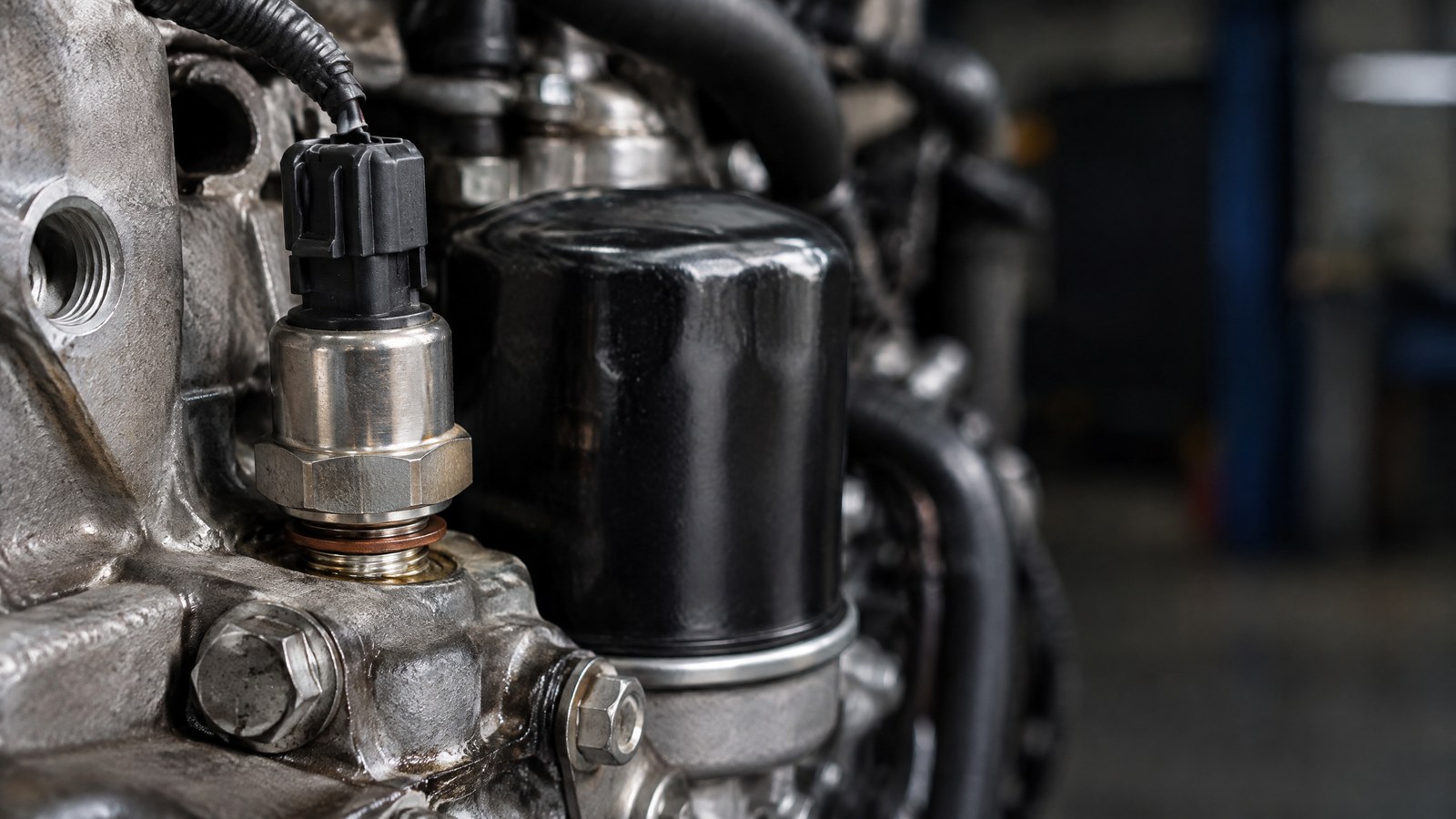
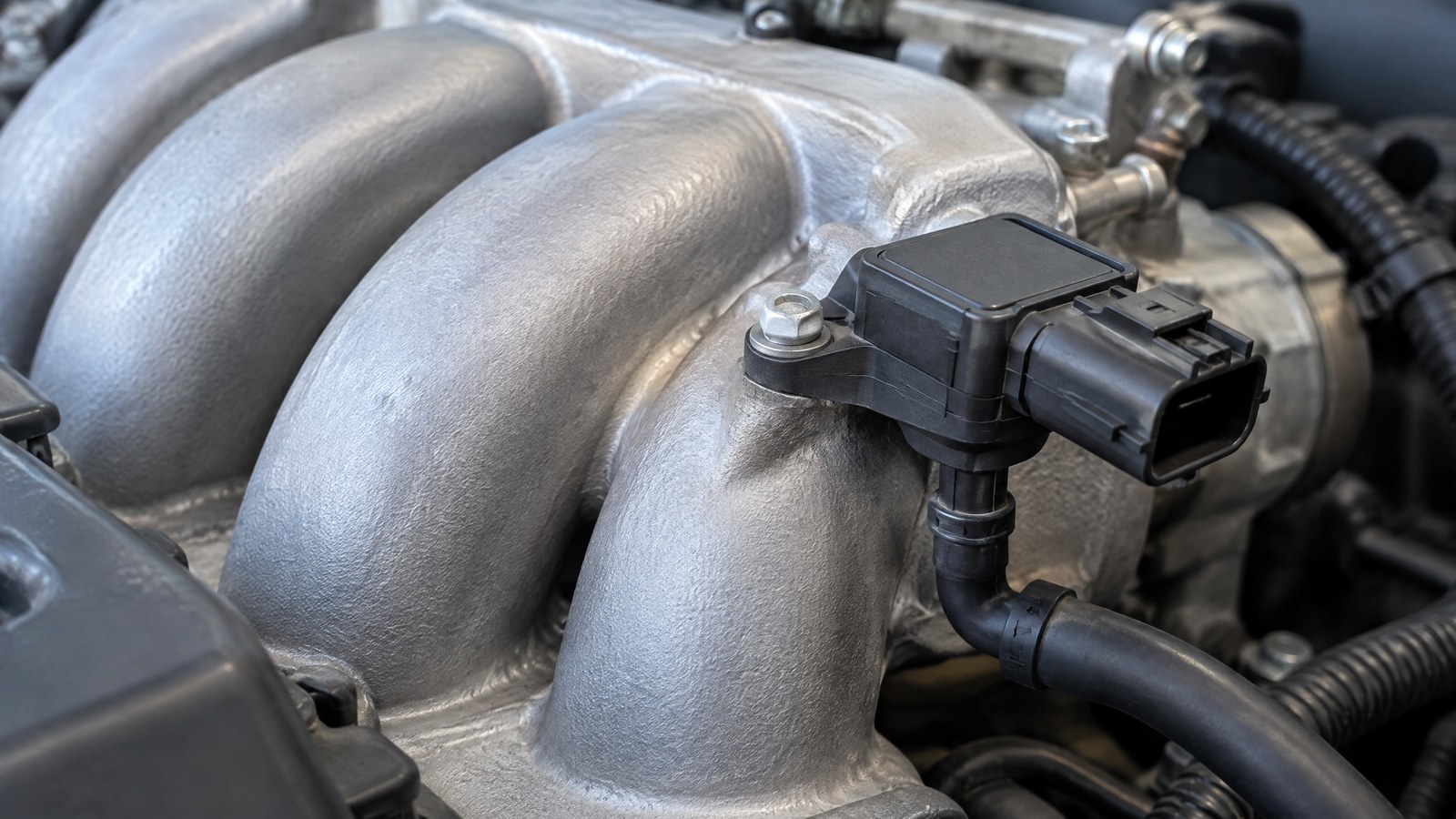
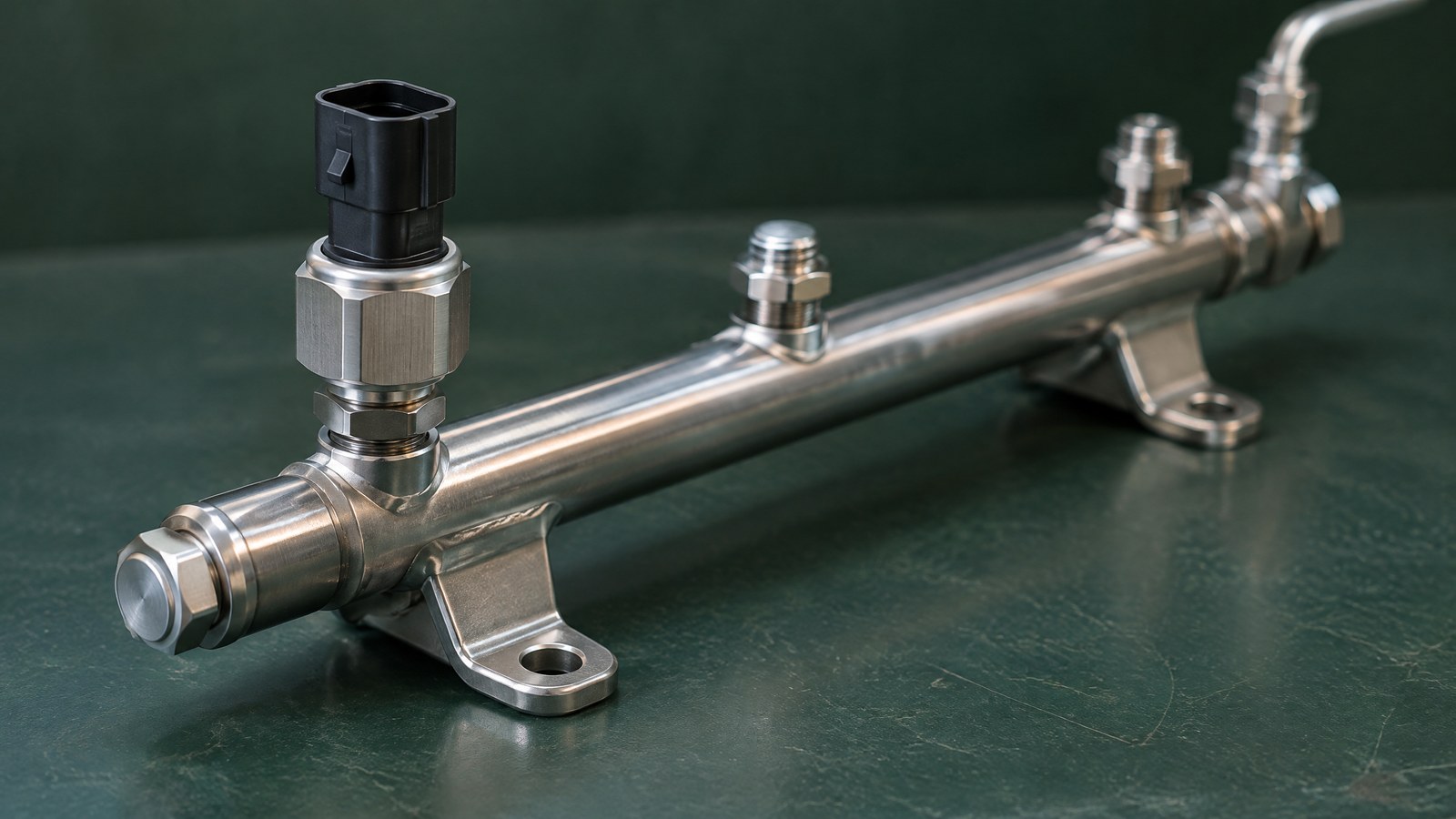
AI-generated editorial illustration of generic high-pressure fuel-rail hardware in an engine-bay context, not a photograph of a tested product or an actual field measurement.
A fuel-rail pressure sensor measures pressure at the rail and sends an electrical representation of that reading to the engine control unit. In a common-rail diesel system, Bosch describes the rail as the central hydraulic component that stores compressed fuel and supplies it to the injectors; it also says the rail-mounted sensor communicates pressure values to the control unit for system-pressure regulation and injector control [1].
This makes the sensor part of a feedback loop rather than a standalone decision-maker. The controller uses the measured value alongside vehicle-specific operating information and its own target strategy. The hardware that changes pressure may be a valve, a pump-metering arrangement, or another system-specific actuator; the sensor reports the result at the rail.
The sensor measures, but does not set, rail pressure
It is easy to call every fuel-system part a “pressure control” part, but their jobs are distinct. The rail pressure sensor observes the pressure at its location. It does not pump fuel, open an injector, or mechanically reduce pressure by itself. Bosch’s common-rail overview separates the sensor from the pressure-control valve and pressure-limiting valve fitted to the rail [1].
That distinction matters when reading a scan report or discussing a workshop estimate. A pressure-related fault indication can involve the sensor signal, its connection, the rail, a control valve, the high-pressure pump, an injector, fuel supply conditions, control software, or another related part. A stored code or a symptom alone is not proof that the sensor is the failed component.
From diaphragm movement to a controller signal
The precise construction varies by application, yet a common design principle is well established. Bosch describes a gasoline direct-injection high-pressure sensor that uses a steel diaphragm; its deflection is evaluated by a resistor bridge, then the resulting signal is amplified and sent to the control unit [2]. In simple terms, pressure flexes a carefully designed sensing element, and electronics translate that tiny physical change into information the controller can use.
Some designs add features such as temperature sensing or a redundant output path, while other vehicles use different packaging and electronics [2]. That is why a generic parts description cannot substitute for the specification, diagnostic information and safety procedure written for a particular engine and vehicle identification number.
Why the Sensor, Pump, Rail and Regulator Are Different Parts
The fuel rail is the shared pressurised passage; the pump creates or supplies high-pressure fuel; injectors meter fuel into the engine; and the controller directs the system. The fuel-rail pressure sensor adds the measurement that lets the control system compare what is happening at the rail with what it is trying to achieve. In gasoline direct injection, Bosch says the measured rail pressure is required by the engine control unit for exact metering of injected fuel mass [2].
The names used for valves and their placement differ across designs. A pressure-control valve may adjust rail pressure, while a pressure-limiting valve can protect components during an overload condition; Bosch identifies these as separate rail-mounted functions from the sensor [1]. A pump may also be managed by electronic metering rather than relying on one valve alone. The useful owner-level takeaway is to ask which component is being discussed and what evidence supports that conclusion, not to assume that “pressure sensor” means “pressure regulator.”
Why the rail acts as a shared high-pressure reservoir
In a common-rail diesel layout, the rail connects the high-pressure pump and injectors and holds compressed fuel so the injectors have a supply available when commanded. Continental describes the pump, rail, lines, injectors and engine control unit as distinct main components, with the rail supplying fuel to the injectors through the lines and the control unit determining the injected amount and timing [3].
The rail also helps moderate pressure pulses associated with injection. Bosch explains that its stored high-pressure volume reduces those pulses, improving the accuracy of injection quantity [1]. This is a system function, not a claim that the rail makes pressure perfectly constant or that one reading captures every event throughout the fuel circuit.
Why professional handling is part of the explanation
High-pressure injection hardware is safety-sensitive. Manufacturer material describes common-rail systems that operate at very high pressure, and Continental says authorised diesel partner workshops carry out repairs with the necessary equipment, knowledge and parts [3]. For that reason, this article does not provide instructions to loosen fuel lines, remove a sensor, probe connectors, defeat protective functions, or apply universal pressure values.
If a vehicle has a warning light, starting issue, uneven running, reduced power, unusual noise, leak, fuel smell, or another concern, the safe next step is a qualified workshop using the vehicle maker’s current procedure. Where there is an apparent leak or fuel odour, avoid operating the vehicle and seek appropriate professional assistance. Symptoms can have multiple causes, and an assessment should preserve the system’s designed safety and emissions controls.
Important Points / Key Information
The central idea is straightforward: the fuel-rail pressure sensor tells the controller what pressure is present at the rail; it does not itself create, regulate or inject fuel. That measured feedback is one input in a vehicle-specific closed-loop system, so it must be interpreted in context rather than treated as a universal verdict.
Key Takeaways
- A fuel-rail pressure sensor measures pressure in a high-pressure fuel rail and communicates that information to the engine control unit [1] [2].
- The high-pressure pump, rail, injectors, control valves and sensor have different roles, even though they work together [1] [3].
- A pressure-related symptom or diagnostic entry does not identify a replacement part on its own; qualified, vehicle-specific evaluation is needed.
- High-pressure fuel-system work is not an owner-maintenance task. Preserve factory safety and emissions systems and use trained service support.
Limits of a single pressure reading
A sensor reports pressure at a defined point and moment. It does not independently establish fuel quality, injector condition, pump condition, combustion quality, wiring integrity, software state, or the cause of a vehicle symptom. Even a plausible measurement needs to be considered with the correct manufacturer information and other verified observations.
This limitation is especially useful for nonexperts: “rail pressure” is a system signal, not a simple health score. Treating a scan-tool number or an online threshold as a repair instruction can lead to unsafe work, wrong parts, and missed faults.
India-use context
For India-focused readers, the same component logic can appear across common-rail diesel passenger vehicles, light and heavy commercial vehicles, and off-highway equipment, but exact layouts depend on the engine and manufacturer. Bosch Aftermarket India describes common-rail components for passenger-car, commercial and off-highway diesel applications and identifies the rail pressure sensor as the component that continuously sends high-pressure-rail data to the engine control unit [4].
That system-level commonality should not be mistaken for part interchangeability or a shared service procedure. A vehicle’s handbook, authorised service information and qualified technician remain the right sources for a particular car, tractor, truck or machine.
Examples / Supporting Information
The following examples show how the parts relate. They are explanatory scenarios, not product tests, repair instructions, diagnostic thresholds or evidence that any particular vehicle has a fault.
Sourced system walk-through
In a common-rail diesel architecture, the high-pressure pump supplies compressed fuel to the rail, the rail stores and distributes it, electrically controlled injectors deliver fuel to the combustion chambers, and the engine control unit coordinates injection [3] [5]. The rail pressure sensor gives the controller a measurement of pressure at the rail, completing the feedback side of that picture [1].
The analogy of a measuring instrument is helpful only if its limits are kept clear. A thermometer can report temperature without producing heat; similarly, a rail pressure sensor reports a state of the fuel system without doing the pump’s or valve’s physical work. The controller and pressure-control hardware determine how the system responds, while the injector performs the metering event.
Hypothetical India service discussion
Hypothetical scenario: an owner of a common-rail diesel vehicle notices a drivability concern and asks whether the fuel-rail pressure sensor is responsible. A responsible workshop discussion would keep the question open, identify the exact vehicle and system, retrieve current maker information, and evaluate the relevant evidence without opening high-pressure hardware unnecessarily.
The practical value of knowing the component roles is better communication. The owner can ask whether the concern relates to the measured rail-pressure signal, the component that controls pressure, the fuel supply path, injection hardware, or another engine-management input. That question avoids assuming a repair outcome before qualified diagnosis.
Conclusion
A fuel-rail pressure sensor is the feedback component that lets an engine control unit see pressure in a high-pressure fuel rail. It is essential to distinguish that measurement role from the jobs performed by the pump, rail, pressure-control hardware and injectors. Understanding the difference makes technical information easier to follow, but it is not a substitute for vehicle-specific professional assessment: high-pressure fuel systems deserve trained handling and a qualified human review before any safety-sensitive guidance is published or acted upon.
Source notes
Reporting record
techduopulse stores source destinations privately. Public notes remain non-clickable so every visitor journey stays on this website.
Bosch Mobility — high-pressure rail feedback and control description
Primary source · Injection feedback and component rolesBosch Mobility — gasoline direct-injection high-pressure sensor description
Primary source · Sensor mechanism and gasoline direct injectionContinental Aftermarket — common-rail component roles
Primary source · Common-rail architecture and safety contextBosch Aftermarket India — common-rail system overview
Primary source · India-use contextDENSO — common-rail diesel architecture explanation
Primary source · Supporting system exampleInitial publication of the source-backed fuel-rail pressure sensor explainer prepared 21 October 2026; owner-commanded manual release 30 October 2026. Educational only; no repair procedure or pressure values.