
Your laptop may show a photo with a convincing blue sky, yet the same file can look different on another screen or in a print; a laptop display colorimeter helps investigate that mismatch. This external USB display colorimeter measures light from on-screen colour patches, then works with calibration software to create a display profile for more consistent colour-critical editing.
This article is part of the computer hardware technology guide library.
Key takeaways
A laptop display colorimeter is an optional external optical instrument, not a built-in laptop sensor.
It reads light from on-screen test patches; software uses those readings to calibrate the display and create a profile or calibration LUT.
It can improve colour consistency, but cannot make every panel identical or guarantee that a print, phone and laptop will match.
Ambient-light measurement, display corrections and software support are model-specific.
What does an external USB display colorimeter measure?
Your laptop may show a photo with a convincing blue sky, yet the same file can look different on another screen or in a print. An external USB display colorimeter helps investigate that mismatch by measuring light emitted by on-screen colour patches. It is placed against the display while calibration software shows a sequence of test colours. X-Rite describes these readings as inputs for display calibration and profiling. [1]
The device samples how that particular panel renders colours; it is not the same as a laptop’s possible built-in ambient-light sensor used for auto-brightness.
How laptop screen calibration works
Calibration adjusts display behaviour toward targets such as brightness, gamma and white point. Profiling or characterisation records the resulting behaviour so colour-managed software can translate image colours more predictably. DisplayCAL documents both adjustment and graphics-card calibration curves or video LUT curves. [4]
A practical workflow is: let the display stabilize; choose a suitable target; place the colorimeter as instructed; let the software show its patches; then install or activate the generated profile. A profile describes that display in that setup, so changing display modes, lighting or the colour path can change what the profile means.
Colorimeter versus spectroradiometer
A colorimeter uses filtered red, green and blue channels to approximate human colour response. A spectroradiometer measures light across wavelengths and can reveal a display’s spectral power distribution. Dolby notes that spectroradiometers generally trade speed and portability for spectral measurement capability. [2]
For many laptop owners, a colorimeter is the more practical external tool for routine profiling. It is not a universal ranking: the right instrument depends on display technology, software, required tolerances and whether spectral data is needed. Display-specific correction data can matter because a colorimeter is not itself a spectral device. [2]
When is a laptop display colorimeter useful?
It is most useful when the screen is part of a colour-sensitive workflow such as photo editing, video, illustration, web design or soft-proof checking. It gives software a measurement-based starting point instead of relying only on visual guesses or factory settings. X-Rite lists laptops among display types that can be profiled, and Datacolor describes the sensor-and-software combination as a way to establish a more accurate editing view. [1] [3]
It is less useful for casual viewing or when the display mode cannot be controlled or profiled. It cannot fix physical panel limits, viewing-angle changes, unevenness or an application that ignores profiles.
Important limits before you buy or calibrate
Check compatibility between the instrument, operating system, calibration application and laptop display mode. Different display technologies and modes may need suitable correction data or workflows. Do not assume one preset covers every panel.
Separate screen light from room light. Some models include an ambient-light sensor, but this is an additional feature, not the definition of every colorimeter. [1] [3]
Room lighting, reflections, warm-up and the selected target affect what you see. DisplayCAL recommends stabilising the screen before measurements, while Datacolor notes that lighting or location changes can justify revisiting calibration. [3] [4]
A profile cannot guarantee a perfect match to every device. Printer, paper, viewing light and the receiving screen add variables, so verify the complete colour-managed workflow for critical work.
FAQs about laptop display colorimeters
Is a laptop display colorimeter built into the screen?
Usually no. It is an optional external USB optical peripheral that rests against the display during measurement, unlike a possible built-in ambient-light sensor.
Can a colorimeter calibrate any laptop screen?
It can support many display types, but compatibility depends on the instrument, software, operating system and display mode. Check support documentation before assuming HDR or wide-gamut modes behave alike.
Does a colorimeter measure room light?
Some models include an ambient-light sensor, but that is an additional, model-specific feature. The core measurement is light emitted by on-screen test patches.
Is calibration the same as profiling?
No. Calibration adjusts targets such as brightness, gamma and white point. Profiling records display behaviour so colour-managed software can interpret colours more consistently.
Will calibration make my laptop match my phone or printer?
Not automatically. A profile can improve the laptop’s colour-managed output, but the other display, printer, paper and viewing light also affect the comparison.
About the image
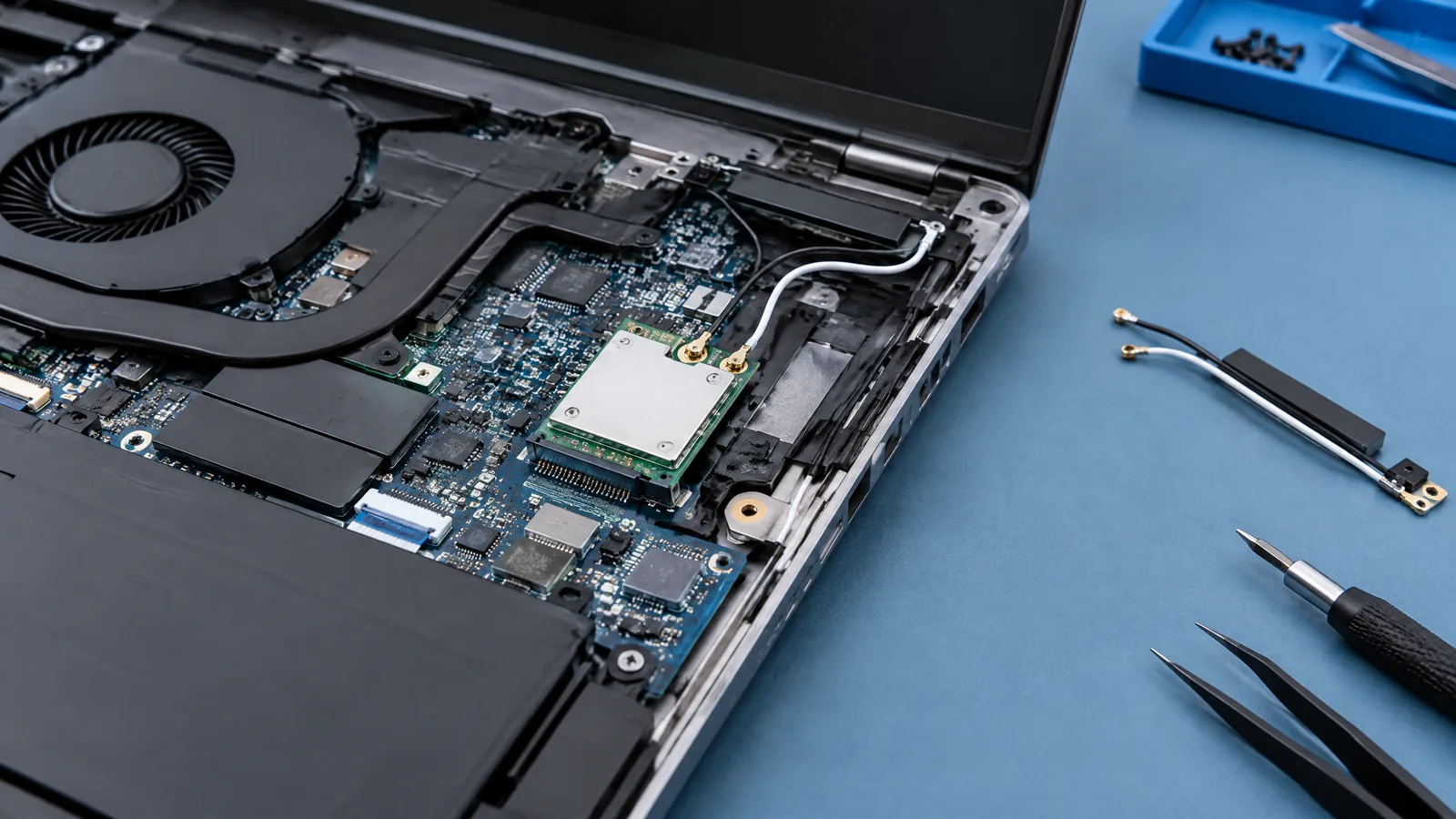
AI-generated editorial illustration; not an actual product or mission photograph.
Source notes
Reporting record
techduopulse stores source destinations privately. Public notes remain non-clickable so every visitor journey stays on this website.
Source note: X-Rite — X-Rite Display Colorimeters
Context source · Defines the external probe and patch measurement; readings create a display profile and calibration LUT; covers laptops and optional ambient-light measurement.Source note: Dolby Professional Support — Display Calibration: Colorimeters vs. Spectroradiometers
Context source · Explains RGB-filter colorimeters, wavelength-measuring spectroradiometers, trade-offs and correction matrices.Source note: Datacolor Spyder — Why color calibrate with Datacolor Spyder?
Context source · Explains display-emitted colour measurement, profile creation, display-setting limits and optional ambient sensing.Source note: DisplayCAL — Basic concept of display calibration and profiling
Context source · Distinguishes calibration and profiling; documents targets, LUT curves, correction data and screen stabilisation.Distinct application page, not a duplicate of the broad light-sensor guide. Clarifies optional external hardware, emitted-screen measurement, model-specific ambient sensing, laptop workflow and limitations.


