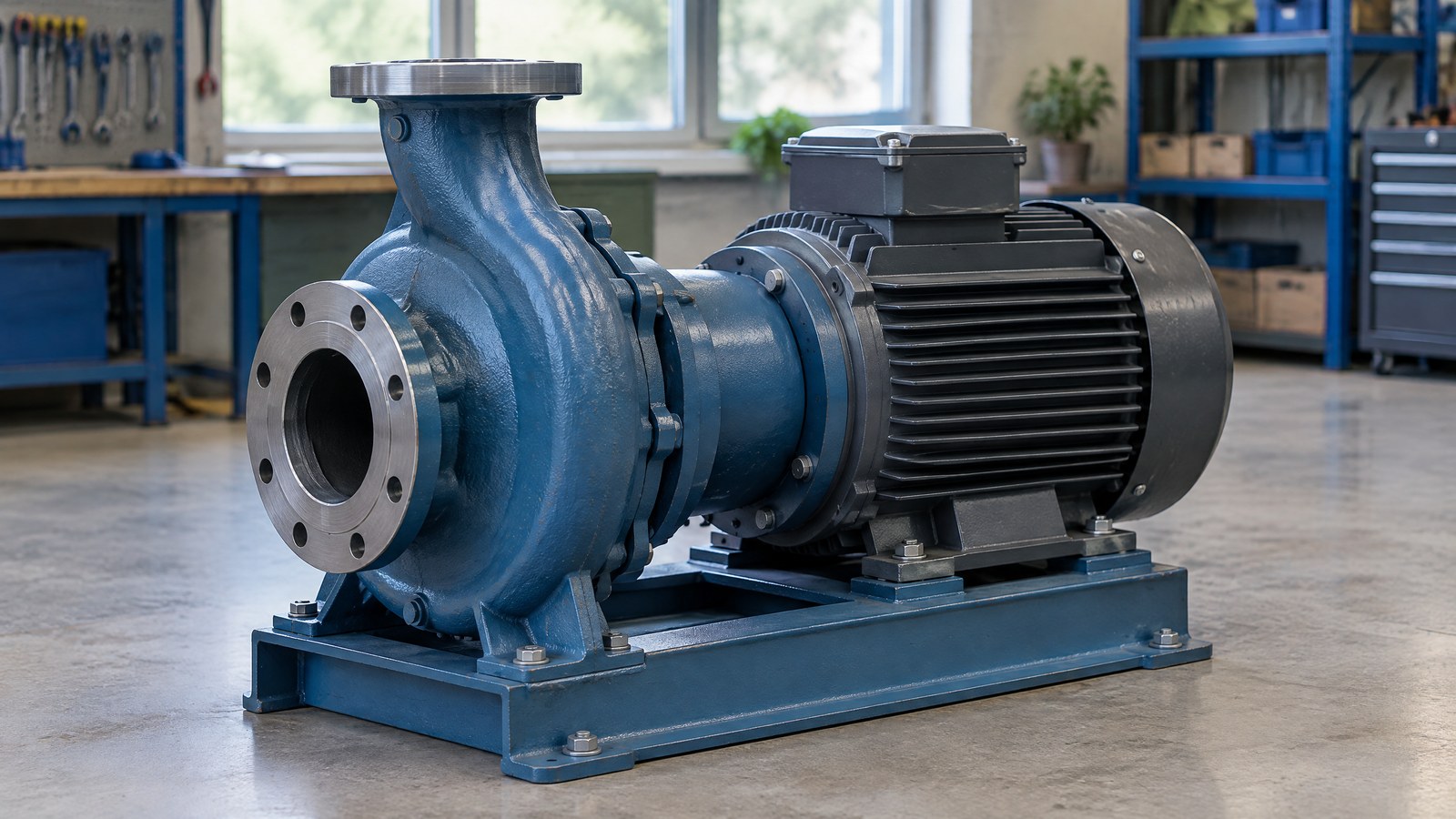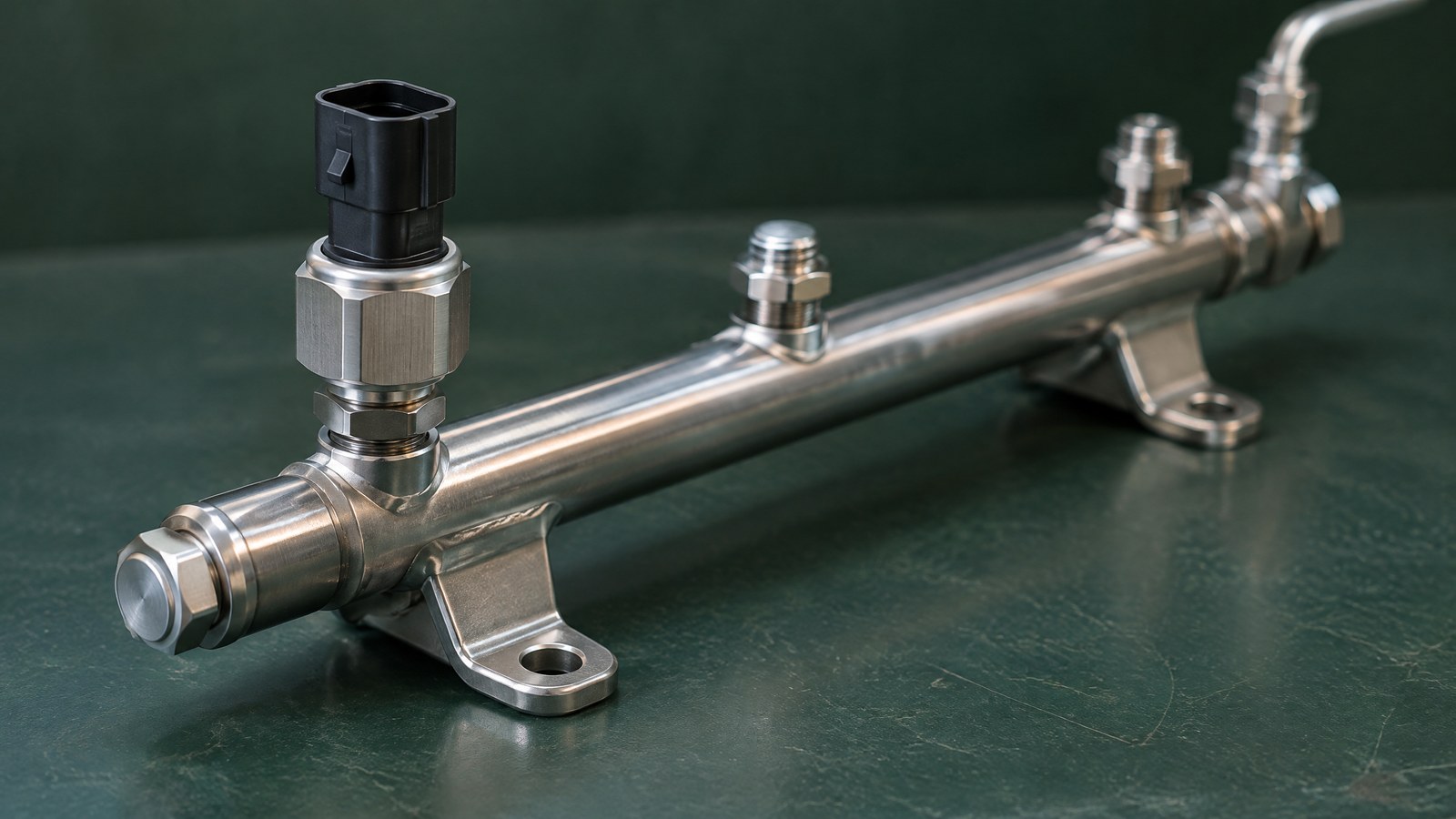
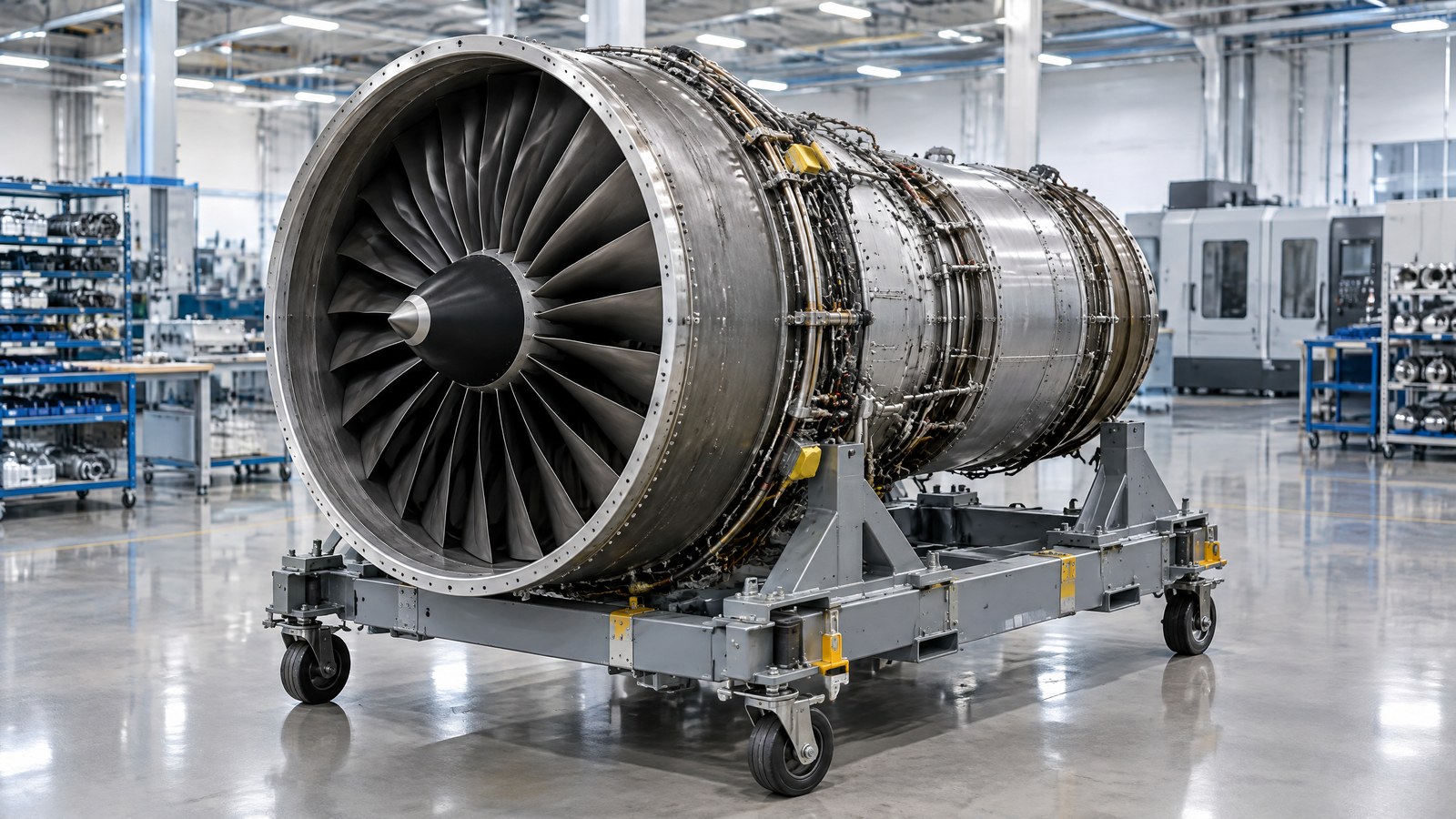
An aircraft factory manufactures airplane engines by turning an approved design into precisely made parts, carefully assembled modules and a tested finished engine. The impressive machines matter, but so do the less visible records that show where a part came from, how it was made and whether it passed its checks.
On this page 10 sections
- How Does an Aircraft Factory Manufacture Airplane Engines?
- Seven Technologies Used in Modern Aircraft Engine Production
- How Different Engine Parts Are Manufactured
- How Robots and AI Help Without Replacing Accountability
- Why Quality Control Has Several Layers
- What Happens During Assembly and Final Testing?
- Which Manufacturing Developments Are Established or Still Evolving?
- Important Points / Key Information
- Examples / Supporting Information
- Conclusion
Part of our computer hardware technology guide library
How Does an Aircraft Factory Manufacture Airplane Engines?
The production route connects design control, component manufacture, inspection, assembly and testing. It is better understood as a controlled network of processes than as one conveyor belt on which every engine part follows the same steps [2] [7].
Here, “aircraft factory” refers to the engine-manufacturing operation. An airframe factory assembles the aircraft itself; specialist engine manufacturers and their suppliers produce the propulsion system. GE Aerospace's manufacturing information describes suppliers providing castings, forgings and early-stage parts to a wider production network [7].
From approved design to finished engine
A useful overview is:
Inspection is not something saved until the end. A finished engine may run successfully while a part's material record is incomplete, or a measurement may have been taken with equipment that was not properly controlled. The production system needs to address those issues as well as the final test result [2].
- Design and engineering: establish the component geometry, material requirements and operating purpose.
- Material and supplier control: check that purchased material, components and services meet the applicable requirements.
- Component manufacture: use the processes specified for that part, such as casting, forging, machining or additive manufacturing.
- Inspection: check dimensions and relevant material or structural characteristics at the required stages.
- Assembly: bring conforming parts together into modules and then the complete engine.
- Testing and acceptance: evaluate the assembled engine and its records under the applicable approved production procedures.
Why the paperwork matters
For production-certificate holders under the US FAA framework, 14 CFR 21.137 requires a written quality system. It covers current approved design data, supplier control, manufacturing processes, inspections, measuring equipment and nonconforming parts [2].
That is a concrete regulatory example, not a statement of India's domestic rules. It shows why a modern engine factory must control both the physical component and the information attached to it.
Seven Technologies Used in Modern Aircraft Engine Production
These seven technology groups explain much of what a visitor might encounter, but they are not a universal list of machines installed in every factory. Their roles depend on the engine design, component and approved manufacturing route.
1. Computer-aided design and simulation
Computer-aided design, or CAD, provides digital geometry for parts and assemblies. Engineers can use those models to develop a shape before it reaches a production machine, while related analysis tools help evaluate the design.
The digital model also has a practical role on the factory floor. GE describes metal additive manufacturing as building parts from CAD data, and Renishaw's aerospace case study describes CAD-informed measurement programming [1] [8]. The important benefit is a connection between the design definition, manufacturing process and inspection—not permission to treat a computer model as proof that a real part is acceptable.
2. CNC precision machining
Computer numerical control, or CNC, means that a machine follows programmed instructions to remove material and create the required shape. It can be used alongside casting or forging: a part may start as a near-finished blank and still need precisely machined surfaces.
The accuracy required is set by the particular drawing and process. A single tolerance figure cannot describe every blade, disc or casing. GE's manufacturing information describes sites that produce and inspect high-precision components, alongside investment in new machines [7].
3. Industrial automation and robotics
Automation can repeat a defined manufacturing or measurement task consistently. A programmed measurement system, for example, follows the specified inspection path rather than relying on a different manual sequence each time [8].
Robotics also appears in engine-support activities. GE describes AI-guided white-light robot inspection in its services operations [5]. That is a documented example, but it should not be mistaken for evidence that every new-engine factory uses the same robot or that assembly has become entirely autonomous.
4. Metal additive manufacturing
Metal additive manufacturing builds a component layer by layer instead of cutting its whole shape from a larger piece of material. GE's description includes fine metal powder processed using a laser or electron beam, with the geometry coming from CAD data [1].
Its usefulness depends on the part. A complex fuel-nozzle tip is a documented production application, not proof that a complete jet engine can be printed in one operation. An additively manufactured component still belongs inside the same controlled system for process approval, inspection and acceptance [1] [2].
5. Advanced aerospace materials
An engine does not use one material throughout. Weight, temperature and mechanical loading differ across its sections, so the material must fit the job.
Nickel-based superalloys are important in demanding turbine applications. The University of Cambridge's Rolls-Royce research centre explains how a superalloy's internal structure contributes to strength under high temperature and stress [9]. Fan components may use different materials: GE documents carbon-fibre polymer composites replacing titanium-based fan blades in its commercial-engine development [10].
Ceramic-matrix composites are another distinct material family. GE's LEAP example concerns turbine shrouds, not a claim that every hot-section part has become ceramic [1].
6. Digital measurement and nondestructive testing
Dimensional inspection asks whether a component's shape matches its requirements. A coordinate measuring machine, or CMM, measures points on a part; optical systems provide another way to assess geometry. Rolls-Royce's blade-casting announcement described structured-light geometry inspection [3] [8].
Nondestructive testing asks different questions about the component without intentionally destroying it. The EMA blade-production case study describes ultrasound, X-ray and liquid-penetrant testing alongside dimensional checks [8]. These methods are not interchangeable: the appropriate technique depends on the material, geometry and defect being sought.
7. Instrumented engine test cells
A test cell provides a controlled setting in which a completed engine can be run and evaluated. Power or thrust measurement and operating records help distinguish an engine that merely looks complete from one that meets its production-test requirements [2] [6].
The applicable test procedure determines which measurements and limits matter. The FAA's production rules contain engine-test requirements, but different approval contexts should not be collapsed into one internet checklist. This article does not supply operating schedules, power settings or pass/fail values.
How Different Engine Parts Are Manufactured
A fan blade, turbine blade and fuel nozzle do different jobs, so their manufacturing routes can be very different. The word “precision” does not mean that all parts are cut from the same metal on the same machine.
Fan and compressor components
The large fan at the front of a civil turbofan should not be confused with the smaller components deeper inside the engine. GE's commercial fan-blade examples use carbon-fibre polymer composites, while other designs have used titanium-based fan blades [10].
Compressor components have their own design requirements and manufacturing routes. Material choices must account for where the component sits and the conditions it experiences; a visible fan-blade material is not a reliable guide to every blade in the engine.
Fuel-system parts, discs and casings
Fuel-system components provide a useful additive-manufacturing example: GE has documented production of LEAP fuel-nozzle tips using metal 3D printing [1]. That selected application does not make machining or casting obsolete elsewhere.
For discs, shafts and casings, the approved component design determines the material, initial form, machining and inspection requirements. GE's supplier information illustrates the continuing role of castings and forgings in the broader engine supply chain [7].
How Robots and AI Help Without Replacing Accountability
Robots repeat physical tasks; AI systems evaluate patterns in data. They may be used together, but they are not the same technology and neither automatically approves a component for flight.
GE describes an AI engineering and quality assistant that draws on nonconforming-hardware information to support part evaluations. Its stated principles include trusted data, transparent outputs and a human in the loop [5].
This matters because a flagged image or unusual measurement needs interpretation. The system may help an evaluator find a relevant record or notice an issue, while the authorised decision still follows the approved quality process. Under the cited FAA quality-system rule, only authorised individuals may make disposition decisions for nonconforming products and articles [2].
For the measurement background, our pressure sensor working principle guide explains how a physical condition becomes a signal. A signal is useful evidence, but it does not interpret the entire engine by itself.
Why Quality Control Has Several Layers
Quality control links dimensions, material condition, process records and acceptance status. Looking correct is not enough, and one successful check does not replace the others.
A CMM may confirm geometry without answering every question about internal condition. An X-ray or another nondestructive method may address a different inspection need. The EMA case study explicitly combines dimensional verification with structural-integrity checks [8].
The measurement equipment also matters. The FAA quality-system example requires calibration and control of inspection, measuring and test equipment, as well as documented inspection status [2]. Reliable measurements depend on a reliable measurement process.
Traceability and nonconforming parts
Traceability connects the relevant part and quality records to the controlled production process. If an issue is found, the organisation needs to identify, evaluate and handle affected material without letting an unapproved part quietly continue into assembly.
That may lead to an authorised corrective action or rejection, depending on the applicable requirements. It is not acceptable to assume that any out-of-tolerance part can simply be adjusted and used. The cited rule requires controlled evaluation, segregation and disposition [2].
What Happens During Assembly and Final Testing?
Assembly brings conforming components into the intended engine configuration. Inspection and functional testing then provide evidence for production acceptance; they do not create a new design approval from scratch [2] [6].
The factory follows the instructions applicable to the particular model and configuration. Modules, connections and accessories must be assembled and checked under that controlled system. No universal torque values, clearances or assembly sequence can be taken from an overview article.
After the required test, the result is assessed together with the engine's conformity and quality records. An engine that fails a requirement must be handled through the authorised process, not waved through because another reading looks satisfactory [2].
A useful distinction is design approval versus production acceptance . The approved design defines what is to be built; production controls establish that the individual engine conforms. Neither should be confused with permission to ignore installation or continuing-airworthiness requirements.
Which Manufacturing Developments Are Established or Still Evolving?
The clearest way to assess a technology is to ask which component or process has actually used it. A manufacturer's production example is more useful than a broad promise of a “fully digital factory.”
A digital twin—a model linked to information about a physical item or process—may support analysis. The label alone does not establish its accuracy, scope or approval status. Readers should look for the specific application rather than assume every engine factory has a complete, real-time virtual copy of its production line.
- Documented production use: GE's LEAP additive fuel-nozzle tips and ceramic-matrix-composite shrouds demonstrate selected advanced manufacturing and materials applications [1].
- Documented measurement use: the EMA case study demonstrates CAD-informed CMM inspection and complementary nondestructive checks [8].
- Documented AI support: GE describes AI-assisted evaluation and inspection-related workflows, with human experts retaining final decisions [5].
- Development work: GE describes composite research supporting its RISE technology programme. The source expressly identifies RISE as a development programme, not a product offered for commercial sale [10].
Important Points / Key Information
The factory's task is to reproduce the approved design reliably, not merely to use the newest machine.
- Component production, final engine assembly and aircraft assembly are different activities.
- Each material and manufacturing route must suit the component's requirements.
- 3D printing is established for selected parts, not entire engines produced in a single print.
- Dimensional checks, nondestructive testing and functional engine tests answer different questions.
- AI supports people and controlled processes; it does not remove accountability.
- A production test result must be considered with conformity and quality records.
Examples / Supporting Information
The following documented examples show why manufacturing claims need a specific component, process and location.
Example: a printed fuel-nozzle tip
GE's 2021 production announcement describes additively manufactured LEAP fuel-nozzle tips alongside ceramic-matrix-composite turbine shrouds [1]. They are different parts made using different technologies within the same engine programme.
The lesson is not “everything is printed.” It is that a manufacturer can adopt a suitable new process for one component while retaining other processes elsewhere.
Example: India's role in the component supply chain
Safran's official Hyderabad manufacturing-site page identifies rotating turbine seals for the LEAP engine as its output [4]. That is a concrete example of Indian participation in civil-engine component production, not evidence that the site assembles every part of a complete engine.
Safran separately announced the inauguration of a Hyderabad LEAP maintenance, repair and overhaul centre in November 2025 [11]. Maintenance, repair and overhaul—MRO—supports engines through their service lives. It should not be confused with manufacturing a brand-new engine, and the announcement's planned ramp-up is not an observed current-output figure.
Are airplane engines made entirely by robots?
No. Automation and robotic inspection can support selected tasks, while engineering, controlled assembly and authorised evaluation remain essential. GE's AI principles explicitly retain human experts for final decisions [5].
Is every turbine blade made from a single crystal?
No universal claim follows from the cited examples. Single-crystal casting is a documented approach for demanding turbine applications, but the manufacturing route depends on the component and engine design [3] [9].
Does passing a test cell prove that an engine is certified?
Not by itself. A production test is part of establishing conformity and acceptance within the applicable approval system. It does not replace approved design data, controlled manufacture or the required records [2] [6].
Conclusion
When an aircraft factory manufactures airplane engines, advanced technology connects design, part production, inspection and assembly. Its value is not simply speed: it helps create components that meet their requirements and produces evidence that the finished engine conforms. The most revealing questions are which part is being made, which process is approved and which checks support acceptance. Those details explain the factory far better than a claim that robots, AI or 3D printing now build everything.
How we checked thisSources (11)
We keep source links private so your reading stays on techduopulse. Each note names the publisher and document we checked.
GE Aviation reaches new milestones in advanced manufacturing for more fuel-efficient jet engines
Primary source · Selected LEAP nozzle tips and CMC shrouds in production14 CFR 21.137 — Quality system
Primary source · Design, supplier, process, equipment, records and nonconforming-part controlsRolls-Royce starts work on advanced casting facility in Rotherham
Primary source · Historical single-crystal civil-engine casting and structured-light inspectionSafran Aircraft Engines - Hyderabad
Primary source · Rotating turbine seals for the LEAP engineAI in Action: Creating value for our customers
Primary source · Manufacturing evaluation, separately-labelled service inspection and human responsibility14 CFR 21.128 — Tests: aircraft engines
Primary source · Test requirement in production-under-type-certificate contextGE Aerospace to Invest Over $650M in Manufacturing Facilities, Supply Chain in 2024
Primary source · Historical supplier castings/forgings and machining, inspection and assembly investments50% faster turbine blade inspection — EMA case study
Primary source · Vendor case: CAD-informed CMM, finishing and complementary NDT methodsTurbine Blade - Nickel Superalloy
Primary source · Turbine-blade material structure and high-temperature strengthThirty Years and 300 Million Flight Hours Later, GE Aerospace’s Carbon Fiber Composites Are Ready for the GE9X Engine
Primary source · Composite/titanium fan blades and RISE development, not commercial productSafran steps up expansion in India for civil and military aviation and deepens commitment to Make in India
Primary source · Civil LEAP MRO inauguration; future ramp-up not current outputInitial source-backed explainer edition; owner-commanded manual publication. Reviewed against retained sources; no hands-on testing claimed.