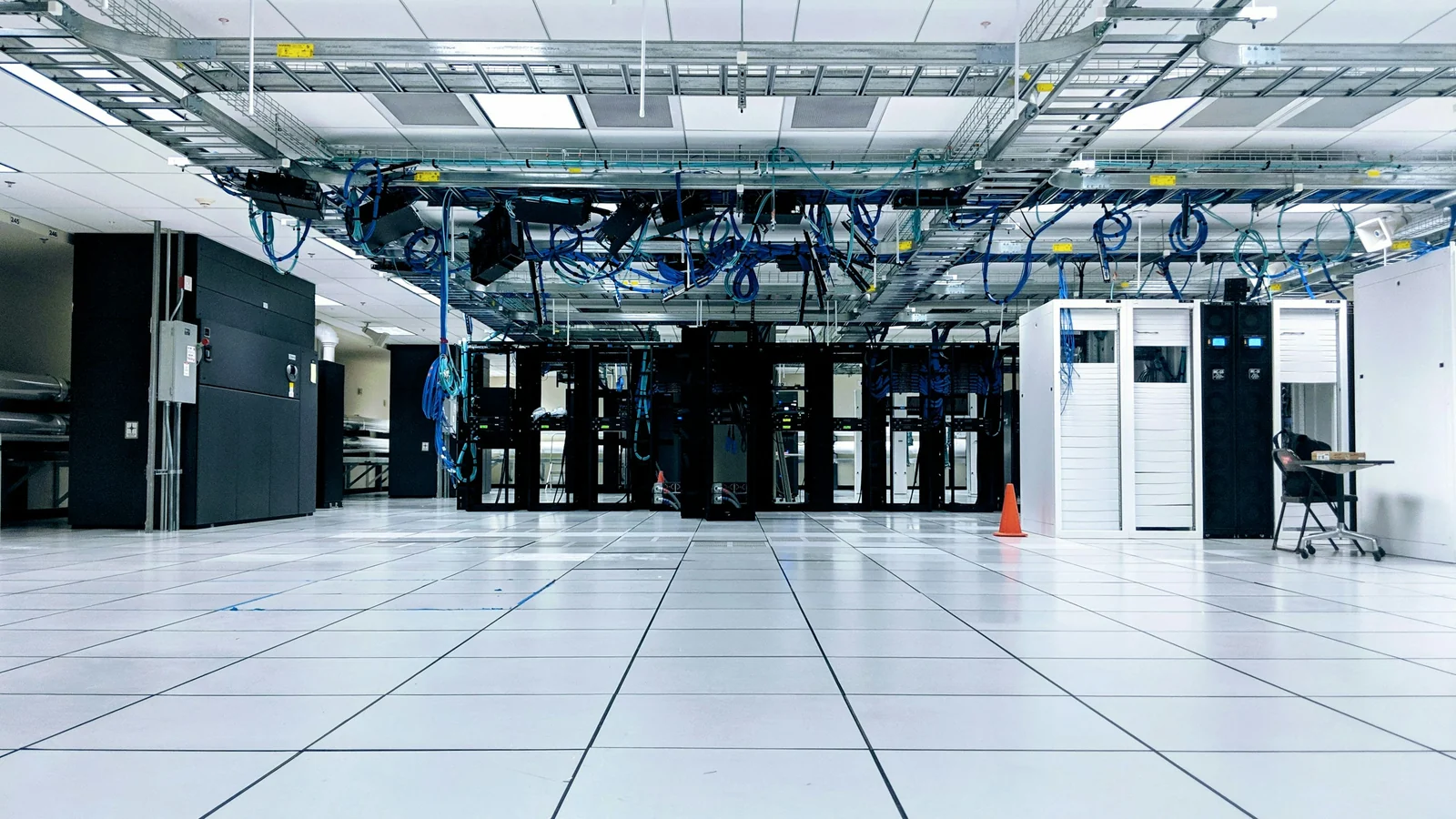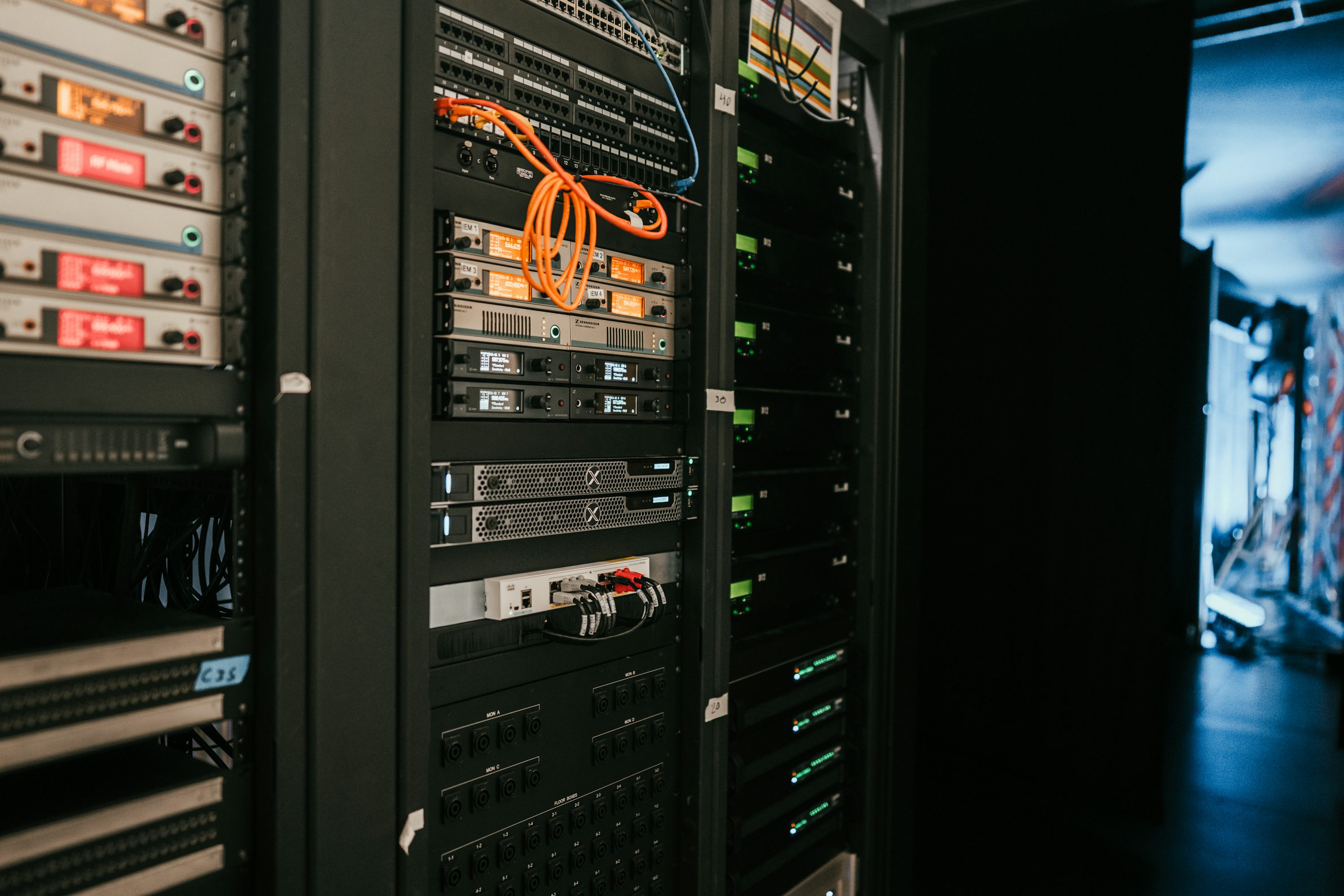
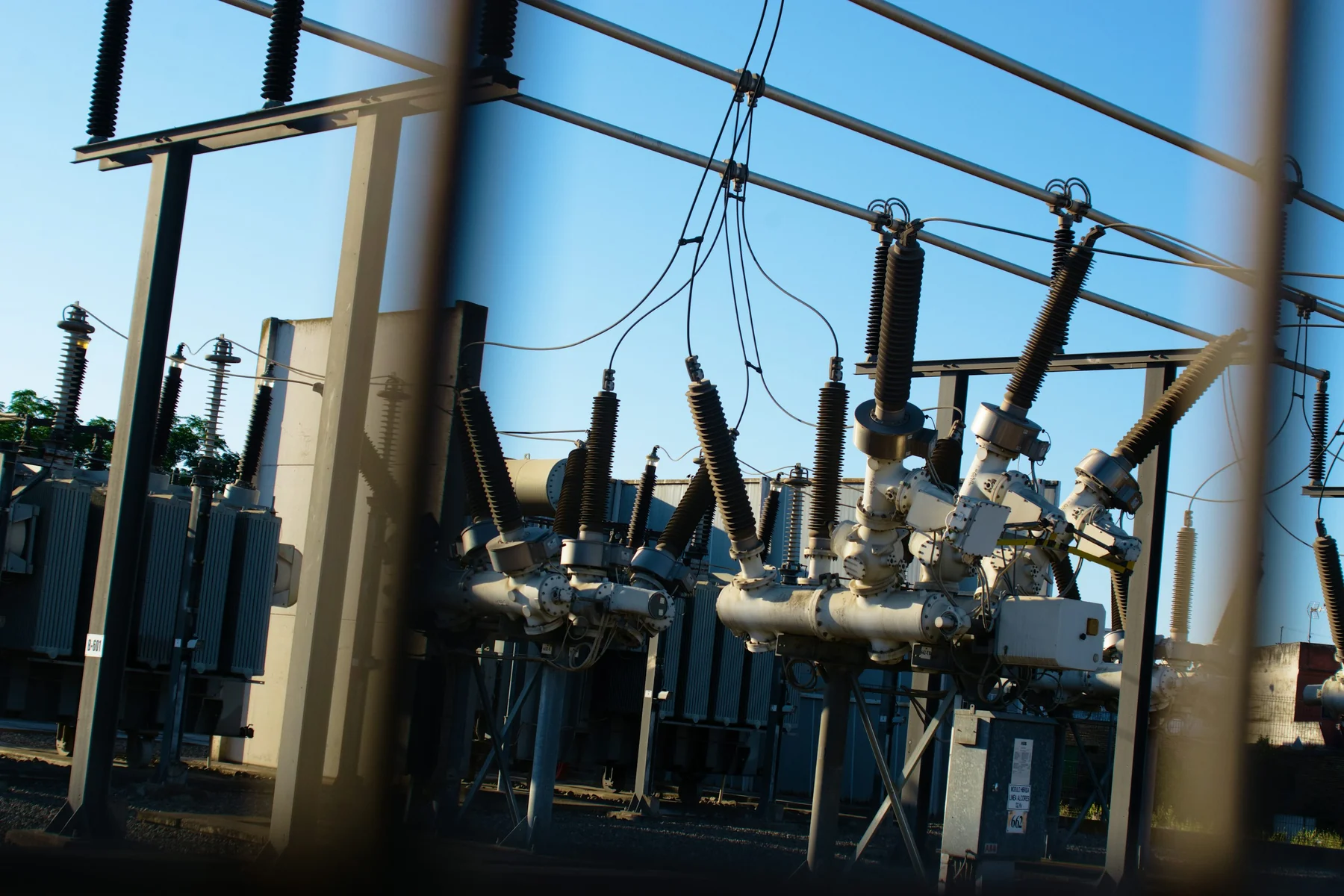
How does electricity reach an AI GPU, and why might installed hardware still be unable to run? For a grid-supplied data centre, power arrives through an electrical network and a completed site connection. Transformers, distribution equipment and power converters then deliver it in the form the computing equipment needs. A supply agreement or a building full of accelerators is not, by itself, proof that this whole path is ready. [1] [2]
The key distinction is between connected power, power usable by the IT equipment and continuity during an interruption. This guide follows those three questions from the grid to the rack. It covers electrical supply, not how heat leaves the equipment, and uses a named rack design only to illustrate why the final conversion stage can vary. [3] [5]
Show less
On this page 11 sections
- Key Takeaways
- How power gets from the grid to the site
- What transformers and distribution equipment do
- How rack power becomes electricity the electronics can use
- What keeps power flowing during an interruption?
- Why connected capacity is not all available to GPUs
- Why an electricity agreement is not a completed connection
- Where the electrical buildout can become the bottleneck
- Important Points / Key Information
- Examples / Supporting Information
- Conclusion
Part of our cloud infrastructure technology guide library
Key Takeaways
- A completed grid connection and suitable site distribution are needed before installed AI hardware can draw usable power.
- Transformers change AC voltage; rack power conversion delivers DC in a design-specific arrangement.
- UPS backup supports continuity within its capacity and available energy, not unlimited primary supply.
- Firm, non-firm and phased access describe different connection conditions; future capacity is not power available today.
How power gets from the grid to the site
The electricity grid joins generating sources to users through transmission and distribution networks. Transmission carries power over longer distances, usually at high voltage. Distribution brings it closer to many end users. A large data centre may connect at a different voltage level from a small building, so its route need not include every stage of a neighbourhood supply. [2] [3]
A connection is the physical and operational link that allows the site to draw power under agreed conditions. Supplying a large new load may require connection works at the site and additional network infrastructure elsewhere. The important question is not simply whether electricity is produced somewhere, but whether the relevant network can deliver the required power to this location. [1] [2]
Power and energy answer different questions. Megawatts, or MW, describe a rate of electricity use or a power-capacity limit. Megawatt-hours, or MWh, describe energy used over time. A large annual energy total does not establish how much power one site can draw at a particular moment. [2]
What transformers and distribution equipment do
Transformers change alternating-current voltage. Alternating current, or AC, reverses direction repeatedly. Transformers allow the voltage used for delivery to be changed for the next part of the electrical system. They do not turn a limited grid connection into an unlimited source of power. [3]
Switchgear controls, protects and isolates electrical circuits. It includes equipment such as switches and circuit breakers, which can interrupt current when a fault occurs. Its job is different from voltage conversion: it helps manage where power flows and which part of a system must be disconnected. [6]
Distribution equipment then carries electricity towards the computing racks. A power distribution unit, or PDU, supplies connected equipment; rack PDUs can also provide metering and control. Room-level distribution and rack-level distribution are related stages, not necessarily the same device. Their arrangement depends on the facility design. [4]
These functions describe the path, not a universal wiring diagram. The number of transformers, location of the UPS and arrangement of distribution equipment differ between installations. Actual voltage levels and equipment ratings must come from that installation's engineering documents. [3]
How rack power becomes electricity the electronics can use
The conversion does not stop at the building entrance. Direct current, or DC, flows in one direction, unlike AC. Computing hardware needs suitable DC supplies, so AC delivered to a rack must be converted somewhere in the hardware's power path. The converter's location is a design choice, not a rule that every GPU has its own connection to building AC. [3] [5]
NVIDIA's DGX GB rack guide provides one concrete example. It describes power shelves that accept AC and convert it to nominal 50–51 V DC. A busbar—a shared conductor—distributes that DC to rack components. This is a documented rack design, not the voltage or layout of every AI server. [5]
The useful principle is that the grid does not feed a GPU directly at transmission voltage. Distribution and conversion stages must suit the equipment they supply. A working rack power system is one requirement for running the accelerator; its memory, networking and software are separate requirements. [3] [5]
What keeps power flowing during an interruption?
An uninterruptible power supply, or UPS, protects its connected load against specified supply problems. A battery-backed UPS stores energy that can keep equipment powered during an interruption. Where a generator is installed, the UPS can bridge the gap while the generator starts and becomes available to the load. It can also support an orderly shutdown if the interruption outlasts the available backup. [3]
Stored energy and continuing generation are different resources. A battery has finite energy; how long it can supply a load depends on that load and the system's design. A generator produces electricity while operating, but has its own capacity and operating requirements. There is no single backup runtime that applies to every data centre. [2] [3]
The U.S. Congressional Research Service distinguishes primary supply, expected to operate through most of the year, from backup generation used mainly for emergencies. An emergency generator therefore should not be treated automatically as an alternative primary supply for every hour of operation. [2]
Backup also does not bypass a limit downstream. Power still has to reach the protected equipment through suitable conversion and distribution stages. Generator, UPS and load compatibility matters; the Eaton handbook treats these as design considerations rather than interchangeable nameplate numbers. [3]
Why connected capacity is not all available to GPUs
The connection supplies the facility, not only its accelerators. Other IT equipment and supporting systems also consume electricity, while conversion and distribution introduce losses. The power available for computing therefore has a different boundary from total facility power. This does not require a fixed percentage deduction: the difference depends on the installation and operating conditions. [2] [3]
There can also be a limit within the site. A connection capable of supplying more power does not establish that every downstream transformer, UPS, distribution circuit and rack is ready to use it. Usable capacity depends on the connected load and the capabilities of the complete electrical path. [3]
For a capacity claim, ask what the number describes: requested grid capacity, agreed future capacity, power available at the site now, or power allocated to operating IT equipment. Those are not interchangeable milestones. A planned expansion can exceed what the current connection stage permits. [1]
Why an electricity agreement is not a completed connection
A power purchase agreement, or PPA, sets terms for electricity supply. In the grid-delivered arrangement described by CRS, a contracted plant delivers electricity onto the grid, while the data centre receives electricity from the grid through a separate transaction. That agreement alone does not establish that the site's physical connection has been completed. Dedicated-line and on-site arrangements need their own explanation. [2]
Connection terms matter as well as connection size. The IEA distinguishes firm access, which permits contracted capacity without routine restrictions, from non-firm access, under which consumption can be limited under predefined conditions. Phased access makes capacity available progressively. A firm connection is not immunity to outages; these labels describe access conditions, not perfect reliability. [1]
Non-firm access can let a site connect while accepting restrictions, but those restrictions affect how much work it can run when they apply. Phased access may let part of a facility operate before the full requested capacity becomes available. Future capacity should not be counted as already usable. [1]
On-site generation intended as a primary supply is different from emergency backup. It can change the supply arrangement, but it still needs suitable equipment and reliable operation. The IEA cautions that large-scale on-site generation is not necessarily a faster route because equipment availability and other constraints remain. [1]
Where the electrical buildout can become the bottleneck
A new large load can need more than a cable to the building. Network reinforcement means adding or upgrading infrastructure so the electricity system can serve it. The IEA identifies connection delays, transformer availability, other equipment constraints and permitting as potential barriers to data-centre deployment. These are physical and operational constraints, not a claim that every announced project will be delayed. [1]
In its U.S. overview, CRS explains that some utilities cannot accommodate new data-centre requests until additional generation, transmission or distribution infrastructure is built. It also describes grid infrastructure as typically taking several years longer to build than data centres. That is an attributed U.S. comparison, not a universal project schedule or evidence about Indian connection queues. [2]
The location matters. A global electricity-demand figure cannot tell a reader whether the network serving one proposed site has enough capacity. Likewise, announced projects do not all become operating loads. A useful explanation keeps local connection readiness separate from global demand and future plans. [1]
Important Points / Key Information
To understand whether AI hardware can run, follow the power limit at each boundary. Establish what supply is available now, what connection conditions apply, whether the electrical works are commissioned and how much capacity reaches the intended IT load. Commissioning means checking and bringing the installed system into service; an equipment delivery is not that milestone. [1] [3]
Then ask how that load is supported during an interruption. Backup capacity and backup duration are different questions, and both must fit the protected equipment. A larger future connection, an electricity agreement and installed emergency generation do not independently prove full usable power today. [1] [2] [3]
Can a UPS solve a shortage of continuous grid capacity?
Not by itself. A UPS can support a load with stored energy within its limits; it cannot create an indefinitely available electricity supply. The IEA discusses batteries and UPS systems as potential flexibility resources during grid stress, but using them that way is a designed operating arrangement, not permission to exceed connection conditions continuously. [1] [3]
Examples / Supporting Information
Consider a fictional data centre with a phased connection. Its first electrical stage is commissioned and can support one planned group of racks. A second group of accelerators has arrived, but the connection capacity for that expansion is not yet available. This is a hypothetical explanation, not a report about a real facility. [1]
Signing a grid-delivered PPA for additional electricity would not complete the missing network works. Installing a UPS would help continuity for the load it is designed to protect, but would not make the unavailable connection capacity permanent. Even after the next connection stage becomes available, the site's distribution and rack power systems must be ready for the added load. [1] [2] [3]
The example separates three questions: can power reach the site, can the site's equipment deliver it to the new racks, and can the required load remain supported during a supply interruption? Counting delivered GPUs answers none of those electrical questions on its own.
Conclusion
AI data-centre power works through a chain of supply, connection, distribution and conversion. The GPU uses electricity only after those stages deliver a suitable supply to the hardware. UPS systems and generators add continuity within their designed limits; they do not erase every capacity constraint.
The clearest capacity question is therefore not just how many accelerators are installed. It is how much power the complete electrical path can deliver to them now, under what connection terms, and with what interruption support. That distinction turns a headline power number into an understandable operating limit. [1] [3]
How we checked thisSources (6)
We keep source links private so your reading stays on techduopulse. Each note names the publisher and document we checked.
International Energy Agency — Powering Artificial Intelligence, 14 October 2026
Primary source · Connection readiness, access terms and network constraintsCongressional Research Service — Data Centers and the Electricity Grid: Frequently Asked Questions, 1 September 2026
Primary source · U.S. grid supply, power units, primary versus backup and grid-delivered PPAsEaton — UPS and Power Management Fundamentals Handbook, 2025 edition — 2025 edition; exact publication day not stated in supplied evidence
Primary source · Electrical terminology, voltage transformation, UPS continuity and load compatibilitySchneider Electric — IT Power Distribution, undated
Primary source · Room and rack distribution; rack PDU metering and controlNVIDIA — DGX GB Rack-Scale Systems User Guide: Hardware Overview, updated 17 September 2026 — Displayed update: 17 September 2026
Primary source · Named rack design: AC power shelves, nominal 50–51 V DC and busbar distributionSchneider Electric — What is Switchgear?, undated
Primary source · Switchgear controls, protects and isolates circuitsInitial source-backed owner-authorized manual publication. Original reviewed article facts, metadata and licensed real photograph preserved. Schema-only body and citation projections are recorded privately; no hands-on test or qualified human certification claimed.