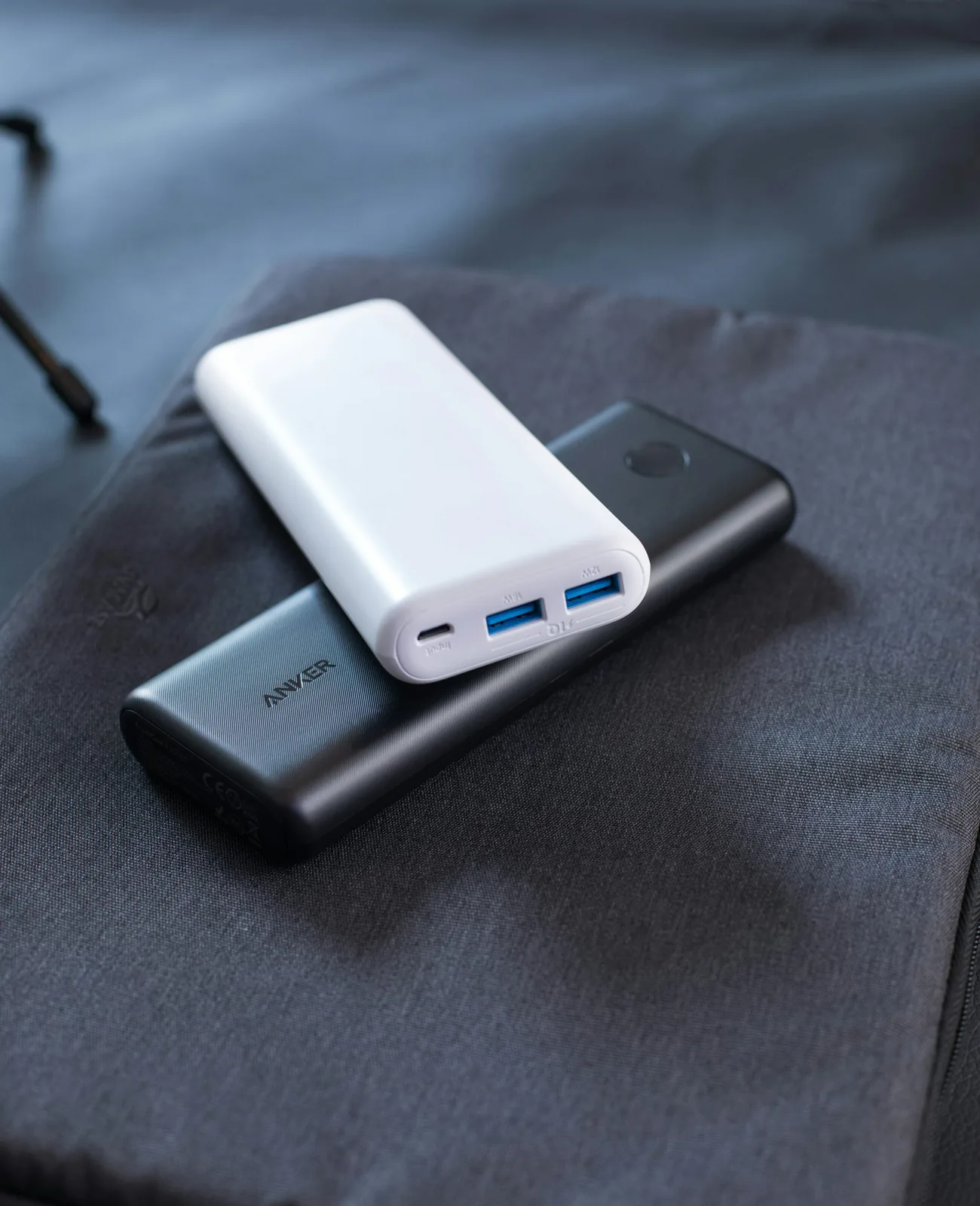
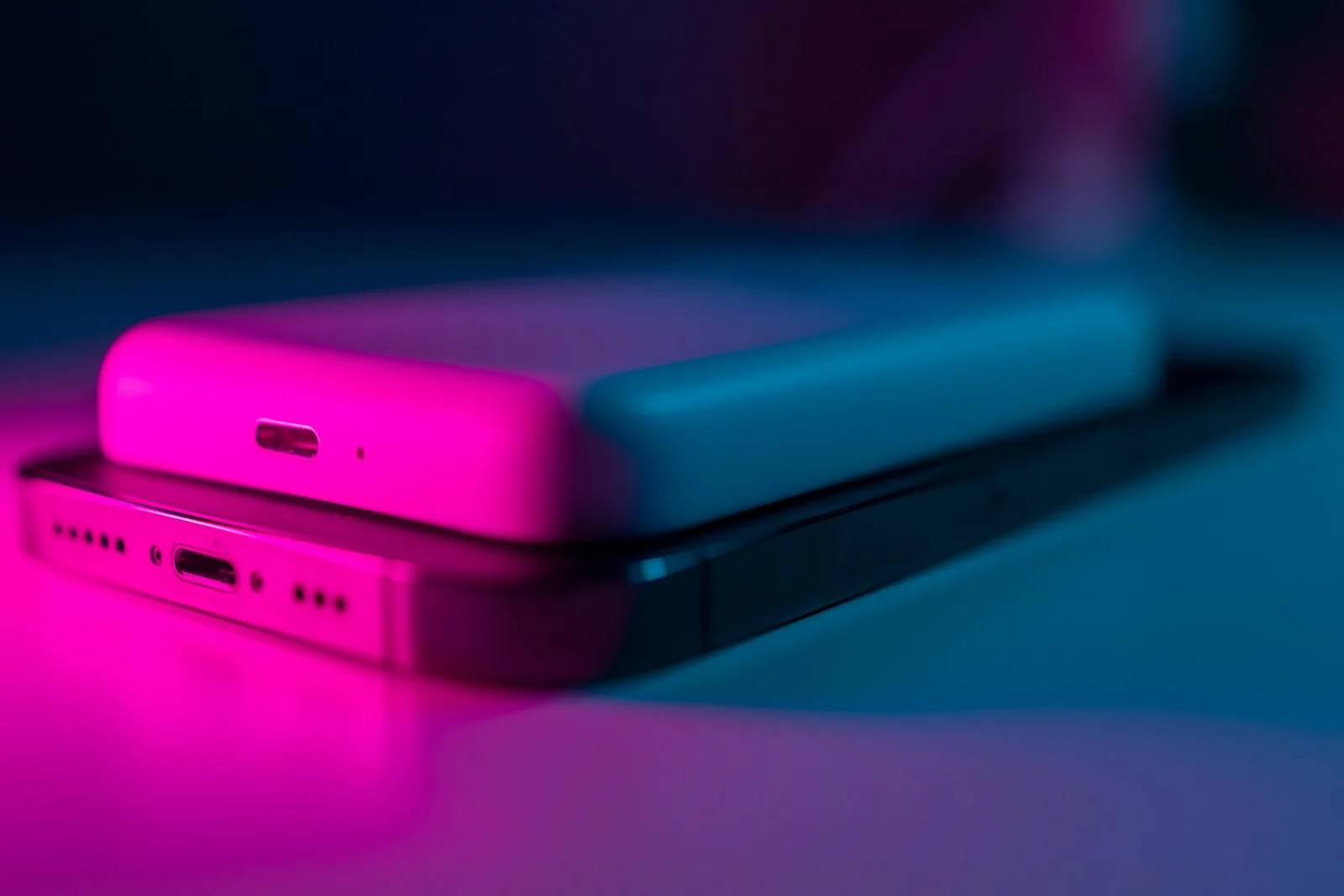
A Mobilla power bank is easier to choose when you compare its listed price, the output of the connection you’ll actually use and the weight you’ll carry, rather than relying on capacity alone.
This guide compares four representative official listings checked on 4 November 2026 and explains what their charging specifications mean for phones, compatible laptops and air travel, without treating advertised figures as hands-on test results.
Show less
On this page 9 sections
- Key Takeaways
- Mobilla power bank prices and specifications: four models
- Charging power and compatibility: read beyond the headline
- Capacity, usable energy and the weight trade-off
- Warranty, battery care and flight rules
- Frequently asked questions
- Important Points / Key Information
- Examples / Supporting Information
- Conclusion
Part of our consumer technology guide library
Key Takeaways
- Four representative official listings checked on 4 November 2026: M:I MPower X6 ₹1,599, Fusion ₹2,799, 725 ₹1,899 and Boost ₹3,499.
- Headline wattage does not apply to every connection: check the specific port, cable and device’s charging support.
- Boost lists up to 100W USB-C output and 65W input; Fusion’s magnetic split design does not establish wireless or MagSafe charging.
- The selected pages list 365-day manufacturing-defect warranties; actual battery labels and operating-airline rules remain essential for flights.
Mobilla power bank prices and specifications: four models
Mobilla’s M:I MPower X6, MPower Fusion, MPower 725 and MPower Boost listings show the following main prices as of 4 November 2026. These are four examples, not the complete range or a brand-wide minimum-to-maximum price claim. Conditional checkout offers are excluded. [1] [2] [3] [4]
The output column shows each model’s headline maximum, not the power available from every port or to every connected device. Recheck the selected colour, availability and final selling price before ordering.
| Model | Listed capacity | Headline maximum output | Main listed price |
|---|---|---|---|
| M:I MPower X6 [1] | 10,000mAh | 22.5W | ₹1,599 |
| MPower Fusion [2] | 10,000mAh | 22.5W | ₹2,799 |
| MPower 725 [3] | 20,000mAh | 22.5W | ₹1,899 |
| MPower Boost [4] | 20,000mAh | 100W USB-C | ₹3,499 |
M:I MPower X6: lighter carry with two cable types
The ₹1,599 listing is specifically the Mission: Impossible-edition M:I MPower X6, not a price for every regular X6 variant. It lists 10,000mAh at 3.7V, built-in USB-C and Lightning cables, a digital display and a 200g weight. Its stated dimensions are 12.8 × 7.5 × 2cm. [1]
For a phone-focused daily bag, the lower listed weight and two connector types are useful reasons to consider it. One detail needs clarification: the same page’s FAQ says three simultaneous devices, while a marketing paragraph says four. That conflict remains unresolved, so don’t plan a multi-device setup around either count without confirmation. [1]
MPower Fusion: a separable design
The ₹2,799 Fusion lists a total 10,000mAh capacity and two magnetically separable halves. Its combined listed weight is 220g, split between a 118g module and a 102g module, with combined dimensions of 8 × 8.2 × 2.5cm. It includes Type-C cables and a digital display. [2]
Choose this design for the way the modules and cables fit your routine, not for assumed wireless charging. The listing does not establish MagSafe charging or 10,000mAh in each half. Its FAQ advertises up to four simultaneous devices, but does not provide a per-device power allocation. [2]
MPower 725: higher listed capacity for phone backup
The ₹1,899 MPower 725 lists 20,000mAh, a built-in Type-C cable, a detachable Lightning cable, an anti-slip texture and a digital display. Its listed weight is 307g. It is the lower-priced of the two 20,000mAh examples in this comparison, not necessarily Mobilla’s cheapest model at that capacity. [3]
Its extra nominal capacity makes it worth considering for longer days away from a socket, provided the added weight suits your bag. Mobilla advertises up to three simultaneous devices; this is not a promise of maximum output to each device. The Type-C connections top out at 20W despite the 22.5W headline. [3]
MPower Boost: higher-power USB-C charging
The ₹3,499 Boost lists 20,000mAh, 74Wh, a built-in Type-C cable and a PD cable in the box. PD means Power Delivery, a charging protocol that negotiates supported power levels. Its listed weight is 361g, making it the heaviest of these four examples. The default Light Silver selection was marked Sold Out at the check; that does not establish the stock status of every colour. [4]
Boost is the model to investigate for a compatible USB-C-powered laptop: its USB-C port and wired output list up to 100W. The 74Wh figure comes from the manufacturer’s specification, not our inspection of a physical battery label, and laptop suitability still depends on the machine’s charging requirements. [4]
Charging power and compatibility: read beyond the headline
The X6 and Fusion advertise PD alongside QC 3.0, meaning Quick Charge 3.0. A protocol name or wattage headline is only a starting point: the device, connection and supported voltage/current profile must match to reach a listed maximum. [1] [2]
22.5W is not available from every connection
Check the route your phone will use. The X6’s USB-A specification reaches 22.5W at 10V/2.25A, while the listed Lightning cable profiles reach about 20W. Fusion lists up to 20W from its Type-C port, but up to 22.5W from its Type-C wired or connector output at 10V/2.25A. [1] [2]
The 725 lists 20W maximum for its Type-C port and wired output, versus 22.5W for USB-A at 5V/4.5A. Boost’s USB-A output is also limited to 22.5W, although its USB-C output can reach 100W. Switching connections can therefore change the available power. [3] [4]
None of those figures guarantees that your phone supports the required profile. Likewise, a claim of several simultaneous devices does not establish full headline power on each connection. Where the listing does not specify shared-load behaviour, ask for the allocation rather than assuming it.
Boost’s 100W output and 65W input do different jobs
Output is power sent to your device; input is power used to refill the bank. Boost lists a maximum 100W USB-C output profile of 20V/5A and a maximum 65W input profile of 20V/3.25A. A 100W wall charger therefore does not make its listed input 100W. [4]
For a laptop, check that its USB-C port accepts charging, that its supported PD profiles match, and that the cable supports the required current. A USB-C connector alone is not enough. A barrel-connector-only laptop is not covered by this compatibility claim, and 100W does not guarantee enough power for every gaming laptop under load. Shared charging may also change what the laptop receives. [4]
Magnetic separation does not mean wireless charging
Fusion’s magnets join its two modules; that feature does not prove Qi wireless charging or MagSafe compatibility. Treat it as a wired charging option unless the exact model’s specifications explicitly establish otherwise. [2]
Match cables to your actual phone, too. Lightning suits iPhones with a Lightning port, while USB-C iPhones need USB-C. A built-in Lightning cable is not an advantage for every iPhone owner, and cable inclusion should not be read as proof of MFi certification.
Capacity, usable energy and the weight trade-off
The capacity printed in mAh describes stored charge at a stated voltage; it is not automatically the amount delivered through USB. Anker Support’s explanation, “Why Is the Rated Capacity Marked on a Power Bank Lower Than Expected?”, distinguishes cell capacity from output capacity. Watt-hours provide the useful bridge: Wh = mAh × voltage ÷ 1,000. [5]
For the X6’s listed 10,000mAh at 3.7V, that calculation gives 37Wh. At 5V, 37Wh ÷ 5V equals 7.4Ah, or 7,400mAh, theoretically before conversion losses. This is a general calculation using Mobilla’s stated figures, not a measured X6 output or an efficiency test. [1] [5]
A phone’s battery energy, conversion losses, temperature and use while charging affect the number of refills. Consequently, neither 10,000mAh nor 20,000mAh guarantees a fixed number of full phone charges. Boost explicitly lists 74Wh; the other models’ mAh figures should not be treated as independently verified Wh labels. [4] [5]
For carrying weight, compare the actual listed figures: X6 200g, Fusion 220g, 725 307g and Boost 361g. A larger capacity may suit a long day, but a lighter bank you reliably carry can be the more practical choice for a short commute. [1] [2] [3] [4]
Warranty, battery care and flight rules
The current pages for all four selected models list 365-day warranties covering manufacturing defects. This is not a warranty promise for every Mobilla model. Read the exact written terms, keep the invoice and confirm the service route; Boost’s page expressly excludes misuse. [1] [2] [3] [4]
Treat advertised protection features as manufacturer claims, not an independent safety audit. Avoid excessive heat and heavy impact, protect exposed connections from short circuits, and stop using a swollen or damaged bank. An estimated percentage display is useful for planning but should not be mistaken for a precise measurement of remaining energy.
For flights, check the battery label and operating carrier
The International Air Transport Association (IATA), in “Changes Regarding Power Banks” dated 31 March 2026, sets out a maximum of two personal power banks, cabin carriage only and individual short-circuit protection. It says you must not recharge a power bank onboard, and recommends that you should not use one to charge a personal device onboard. Those are different instructions: the latter is a recommendation in this guidance, not a universal ban. [6]
Air India’s “Restricted Baggage & Prohibited Items Guidelines” generally allows spare batteries, including power banks, up to 100Wh, with a maximum of two, in cabin baggage rather than checked baggage. They must be individually protected and must not be placed in overhead bins. Its additional Singapore-departure rules prohibit both using and charging power banks onboard; that wording must not be extended to all routes or all Indian airlines. [7]
Check your actual battery’s Wh label and the operating airline’s rules for the itinerary. If your cabin bag is gate-checked, remove its power bank. Boost’s manufacturer-listed 74Wh and any “flight-friendly” marketing are not airline approval or verification of the label on your unit. [4] [6] [7]
Frequently asked questions
Can these Mobilla power banks charge an iPhone?
Choose the connection your iPhone uses. X6 lists built-in Lightning and USB-C cables, while 725 lists a detachable Lightning cable and built-in Type-C cable. Charging speed still depends on the supported profile, and Fusion’s magnetic separation does not establish MagSafe wireless charging. [1] [2] [3]
Does Boost charge every USB-C laptop?
No. The laptop must accept USB-C power and support a compatible PD profile, with an appropriate cable. Boost’s listed 100W maximum does not guarantee coverage of every laptop’s power demand or continued full-power output when other devices are connected. [4]
How long does a Mobilla power bank take to recharge?
There is no verified full-recharge time in this comparison. Fusion and 725 list input of about 20W maximum, while Boost lists 65W maximum. Those ceilings alone are not enough to calculate a reliable empty-to-full time; the wall charger and actual charging behaviour matter. [2] [3] [4]
How many full phone charges will 20,000mAh provide?
There is no universal count. Compare the bank’s usable output energy with your phone battery’s energy, then allow for charging losses and phone use. The listed 20,000mAh should not be turned into a guarantee of four or five full charges without device-specific evidence. [5]
Important Points / Key Information
Before choosing a model, make the comparison specific to your devices:
- Identify the port or built-in cable you’ll use, then check its output rather than the headline wattage.
- Confirm the phone or laptop supports the required charging profile and that the cable is suitable.
- Balance listed capacity against carrying weight; don’t convert mAh directly into a promised refill count.
- Check the selected variant’s price and stock, the written warranty, and the service process.
- For flying, read the actual Wh label and your operating carrier’s itinerary-specific restrictions.
Examples / Supporting Information
For a commute with one phone and occasional top-ups, X6’s 200g listed weight and built-in cables are sensible features to compare first. You don’t need to rely on its disputed multi-device count for that use. [1]
For two people who value separate modules, Fusion’s split design may be useful. Confirm how each half works for your cables and devices rather than assuming each holds 10,000mAh or charges wirelessly. [2]
For a long phone-focused day, compare 725’s 20,000mAh and 307g weight with your willingness to carry it. A USB-C phone would use its listed 20W Type-C limit, not automatically the 22.5W headline. [3]
For a compatible work laptop, start with its required USB-C PD profile, then assess Boost’s 100W output and suitable cable. If you also want to charge a phone, confirm shared-output behaviour before relying on the setup. [4]
Conclusion
Choose a Mobilla power bank by the connection and power your device needs, then weigh capacity, portability and price. X6 offers lighter carry, Fusion offers a separable design, 725 adds nominal capacity at a lower listed price than Boost, and Boost offers higher-power USB-C output. Verify the exact variant, warranty and travel requirements before buying; specifications are a useful shortlist, not a substitute for compatibility checks or real charging tests.
How we checked thisSources (7)
We keep source links private so your reading stays on techduopulse. Each note names the publisher and document we checked.
Why Is the Rated Capacity Marked on a Power Bank Lower Than Expected?
Primary source · Source-backed article facts and limitationsRestricted Baggage & Prohibited Items Guidelines
Primary source · Source-backed article facts and limitationsM:I MPower X6
Primary source · Source-backed article facts and limitationsMPower Fusion
Primary source · Source-backed article facts and limitationsMPower 725
Primary source · Source-backed article facts and limitationsMPower Boost
Primary source · Source-backed article facts and limitationsChanges Regarding Power Banks
Primary source · Source-backed article facts and limitationsInitial source-backed manual publication. Reviewed article facts preserved; licensed real photograph credited and labelled accurately. Full article remains in server-rendered HTML with a two-paragraph reading disclosure.