eSanjeevani in India: how public telemedicine works and its limits
This article is part of the software engineering technologies guide library.
What is eSanjeevani?
eSanjeevani is the Government of India’s national telemedicine service. It links people and public facilities with registered medical practitioners through digital consultations. Its two practical routes are patient-to-doctor telemedicine, where offered remotely, and assisted telemedicine, where a health worker facilitates a session at a participating primary-care location. [2] [3]
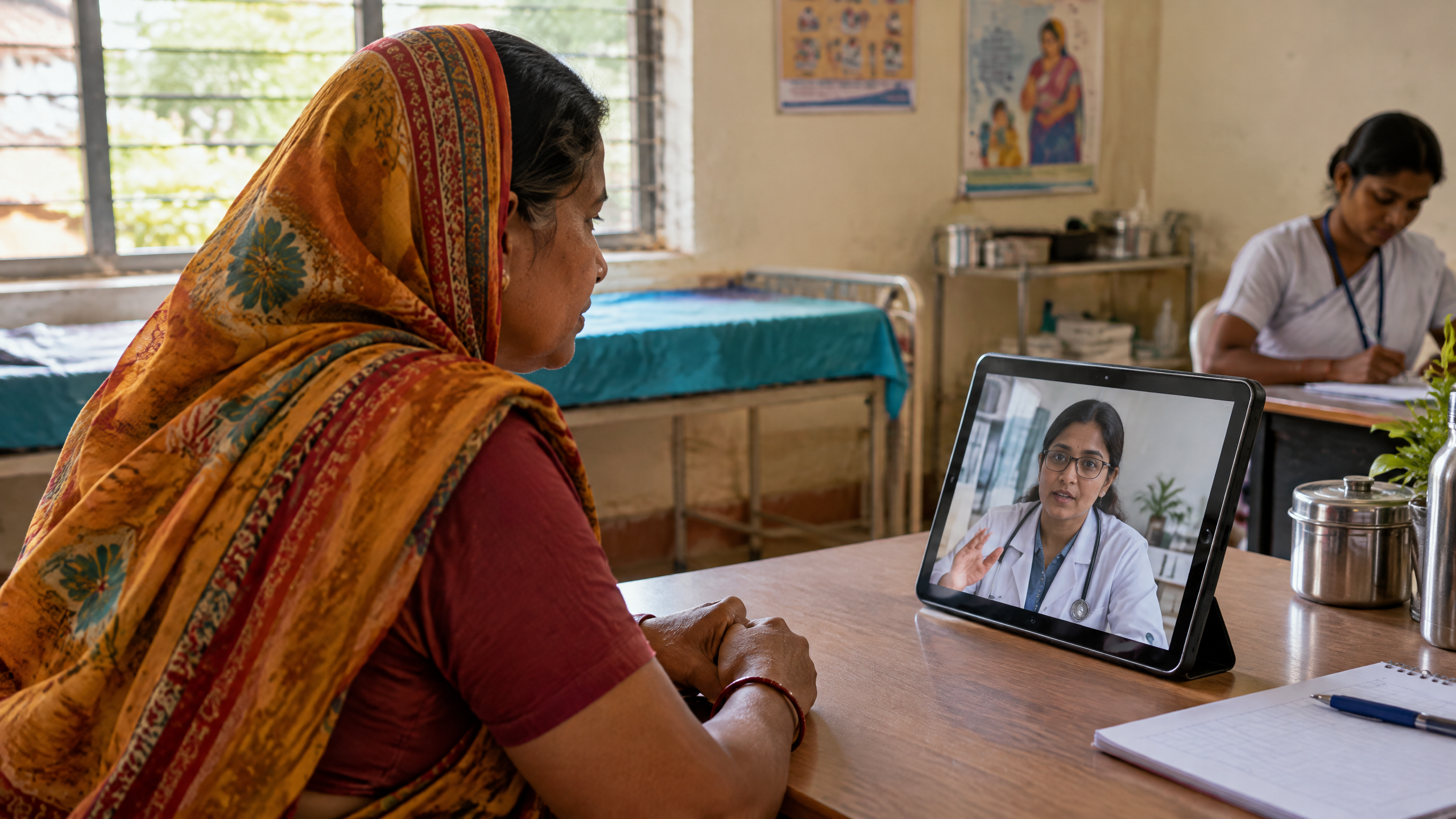
The assisted route matters in rural and underserved settings. A person can go to a participating Ayushman Arogya Mandir or other public facility, where a Community Health Officer or another health worker may help connect them to a doctor or specialist hub. This is the programme’s hub-and-spoke model. [3]
How eSanjeevani access can work in practice
Screens, queues, hours, languages, specialties and local rules can differ. The Ministry reported more than 1.42 lakh Ayushman Arogya Mandir spokes, 19,473 medical hubs and 901 online OPDs in its October 2026 snapshot. Those totals do not mean every spoke offers every specialty or route. [1]
### Route 1: patient-to-doctor consultation
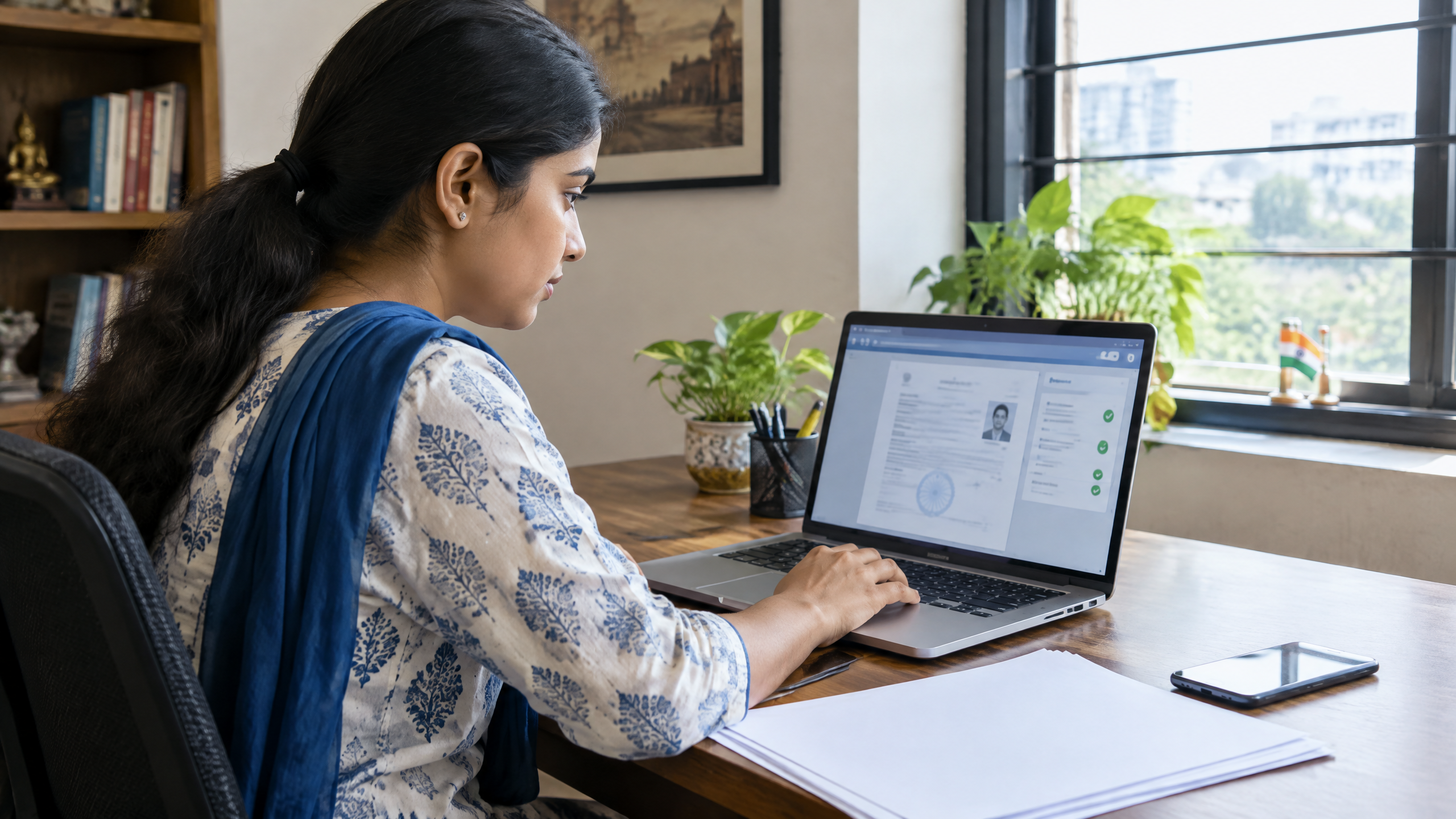
Where online access is available, start with the official eSanjeevani portal or its official UMANG listing. UMANG currently lists registration, Consult Now, past consultations, a patient profile and family-member functions. [2] [4]
Check the current instructions for your state or facility. Keep a working phone number and relevant prior prescriptions, lab reports or discharge documents ready. Do not assume an old tutorial reflects today’s registration flow or that a specialty slot is open.
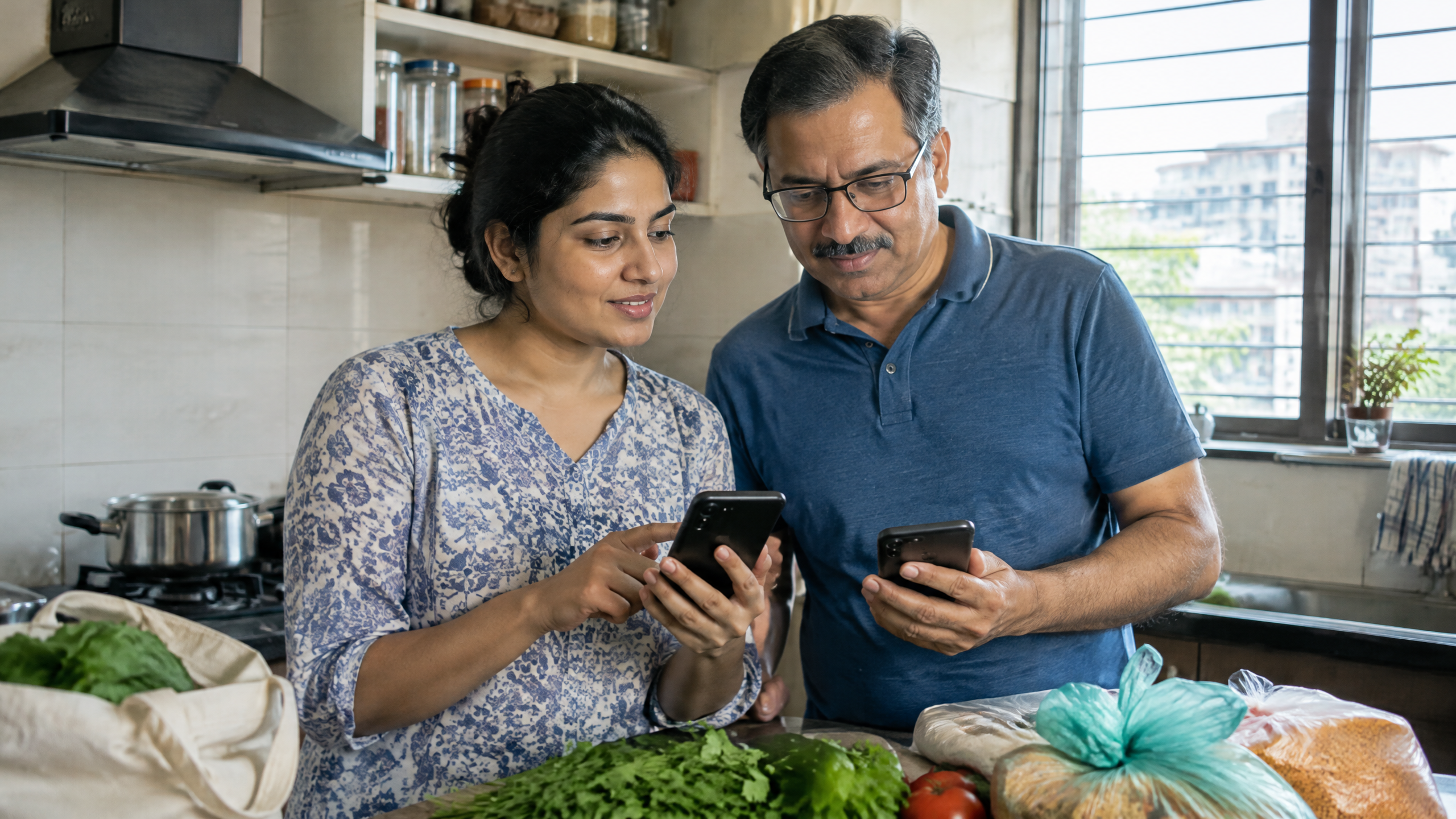
A steady connection and usable device help with a video session. For technology context, see TechDuoPulse’s smartphone technology and smartphone connectivity explainers; they are not health guidance.
### Route 2: assisted consultation at a participating facility
If you lack a suitable phone, a private place or reliable data, ask a nearby public primary-care facility whether it participates and what its hours are. In the programme model, the facility is the spoke and a doctor or specialist hub is the remote end. A health worker can assist the session. [3]
Digital access is more than handset ownership. It also depends on signal, privacy, confidence using an interface and a connected facility.
Example: A resident of a village may be able to visit a participating primary-care facility for an assisted session rather than travel first to a distant specialist centre. The doctor may still ask for an in-person visit, investigation or referral. The gain is access to an informed next step; it is not a guarantee that travel disappears.
What happens during an eSanjeevani consultation?
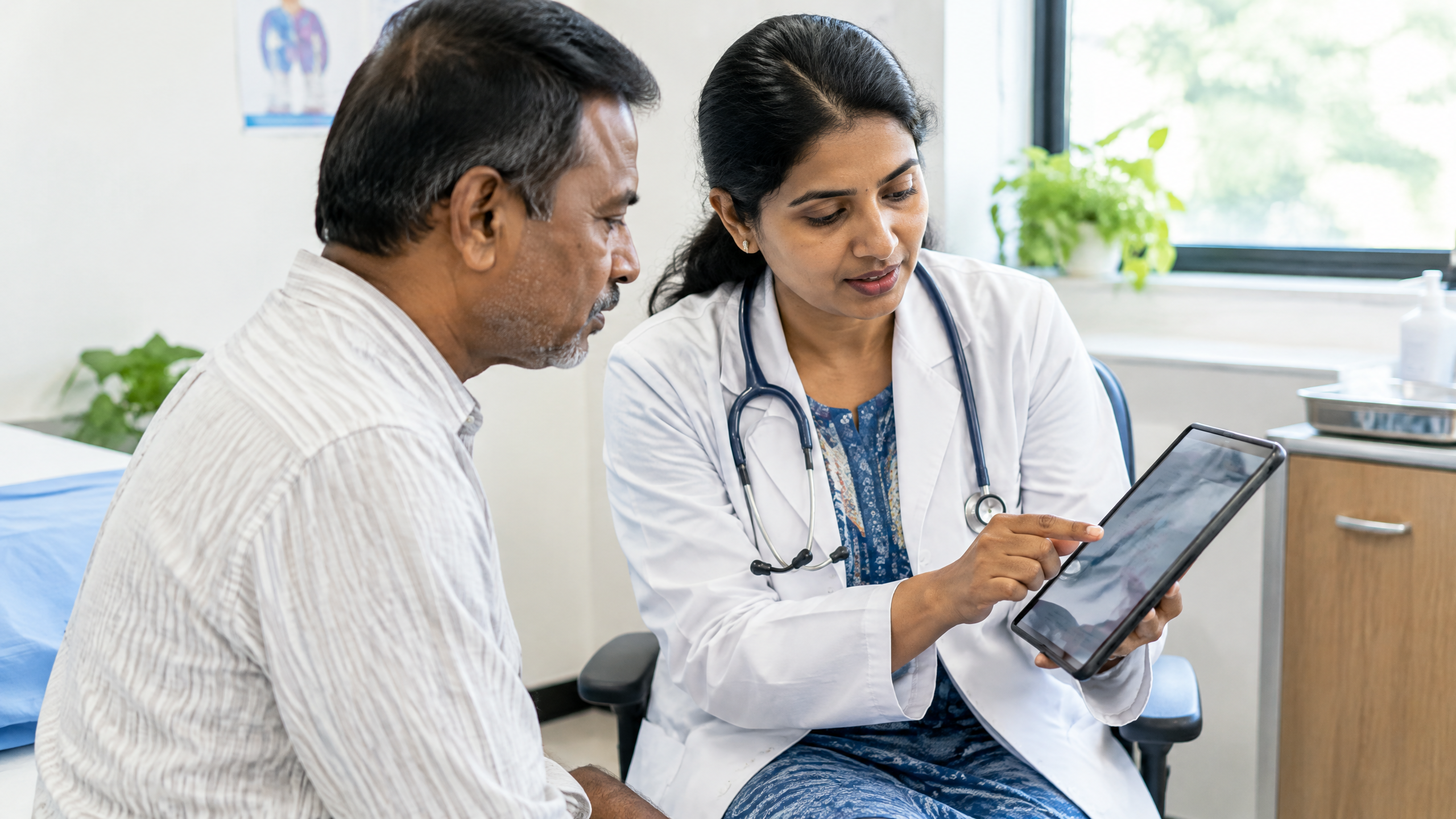
The clinical process is led by a registered medical practitioner (RMP). At a first consultation, the practitioner confirms identity, makes a quick assessment and decides whether remote management is appropriate. They can ask for more information or results, or advise an in-person consultation or referral. [5]
If a case is suitable, the guidelines allow health education, counselling, investigation advice and, within the framework, a prescription. That does not mean every consultation produces a diagnosis or medicine. The right outcome may be more information, follow-up or a physical visit. [5]
Example: A clinician may consider a lab document you share but still decide that an examination or new test is needed. Do not edit or omit information to make a case fit an online route.
The 2026 Ministry update says selected patient-to-doctor specialist OPD services had been rolled out at AIIMS Jodhpur, AIIMS Jammu and AIIMS Patna. Treat that as a selective, schedule-dependent expansion rather than an assurance of specialist access through every eSanjeevani entry point. [1]
When eSanjeevani is not the right route
### Emergencies need in-person emergency care
Do not wait in an online queue for an emergency. India’s Telemedicine Practice Guidelines say the goal in an emergency is in-person care as soon as possible. A clinician may give first-aid guidance or facilitate a referral, but the patient must be advised to have an in-person interaction with a registered medical practitioner at the earliest. [5]
This is not medical advice or an assessment tool. If you think a situation needs emergency attention, seek immediate in-person/emergency care rather than relying on this article or a delayed digital consultation.
### A video call cannot perform every examination
A camera can support conversation and visual information. It cannot reliably provide every part of a physical examination, diagnostic test or procedure. The guidelines explicitly allow an RMP to decide that the information is insufficient or that telemedicine is not suitable, then refer for in-person care. [5]
That limit is a clinical safeguard, not a failure of the service. A useful teleconsultation can clarify where to go next and what information to bring. It should not be used to demand a prescription or to avoid a necessary referral.
ABHA records and privacy: what to check
The official portal currently asks people to provide an ABHA ID in consultations to link health records. If you have one, review the current form and consent prompts rather than assuming it will automatically retrieve every record from every provider. Participation, available records and workflow can differ. [2]
The published privacy policy says registration may collect contact details and health records, encrypts information before cloud upload, and may use anonymised or aggregated data for stated reporting, research, academic, public-health and health-delivery purposes. Read the current policy before sharing information. [6]
Protect one-time passwords and avoid sharing them with strangers. For general account-safety context, see TechDuoPulse’s passkeys, phishing and account recovery guide; use the official portal or UMANG listing for current contact information.
A quick, realistic checklist before you try it
Use an official route. Start at the official eSanjeevani portal or UMANG, not an unsolicited link.
Check local availability. Confirm participation, hours, language, specialty roster and queue process.
Bring accurate information. Keep relevant documents handy; do not guess or change facts.
Accept the clinical next step. The clinician may request more information, prescribe within the rules or ask you to attend in person.
Keep emergencies out of the queue. Seek immediate in-person/emergency care when urgent help may be needed.
Frequently asked questions about eSanjeevani
### Is eSanjeevani free?
The Ministry describes eSanjeevani as a public service providing free teleconsultation services. Check current local instructions for medicines, tests, travel and follow-up; a teleconsultation does not make every part of care free or automatic. [1]
### Can I use eSanjeevani from home?
Patient-to-doctor access is available in parts of the programme, while participating public facilities offer assisted telemedicine. Check the official portal or UMANG for the current route. Services vary by state and facility. [2] [4]
### Do I need an ABHA ID for eSanjeevani?
The portal currently requests an ABHA ID to link records in consultations. Follow the current official registration and consent screens. Do not assume that an ABHA ID guarantees a complete record history or a consultation slot. [2]
### Can an eSanjeevani doctor prescribe medicine?
An RMP may prescribe where the consultation is suitable and the rules permit it. A prescription is not guaranteed; more information, investigations, follow-up or an in-person examination may be needed. [5]
### Can I use eSanjeevani in an emergency?
Do not wait for a teleconsultation in an emergency. The national guidelines prioritise in-person care at the earliest, although a clinician may provide immediate first-aid guidance or help facilitate referral. [5]
Frequently asked questions about eSanjeevani
These short answers summarise the practical scope of this explainer. Service availability, eligibility and implementation details can change, so check the current official guidance before acting.
What is eSanjeevani?
eSanjeevani in India: how public telemedicine works and its limits explains the purpose, user experience and practical limits of eSanjeevani in India.
Who can use eSanjeevani?
Eligibility depends on the service, the user profile and the current rules or implementation of the participating organisation.
What should users check before using it?
Check the identity, consent, privacy, eligibility and support information shown by the service. Do not share sensitive information with an unverified person or interface.
Is eSanjeevani available everywhere?
Coverage and features may vary by state, department, institution, provider, device and rollout stage. Treat availability as status-labelled rather than universal.
Source notes
Reporting record
techduopulse stores source destinations privately. Public notes remain non-clickable so every visitor journey stays on this website.
E-Sanjeevani crosses 50 crore teleconsultations
Primary source · Research source 1eSanjeevani official portal
Primary source · Research source 2Guidelines for Telemedicine Services in AB-HWCs
Primary source · Research source 3UMANG eSanjeevani service listing
Primary source · Research source 4Telemedicine Practice Guidelines
Primary source · Research source 5eSanjeevani privacy policy
Primary source · Research source 6New India-focused explainer covering eSanjeevani, user context, limitations and verified sources.