
ABHA Health Records in India: Consent, Access and Limits Explained
This article is part of the software engineering technologies guide library.
ABHA number, ABHA address and a health record are different things
An ABHA number is the 14-digit identifier that identifies a participant in India’s digital health ecosystem. An ABHA address is a self-declared, easier-to-remember username for digital access and sharing, such as a name followed by a consent-manager domain. The official ABHA service recommends linking the two for health-data sharing.[1]
A health record is the information created during care. Depending on what a participating provider creates and links, that may include a digital lab report, prescription, diagnosis or other record. The record remains tied to the system that created or holds it; an ABHA number is not a claim that one central app contains every document from every visit.[2] [3]
This is an important boundary for families who have a mixture of paper files, WhatsApp PDFs and visits at different providers. You may be able to upload scanned copies to a compatible health locker through a personal health record (PHR) application, but an uploaded scan is not the same thing as a record created and linked by a participating provider.[3]
How ABHA health-record sharing works
ABDM’s Health Information Exchange and Consent Manager (HIE-CM) is intended to make consent-based exchange possible between different ecosystem participants. The official description calls it a data-blind gateway: it facilitates a transaction without itself accessing the exchanged health data.[4]
A simplified journey looks like this:
At an ABDM-compliant facility, you may share your ABHA address during registration.
The facility may ask for consent to link a newly created digital record to that address.
Later, a doctor, hospital or another authorised requester may ask to access relevant prior records.
You review and grant or decline the request. If you grant it, the requesting provider can receive the information within the scope and duration of that consent.[3]
The visible screen and exact steps can differ by PHR app and provider. The useful question is not “Does this facility know about ABHA?” but “Can this facility create, link, find or share the record I need through its current workflow?” Ask at registration rather than assuming that every counter, department or historic visit works in the same way.
### What to check before approving a request
Consent is more meaningful when you know what you are agreeing to. The Health Data Management Policy says consent should be informed, specific and capable of withdrawal. It also says a consent notice should explain the purpose, categories of personal data, recipients where applicable, retention information or criteria, and how to withdraw consent.[5]
Before tapping approve, take a moment to check the requesting organisation or professional, purpose, type or range of record requested, and duration. If something is unclear, ask the facility to explain it in a language you understand or decline until you can confirm it. The policy says consent may be withdrawn; do not assume that withdrawal deletes clinical records held by a provider or undoes a disclosure that has already occurred. Those outcomes depend on the relevant service and record-holder processes and are not established by the materials reviewed here.[5]
Never share a one-time password with someone who calls or messages unexpectedly. Use the official ABHA/ABDM path or a verified facility channel, and protect the phone used for account access. For everyday device safeguards, see TechDuoPulse’s Smartphone Security Guide and its explainer on passkeys, phishing and account recovery.
Creating an ABHA account in India
The National Health Authority’s ABHA creation page currently offers Aadhaar and driving-licence routes. The official portal, login and its published instructions are the safer place to start because account screens and verification routes can change.[6]
The driving-licence route has a specific caveat: the portal says it initially gives an enrolment number, and the person must take the driving licence to a nearby ABDM-participating facility for identity verification to obtain the ABHA number.[7] Do not assume that an enrolment number is already the final ABHA number.
After creation, a person can create or link an ABHA address through an ABDM-enabled PHR application. The official FAQ says users may sign in through a 14-digit ABHA number, ABHA address and password, or mobile number, depending on the available method.[3]
Participation is voluntary. The official ABHA service says a person may opt out by deactivating the ABHA number.[1] If you need help with a particular screen, record, correction or grievance, use the official NHA/ABDM support route rather than relying on an unverified agent or social-media post.
Why participation matters more than a digital card
ABDM is designed to improve interoperability across many otherwise separate health systems. Its official FAQ describes registries for individuals, professionals and facilities, alongside a consent manager that verifies identity and logs consent before sharing. It also says the government does not intend to force providers or users to adopt a single solution.[3]
So a successful account creation does not prove that:
a particular hospital, laboratory, clinic or pharmacy is participating today;
a provider has digitised a particular older record;
every clinician in a participating facility can view the same records;
a requested record will be found or linked automatically; or
a provider will make a clinical decision solely from a digital record.
The Health Facility Registry is useful context: it is a national repository covering public and private facilities, including hospitals, clinics, labs, imaging centres and pharmacies.[8] But registry status and on-the-ground record availability are different questions. A facility may have a listing while a specific service, department or visit still uses a separate process. Check directly with the facility before relying on a record for an appointment.
### A realistic public-hospital example
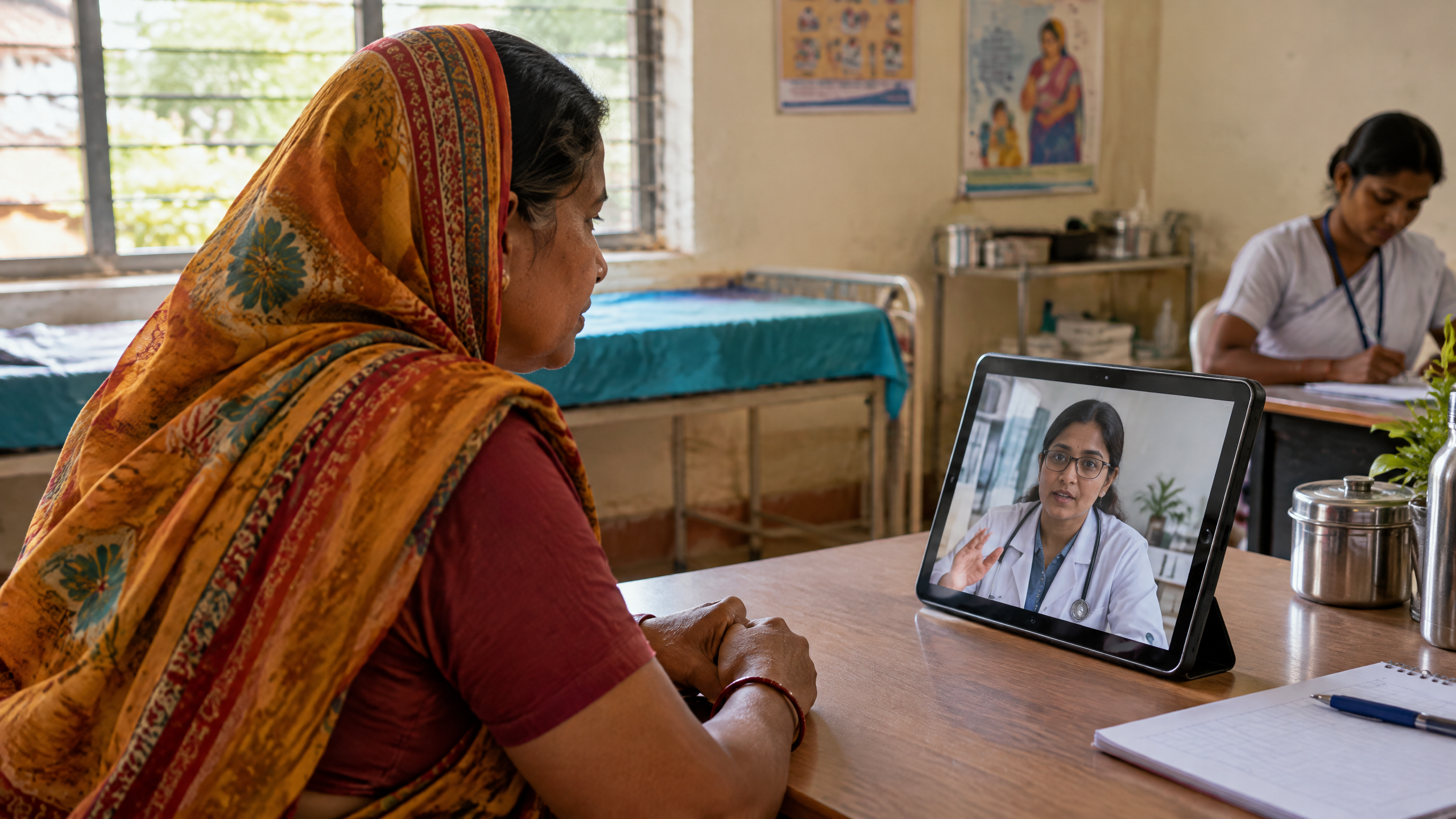
Imagine a person receives a digital blood-test report at a participating district hospital. The facility links it to the person’s ABHA address after seeking consent. Months later, the person visits another participating provider in another city. That provider can request access to the relevant record, and the person can decide whether to approve.
This could reduce the need to search through a phone gallery or carry a paper copy. Yet it does not guarantee that every earlier test, handwritten prescription or private-clinic file appears. The new clinician may still need to ask questions, repeat a test or use their professional judgment. A digital record supports care continuity; it does not replace care.
### A migrant-worker or family-care example
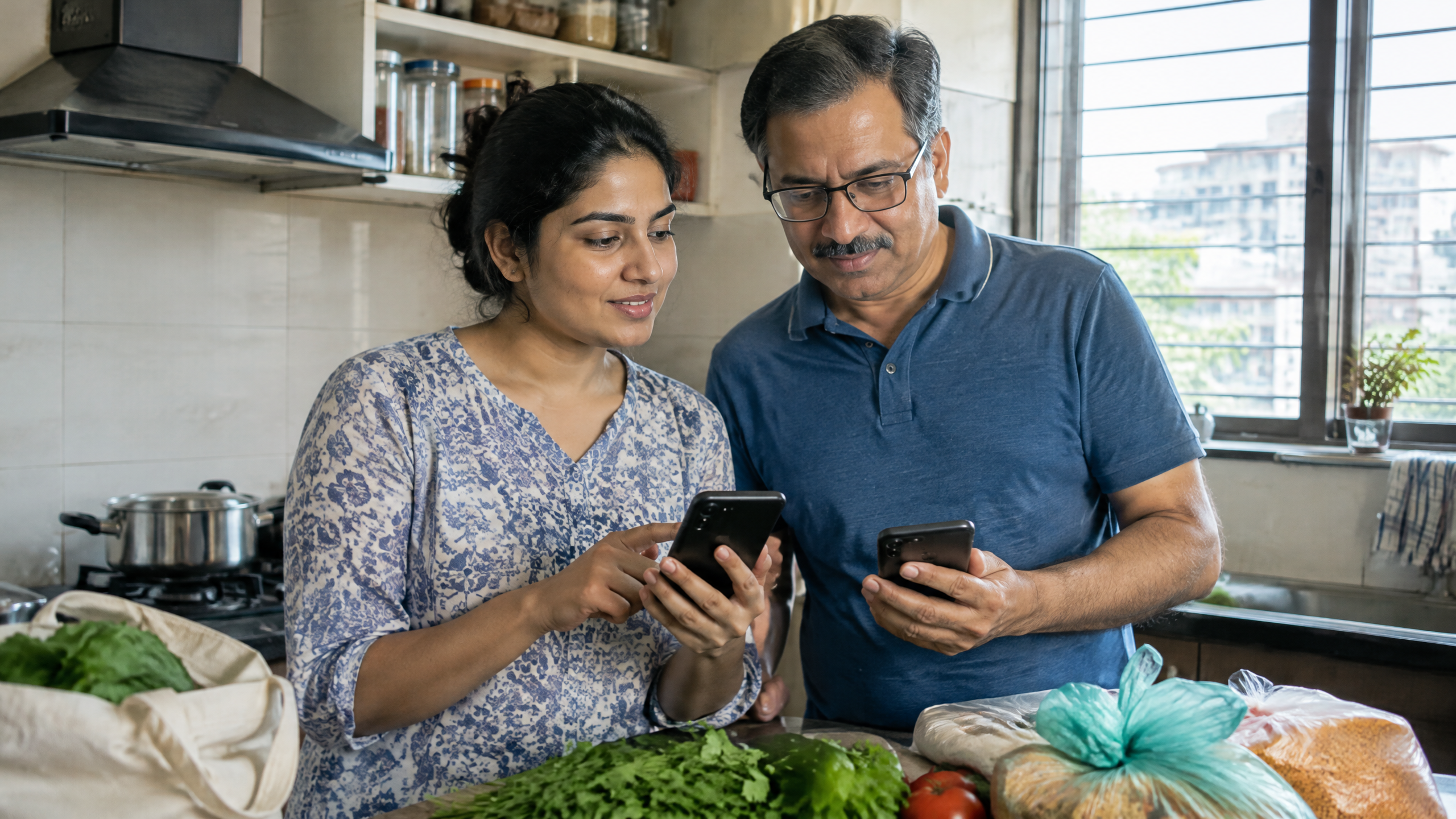
A worker moving between states may find an ABHA address useful if records are created by a participating provider in one location and a subsequent participating provider requests them with the worker’s consent. A family member can also help a relative keep their device and paper records organised, while letting that relative make their own consent choices where appropriate.
Neither situation changes scheme eligibility, assures cashless treatment, or turns an ABHA account into an emergency-care pathway. In an emergency, seek the appropriate immediate medical help rather than waiting for an account, app, consent request or record search to complete.
What ABHA does not replace
ABHA is not a diagnosis, prescription, medical history in itself, health-insurance approval or a promise of free treatment. NHA’s FAQ specifically says an ABHA number is not proof of eligibility for AB-PMJAY; that scheme uses its own eligibility criteria.[3]
It also does not replace keeping copies of important information. If you have an upcoming appointment, retain paper or digital copies that the clinician asks for and tell them about relevant history. Do not delay urgent care because an old record is missing from an app. A clinician, not a digital account, assesses symptoms and decides what care is appropriate.
For a wider example of how an India public-service account can have an intended national design while local participation and operational status still need checking, read the site’s OneTag FASTag portability explainer. The subject is different, but the reader habit is the same: distinguish a system’s design from a guarantee that every local workflow is live.
Frequently asked questions
### Is an ABHA number the same as an Ayushman card or PM-JAY eligibility?
No. An ABHA number is a digital-health identifier used to link health records. It does not, by itself, show eligibility for AB-PMJAY or another scheme; eligibility is decided under the relevant scheme’s criteria.[3]
### Can every hospital in India see my ABHA health records?
No. A provider must be able to participate in the relevant ABDM workflow, request access, and receive your valid consent. Record availability also depends on whether a provider created or linked the record. Do not assume universal participation or automatic access.[2] [3]
### Do all my old medical records appear automatically after I create ABHA?
No. The official flow describes digital records created and linked by ABDM-compliant facilities, plus records a user may discover/fetch or upload through compatible tools. It does not say all historic paper or provider records are automatically imported.[3]
### Can I refuse or withdraw ABHA record-sharing consent?
You can decline a request. The Health Data Management Policy says consent should be capable of withdrawal, and the ABDM FAQ says records are not shared with a requesting provider without the user’s consent.[3] [5] Check the applicable PHR app or official support route for the current process. Withdrawal should not be assumed to erase records held elsewhere or undo an earlier disclosure.
### Is creating an ABHA account compulsory?
No. The official ABHA site says participation is voluntary and that a user may opt out by deactivating the ABHA number.[1]
Frequently asked questions about ABHA health records
These short answers summarise the practical scope of this explainer. Service availability, eligibility and implementation details can change, so check the current official guidance before acting.
What is ABHA health records?
ABHA Health Records in India: Consent, Access and Limits Explained explains the purpose, user experience and practical limits of ABHA health records in India.
Who can use ABHA health records?
Eligibility depends on the service, the user profile and the current rules or implementation of the participating organisation.
What should users check before using it?
Check the identity, consent, privacy, eligibility and support information shown by the service. Do not share sensitive information with an unverified person or interface.
Is ABHA health records available everywhere?
Coverage and features may vary by state, department, institution, provider, device and rollout stage. Treat availability as status-labelled rather than universal.
Source notes
Reporting record
techduopulse stores source destinations privately. Public notes remain non-clickable so every visitor journey stays on this website.
National Health Authority: Create Ayushman Bharat Health Account (ABHA) Number
Primary source · Research source 1Ayushman Bharat Digital Mission: official homepage
Primary source · Research source 2Ayushman Bharat Digital Mission: Frequently Asked Questions
Primary source · Research source 3ABDM: Health Information Exchange Consent Manager
Primary source · Research source 4National Digital Health Mission: Health Data Management Policy
Primary source · Research source 5National Health Authority: Create ABHA Number registration options
Primary source · Research source 6National Health Authority: Create ABHA Number using Driving Licence
Primary source · Research source 7National Healthcare Providers Registry: Health Facility Registry
Primary source · Research source 8New India-focused explainer covering ABHA health records, user context, limitations and verified sources.