
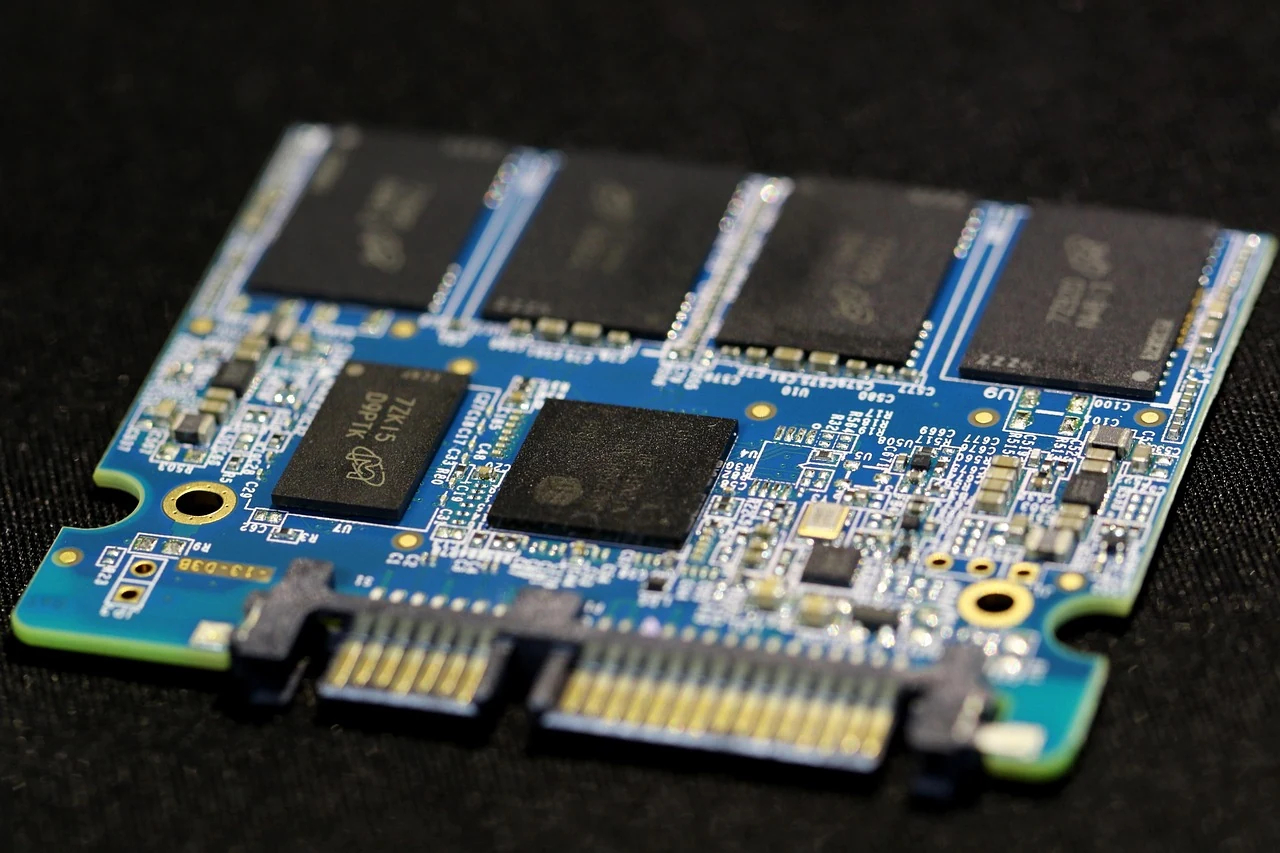
Yes—if the model and its execution system are designed to load selected weights rather than keep the entire weight set in RAM. Weights are the learned numerical values that shape a model's calculations. Flash-backed selective loading stores the full model in flash storage, brings the needed subset into working memory, and reuses that subset while producing an answer. It still needs RAM; storage does not perform the model's calculations. [1] [3]
The hard part is not finding somewhere to store a large file. It is avoiding so many weight transfers that generation becomes slow. Apple's AFM 3 Core Advanced provides one concrete design: choose weights using the prompt, keep useful parts active, and periodically reconsider the selection. Understanding that sequence also explains why a model's total parameters, active parameters and complete RAM use are three different things. [1]
Show less
On this page 11 sections
- Key Takeaways
- Three different sizes behind one model
- Why more storage is not enough
- Select a useful subset from the instruction
- Follow a request through Apple's flash-backed design
- Earlier flash research shows why reuse matters
- What selective loading does not remove
- Common questions about weights and RAM
- Important Points / Key Information
- Examples / Supporting Information
- Conclusion
Part of our artificial intelligence technology guide library
Key Takeaways
- Flash-backed execution stores the full weight set in flash and brings selected weights into DRAM for computation.
- Stored parameters, active parameters and complete runtime RAM describe different quantities.
- Keeping useful weights loaded reduces repeated transfers; how often selection changes is a central design choice.
- Apple's current expert architecture and the two earlier research methods are related, but their exact loading strategies differ.
Three different sizes behind one model
The stored model contains its full set of parameters. In this design, NAND flash is the persistent storage that holds those weights. DRAM, or dynamic random-access memory, is the faster working memory into which selected weights are brought for execution. Flash offers storage capacity, but its access and transfer characteristics differ from DRAM's. [1] [3]
Active parameters are the parameters used in the selected computation. They are not automatically the complete set of weights occupying RAM: a system can retain useful weights between steps, and some components remain active throughout. Nor does the active count reveal the number of bytes used for each numerical value. [1] [3]
Full-runtime memory includes more than weights. A language model can also retain attention information about earlier tokens in a key-value cache, alongside intermediate calculation data and software buffers. A token is a unit of text processed by the model, not necessarily a whole word. These allocations are separate from the stored parameter count. [4]
Why more storage is not enough
Keeping a large model on flash solves a capacity problem: the full weights need not all occupy DRAM at once. It does not solve the transfer problem. If generation continually asks for different weights, the system must repeatedly read them from storage before it can use them. The older LLM in a flash paper explains why naive loading on every forward pass can be expensive. [3]
Both the amount transferred and the pattern of reads matter. Many small scattered reads can make poorer use of flash than larger contiguous transfers. Meanwhile, keeping previously loaded weights available consumes RAM but can avoid another read. Practical execution therefore needs a policy for what to load and what to retain, not just a larger storage device. [3]
Select a useful subset from the instruction
Apple's research page for Instruction-Following Pruning, marked June 2025, describes a learned predictor that reads the user instruction and chooses which model parameters to activate for that task. Its sparse mask is a selection pattern: it identifies parts to use rather than permanently deleting the same parts for every request. The predictor and language model are trained together. [2]
The research selects rows and columns in feed-forward matrices, which are arrays of weights used in a model's calculation layers. Fixing a selection for the task makes those weights reusable during generation. The shared idea with mixture-of-experts models is conditional computation: activate a subset instead of using every parameter. The flash-relevant distinction is how frequently that selection changes. [2]
This predictor is not a lookup table that knows every answer's exact needs. It learns a selection strategy, and the resulting model must still be evaluated for the intended tasks. The research's quality results do not establish that every chosen subset preserves the full model's abilities. [2]
Follow a request through Apple's flash-backed design
Apple's June 2026 description says AFM 3 Core Advanced stores a 20-billion-parameter model in NAND flash and activates 1–4 billion parameters at a time, depending on the request. These are Apple's architecture figures, not a measured RAM requirement. The company describes the model as optimized for its most capable Apple silicon systems, not as compatible with every phone. [1]
During initial prompt processing, a lightweight dense block makes a routing decision. Routing means choosing the model components that will participate. Here, experts are learned groups of weights associated mainly with feed-forward blocks; the word does not promise that each group has a neatly labelled subject specialty. [1]
The system combines selected routed experts with shared weights in DRAM. Many shared experts are always active. Input-dependent routed experts are brought into DRAM when needed, allowing the selected weights to be used for generation without fetching the entire stored model. [1]
The selection is periodically reconsidered while generation continues. So per-prompt routing does not mean one unchanging subset must serve the entire response. Apple's stated reason for reducing selection churn is that NAND-to-DRAM bandwidth is too slow for token-by-token weight swapping in this design. It is not a rule that all sparse models have identical loading requirements. [1]
Earlier flash research shows why reuse matters
LLM in a flash, first submitted in December 2023, describes a different execution method. In the January 2024 version considered here, the system predicts which feed-forward weights are needed at token steps and uses windowing to keep weights associated with recent tokens in DRAM. It loads newly needed weights rather than discarding and rereading everything at each step. [3]
Its row-column bundling method places paired feed-forward weight data together so it can be read in larger contiguous chunks. Windowing reduces repeated transfers; bundling changes how necessary transfers are organized. A larger retained window can reduce new reads but consumes more working memory. [3]
These techniques illustrate the same systems lesson—weight reuse and read layout matter—but they are not interchangeable descriptions of Apple's later architecture. The older token-step predictor, the 2025 task-conditioned pruning research, and the 2026 periodically reselected expert design have different selection details. The older paper does not establish that the current model uses its exact windowing or bundling methods. [1] [2] [3]
What selective loading does not remove
The full model still occupies storage, selected weights still require DRAM, and routing plus transfers still take work. A low active-parameter count cannot by itself establish response speed, energy use or answer quality. It also cannot be turned into a proportional whole-runtime RAM saving: the retained weight set, numerical representation and non-weight allocations all matter. [1] [2] [3] [4]
A meaningful memory claim should say whether it measures weights alone or the entire runtime, and on which hardware. A speed claim should distinguish the initial wait for output from the pace of generation. Both should be paired with task-quality results and an explanation of whether weights were already loaded or had to be read. These questions reveal the transfer cost hidden behind a simple parameter label. [1] [3] [4]
An on-device model design also does not establish that every feature or request is processed locally. Apple's foundation-model family includes server-based models as well. Selective loading addresses weight residency; it is not a complete description of application data flow or device deployment. [1]
Common questions about weights and RAM
Can I put any model on flash and get this benefit?
Not simply by changing where the file is saved. The described approaches require a model and runtime that can select, load and reuse the appropriate weights. A conventional execution path may still need its full weight set resident, or spend substantial time on transfers. Available storage alone does not establish practical flash-backed inference. [1] [3]
Is a smaller active subset just a smaller model?
It is a smaller selected computation, not necessarily a smaller stored model. Different instructions can select different weights from the larger retained set. This differs from keeping only one permanently reduced model for every request. The broader weight set does not, however, guarantee that a selected subset matches every capability of full-model execution. [1] [2]
Important Points / Key Information
Read a flash-backed model claim as three questions: how much is stored, which parameters participate, and what occupies working memory during execution. Then ask how often the loaded subset changes. That last detail helps explain whether the design reduces repeated storage reads or merely moves the memory constraint into a transfer bottleneck. [1] [3]
Keep the evidence attached to the right system. Apple's stated total and active counts describe its 2026 architecture; the 2025 pruning page explains instruction-conditioned selection; the earlier flash paper explains its own token-step reuse and read layout. None supplies an independent full-runtime RAM result for a different device. [1] [2] [3]
Examples / Supporting Information
Hypothetical walkthrough—not a measurement: imagine a device asked to summarize a short document. The full model is stored in flash. A predictor reads the instruction and selects a useful subset of weights, while shared components remain available in working memory. The selected weights are loaded into DRAM before the relevant calculations use them.
As the summary is generated, the device reuses loaded weights. If the design reconsiders the selection and needs a different subset, additional weights must be brought in from flash. Avoiding unnecessary replacement is the point: an unchanged stored file can support different selected computations without being loaded in full each time.
This example explains the movement sequence, not which experts a real summarization request would select. It assigns no memory size, elapsed time or quality result. Apple's actual description supports initial routing and periodic reselection; it does not disclose a universal selection schedule for this fictional request. [1]
Conclusion
An AI model can run without every stored weight staying in RAM when its architecture and runtime support selective loading. The enabling mechanism is controlled movement: choose useful weights, bring them from flash into DRAM, and reuse them long enough to avoid excessive transfers. [1] [3]
The right interpretation is not that RAM has disappeared or that fewer active parameters reveal the full memory requirement. It is that weight residency can be managed separately from total model storage—with transfer overhead, runtime state and task quality still part of the design. [1] [2] [4]
How we checked thisSources (4)
We keep source links private so your reading stays on techduopulse. Each note names the publisher and document we checked.
Apple Machine Learning Research — Introducing the Third Generation of Apple's Foundation Models — June 2026 — 8 June 2026; page update noted 9 September 2026
Primary source · NAND residency, DRAM loading, shared and routed experts, periodic reselection and attributed parameter countsApple Machine Learning Research — Instruction-Following Pruning for Large Language Models — June 2025 — June 2025, as marked on research page
Primary source · Instruction-dependent sparse mask, joint training, task-fixed parameter selection and research limitationsAlizadeh and colleagues / arXiv — LLM in a flash — version 2, January 2024 — 4 January 2024, version 2; first submitted 12 December 2023
Primary source · Flash transfer cost, token-step selection, windowing and row-column bundling, distinct from current Apple implementationNVIDIA Developer — Mastering LLM Techniques: Inference Optimization — November 2023 — 17 November 2023, original publication
Primary source · Tokens, separate weight and key-value-cache storage, and runtime memory background, not Apple memory measurementsInitial source-backed owner-authorized manual publication. Original reviewed article facts, metadata and licensed real photograph preserved. Schema-only body and citation projections are recorded privately; no hands-on test or qualified human certification claimed.