AgriStack Farmer ID Explained: What India’s Farm Registry Connects and What It Does Not
This article is part of the software engineering technologies guide library.
Start with the names: AgriStack, Farmer ID and Farm ID
The names sound similar but do different jobs.
### AgriStack is the wider digital infrastructure
Under the Digital Agriculture Mission, AgriStack includes the Farmer Registry, geo-referenced village maps and the Crop Sown Registry. The official portal says it is meant to support access to services, credit, inputs and markets. The registries are federated: States and UTs create and maintain them, rather than one central app replacing every State system. [1] [2]
### A Farmer ID is for the farmer
A Farmer ID is the person-level digital identity used in the Farmer Registry. The official portal describes it as a functional ID based on Aadhaar under the government’s IndEA 2.0 architecture. The registry is designed to link a farmer dynamically with farmland plot records for non-legal, planning, advisory and scheme-delivery purposes. [2]
That is why a Farmer ID should not be described as a land-title certificate or as a replacement for the official Record of Rights (RoR). Land ownership, mutation and disputes continue to depend on the relevant State land-record and revenue processes.
### A Farm ID is for a land ownership extent
A Farm ID (also called a Farmland Plot ID or Owner Plot ID in the official clarifications) relates to an ownership extent within a land parcel. A Farmer ID relates to a person. One farmer can have land in more than one plot; joint ownership and the way shares are recorded can also affect how Farm IDs are represented. [4]
This distinction matters when a page shows a plot or an enrolment claim: seeing land data does not, by itself, settle ownership or make someone eligible for a particular programme.
What a Farmer ID may help connect in India
The Ministry says Farmer Registry integration is intended to speed up access pathways for credit, crop insurance, weather advisories and MSP-based crop-procurement systems. It has also described the wider mission as enabling paper-light delivery of eligible government services, crop loans and personalised agricultural advice. [1] [5]
These are service pathways, not blanket promises. A bank still applies its own credit decision and documentation rules. An insurance programme still has its own enrolment, season, crop and claim requirements. A procurement system still has its own crop, quantity, quality, registration and State rules. A Farmer ID may reduce repeated data entry where a connection exists; it does not override those decisions.
The rollout is material. In an August 2026 written reply, the Ministry said more than 10.31 crore Farmer IDs had been created as of 3 August 2026 and said the registry was being integrated with farmer-facing schemes, services and platforms. [5] That is evidence of large-scale deployment, not proof that every farmer, programme, village or State portal offers the same live transaction today.
For example, the Ministry has described Maharashtra’s use of AgriStack for scheme delivery, advisory, credit access and disaster relief, and Chhattisgarh’s Farmer ID and Digital Crop Survey use for MSP-based paddy procurement. They are useful examples of what State integration can look like; they are not a national guarantee. [6]
How registration may work — and why the State journey matters
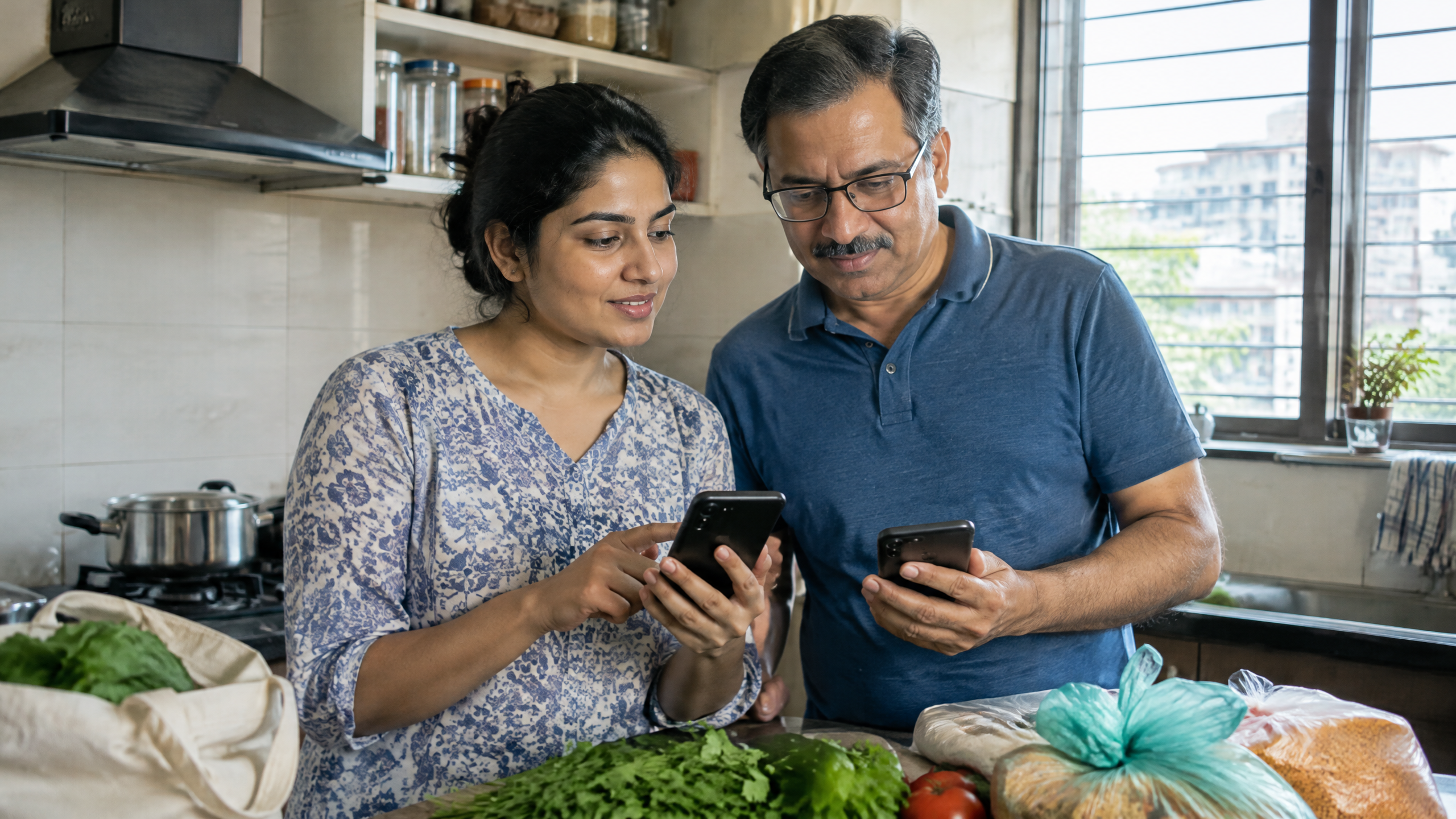
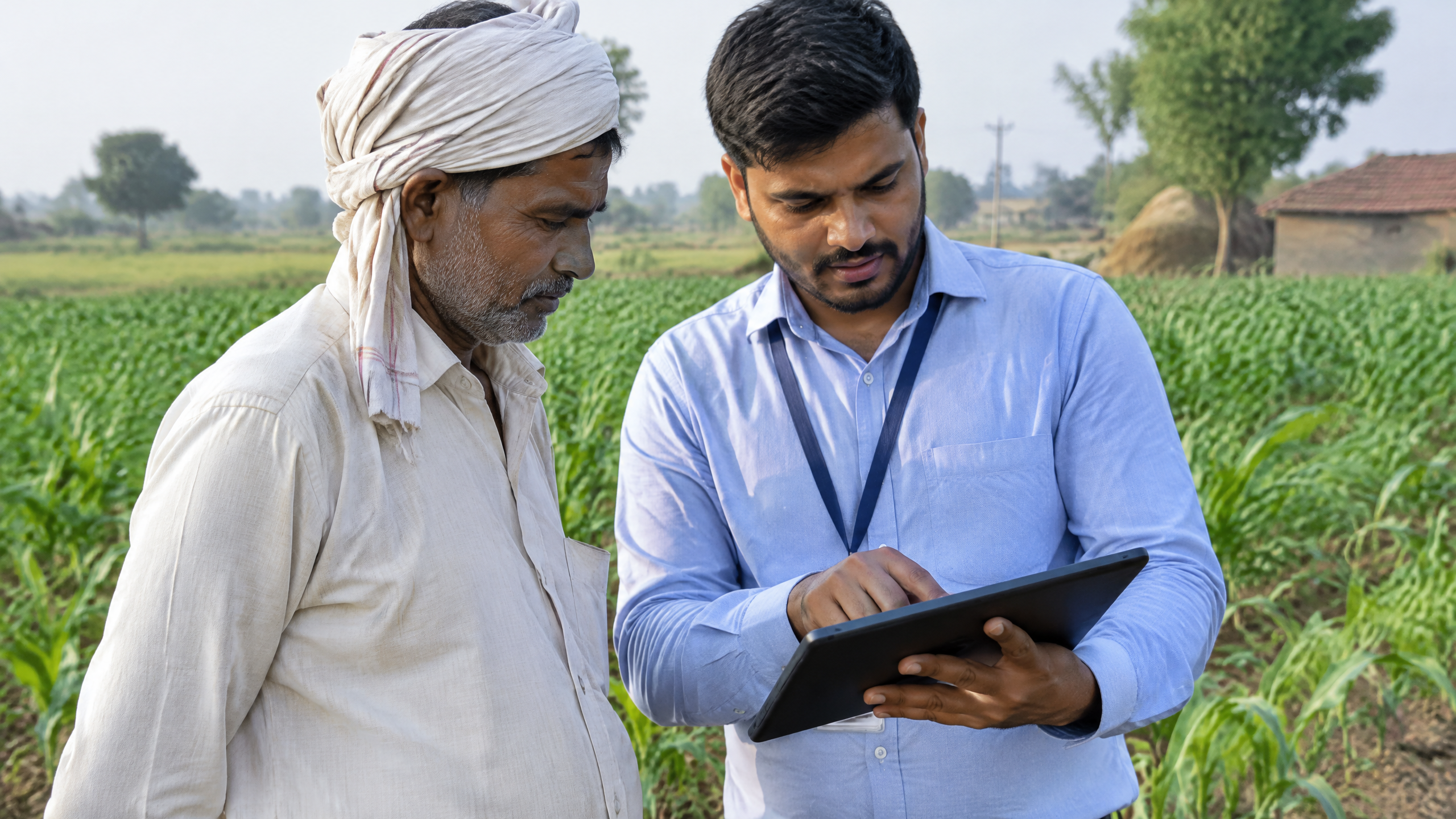
The State Farmer Registry handbook describes several possible routes: self-service through an app or web portal, registration camps run by the State, CSC assistance and in-person help at a designated government office. A State may offer some, not all, of these routes. [3]
A typical journey in the handbook is:
Create or access an account and complete the available identity and mobile verification steps.
Review the land information shown, or enter relevant land particulars if a plot is missing.
Read the consent screen, complete the e-sign step if presented, and submit the claim.
Keep the enrolment number to check status while the claim is verified.
The exact evidence and screen sequence are State-specific. The handbook’s self-service example mentions Aadhaar, a mobile number that can receive texts, land survey details, and, for face authentication where used, a working camera. It also warns users not to share OTPs or bank details over the phone. [3] If you use a personal phone, the site’s smartphone security guide offers general advice on screen locks, updates and app permissions.
The handbook describes some claims being auto-approved under State criteria and others sent for manual review. It mentions issuance after approval, but this is not a universal 24-hour promise: a mismatch, incomplete record or verification issue can take longer. [3]
State portals illustrate the difference. Uttar Pradesh publishes a self-mode manual and app alongside a helpline, while Maharashtra’s portal displays enrolment-status and KCC-status functions. Punjab presents its own Farmer Registry entry point. A feature visible in one place is not verification that the same option is available elsewhere. [7] [8] [9]
Land-record mismatches, inheritance and joint ownership
A Farmer Registry is built around available State land-record information. That can surface practical problems: a plot does not appear, a name differs between Aadhaar and the RoR, the record remains in an ancestor’s name, or joint owners are recorded differently from how a family understands its holding.
When a land bucket is not shown, a farmer may be able to enter details such as survey or sub-survey number and village information. The handbook describes State verification and a grievance process for incorrect, absent or disputed land linkage. [3] [4]
That process is not a substitute for correcting the underlying official land record. If a mutation, inheritance or ownership issue is unresolved, use the State’s designated registry help channel and the appropriate revenue/land-record office. This article cannot determine ownership, resolve a dispute or advise on legal documentation.
### What about tenant farmers and sharecroppers?
The national mission says cultivators and tenant farmers are included as per State Government policy. A March 2026 Ministry reply says the Farmer Registry application has a provision to onboard cultivators such as tenants and sharecroppers. [1] [6]
In practical terms, that supports a careful conclusion: a tenant or sharecropper may have a route in the system, but the available method, evidence, service access and result depend on the State and the relevant programme. Do not assume a Farmer ID confirms tenancy rights or guarantees a benefit. Ask through the official State channel or a CSC what applies locally.
Consent, privacy and using the registry carefully
The official Agri Stack portal describes a Consent Manager intended to support consent-based sharing with authorised entities and says consent may be revoked to prevent future sharing. The Farmer Registry clarifications likewise say external sharing should use explicit farmer consent. [2] [4]
Before completing an e-sign or sharing step, read the purpose, recipient and information requested. Use only a State government, NIC/AgriStack or recognised CSC route. Never give an OTP, bank PIN or password to an unsolicited caller.
For context on another Indian digital-service workflow, see TechDuoPulse’s OneTag FASTag issuer-bank portability explainer. Like Farmer Registry services, a public digital framework does not mean every user, provider or transaction has identical availability on day one.
Two realistic examples
Example: Meena is a landholder whose plot appears in the State portal. She completes the available verification and consent steps, submits the claim and keeps the enrolment number. If approved, her Farmer ID can be used where her State and an eligible programme have connected it. It does not mean a crop loan or insurance cover is approved automatically.
Example: Rahim cultivates land that is not in his name. He should not assume a landholder’s Farmer ID settles his situation. The national system has a provision for cultivators including tenants and sharecroppers, but the applicable State route and programme rules matter. He can ask the official State registry support point or CSC about the locally available process. [6]
The limits to keep in mind
A Farmer ID is not a land-title deed, a Farm ID, or a legal ruling on ownership.
It does not create universal nationwide eligibility for PM-KISAN, crop insurance, a loan, procurement or any other programme.
A portal feature or integration in one State does not prove it exists in another.
An enrolment number tracks a submitted claim; it is not the same as final approval.
Consent architecture is a stated design feature, but users should still read the exact screen and State terms before e-signing.
Frequently asked questions
### Is AgriStack Farmer ID the same as Aadhaar?
No. The official portal describes Farmer ID as a functional farmer identity based on Aadhaar under its architecture. The registration journey may use Aadhaar/eKYC, but Farmer ID is a separate agriculture-registry identifier. [2]
### Is a Farmer ID the same as a Farm ID?
No. A Farmer ID identifies the farmer in the registry. A Farm ID relates to an ownership extent within a land parcel. Neither is, by itself, a land-title document. [4]
### Does a Farmer ID guarantee PM-KISAN, crop insurance, a loan or MSP procurement?
No. It may help a connected State or programme verify and reuse information, but each service retains its own eligibility, verification and operational rules. [5] [6]
### What should I do if my land is missing or my name does not match?
Use the official State Farmer Registry status, helpdesk, camp, CSC or government-office route. The handbook describes claim verification and a land-linkage grievance process; underlying land-record corrections may require the appropriate revenue process. [3]
### Can a tenant farmer or sharecropper get a Farmer ID?
The system has a stated provision for cultivators including tenants and sharecroppers, while the national mission says inclusion is subject to State policy. Check the official route in your State; availability and requirements are not verified as uniform nationwide. [1] [6]
Frequently asked questions about AgriStack Farmer ID
These short answers summarise the practical scope of this explainer. Service availability, eligibility and implementation details can change, so check the current official guidance before acting.
What is AgriStack Farmer ID?
AgriStack Farmer ID Explained: What India’s Farm Registry Connects and What It Does Not explains the purpose, user experience and practical limits of AgriStack Farmer ID in India.
Who can use AgriStack Farmer ID?
Eligibility depends on the service, the user profile and the current rules or implementation of the participating organisation.
What should users check before using it?
Check the identity, consent, privacy, eligibility and support information shown by the service. Do not share sensitive information with an unverified person or interface.
Is AgriStack Farmer ID available everywhere?
Coverage and features may vary by state, department, institution, provider, device and rollout stage. Treat availability as status-labelled rather than universal.
Source notes
Reporting record
techduopulse stores source destinations privately. Public notes remain non-clickable so every visitor journey stays on this website.
Article structured data
Primary source · Research source 10Cabinet approves the Digital Agriculture Mission
Primary source · Research source 1Official Agri Stack portal
Primary source · Research source 2State Farmer Registry Handbook
Primary source · Research source 3Farmer Registry Administrative and Technical Clarifications, version 1.1
Primary source · Research source 4Implementation of AgriStack and Digital Agriculture Mission
Primary source · Research source 5AgriStack’s Farmers Registry Crosses 9.20 Crore Farmer IDs Nationwide
Primary source · Research source 6Uttar Pradesh Farmer Registry
Primary source · Research source 7Maharashtra Farmer Registry
Primary source · Research source 8Punjab Farmer Registry
Primary source · Research source 9Breadcrumb structured data
Primary source · Research source 11Google Search documentation updates: FAQ rich result removal
Primary source · Research source 12New India-focused explainer covering AgriStack Farmer ID, user context, limitations and verified sources.