
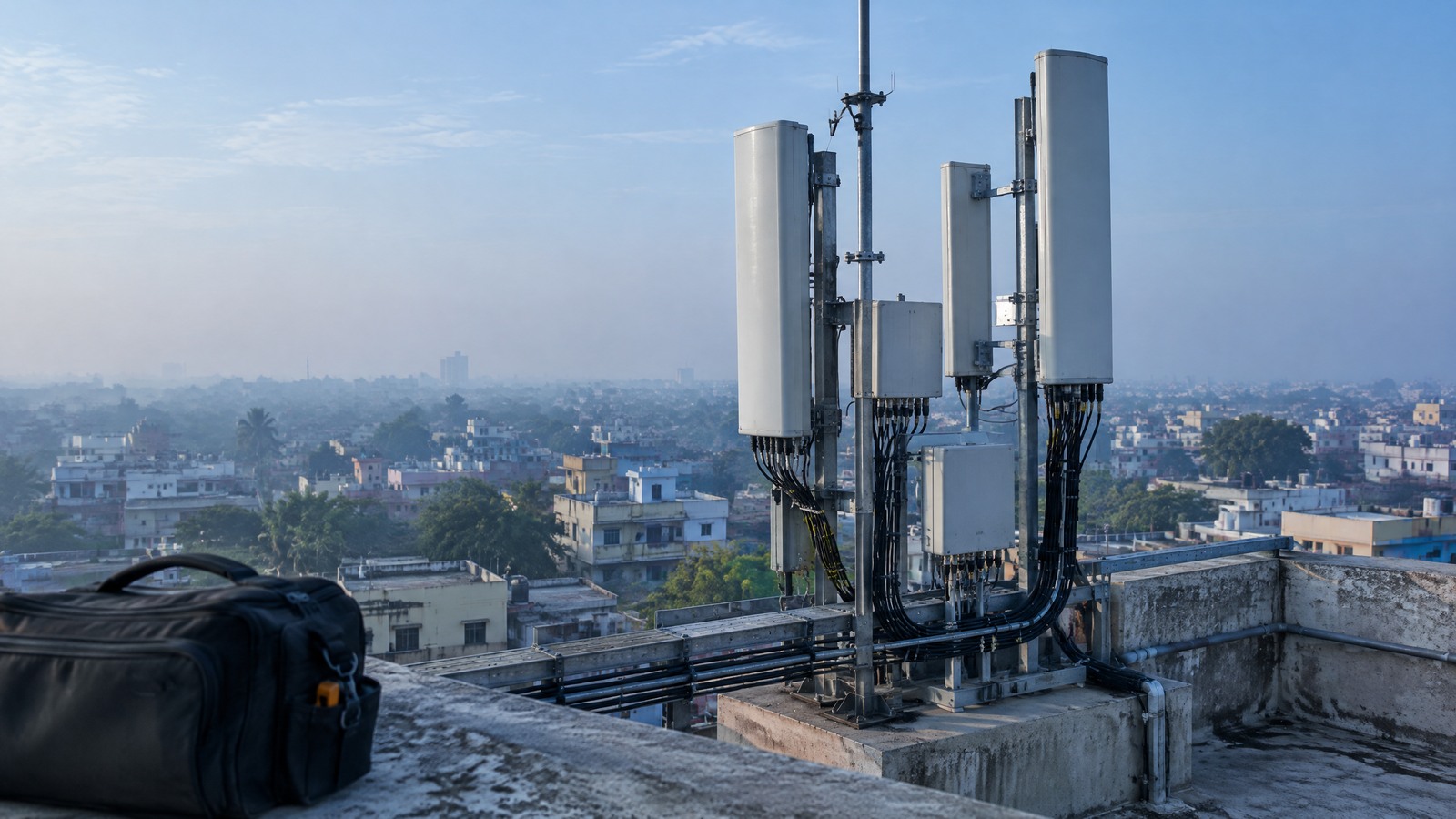
AI can help manage telecom networks, but a wrong automated decision can also affect the services people depend on. TRAI’s draft responsible-AI telecom guidelines, released on October 30, 2026, propose safeguards for those decisions and invite comments until November 27; they are not a final rule taking effect now. [1] [2]
On this page 5 sections
Part of our artificial intelligence technology guide library
Key Takeaways
- TRAI released the responsible-AI telecom draft on October 30, 2026; comments are invited by November 27, and the consultation is not a final rule.
- The proposed scope covers specified licensed or authorised telecom entities using, or intending to use, AI in networks or telecom services—not every AI startup.
- Proposals include board-approved AI policies, risk classification, human oversight, supplier checks and reporting of serious incidents.
- The authorised entity would remain accountable for AI outcomes even when a system is bought or outsourced; the draft sets no new fine schedule or general implementation date.
What TRAI is proposing for telecom AI
The Telecom Regulatory Authority of India wants covered telecom entities to take responsibility for the AI they use throughout its lifecycle. Its draft combines internal policies, technical assessments, supplier contracts and incident records rather than treating an AI system as safe simply because somebody approved its purchase. [2]
The Ministry of Communications says the consultation seeks to apply the India AI Governance Guidelines to telecommunications. The sector-specific concern is practical: connectivity supports essential services, commerce and emergency response, so unreliable automation can have consequences beyond one app or chatbot. TRAI identifies risks including biased systems, changing model behaviour and adversarial attacks alongside AI’s potential efficiency benefits. [2] [3]
For Indian subscribers, the significance is clearer responsibility when AI contributes to a service problem. The proposal is not a promise of faster mobile data, cheaper plans or error-free customer support. Whether it improves everyday service would depend on the final requirements and how effectively operators implement them.
Which entities would be covered?
The proposed scope depends on telecom licensing or authorisation, not simply on whether a business develops AI. It includes entities holding a Telegraph Act, 1885 licence or a Telecommunications Act, 2023 authorisation to provide telecom services. It also includes entities authorised under the 2023 Act to establish, operate, maintain or expand telecom networks. In either case, the entity must be using or intending to use AI in telecom networks or service provision. [2]
That does not make this a blanket framework for every Indian AI startup, software developer or phone user. A technology supplier could nevertheless face more detailed questions from a covered telecom customer because the draft asks that customer to examine third-party AI and secure contractual safeguards. Those procurement effects are different from declaring every supplier directly covered by the draft. [2]
The draft’s definition of an AI system also extends beyond generative chatbots. It covers systems producing predictions, content, recommendations or decisions. Readers should therefore think about network operations and automated service decisions as well as customer-facing conversational tools. [2]
Board-approved policies would make responsibility explicit
TRAI proposes an internal telecom AI policy approved by the board of directors or an equivalent governing body. Each AI system would be classified as high, medium or low risk according to its importance to networks or services, its financial and operational impact, and its potential implications for consumers. Use would require approval by a designated officer, with delegation permitted according to risk. [2]
This is a risk-based approach, not a statement that every automated tool needs identical controls. A useful policy would connect each system’s consequences to the level of scrutiny it receives. The draft does not assign specific products to risk bands, so it would be premature to label a particular operator’s tool high-risk without an assessment.
An inventory would record active, inactive and decommissioned AI systems, including their source, purpose and risk classification. No system could be used outside that inventory under the proposal. This matters because an organisation cannot meaningfully supervise automation it has not identified. [2]
The proposed AI Governance and Safety Committee would bring together relevant functions such as network operations, IT, data management, regulatory affairs and consumer affairs. A senior executive serving as AI Governance and Safety Officer would lead it. Its review would cover deployed-system performance, incident records, vulnerabilities and fairness concerns, with corrective measures potentially including modification or decommissioning. [2]
Human oversight would need testing and operational support
The draft calls for appropriate human oversight of every AI system, with oversight informed by risk assessment. It also proposes validation, conformity assessment and impact assessment before a new system is deployed or an existing one is modified. These assessments would examine accuracy, robustness, explainability, fairness, resistance to model drift and human oversight. [2]
Model drift describes the problem of performance changing as the data or operating environment changes. A model that worked acceptably during an initial assessment may not remain reliable indefinitely. TRAI’s proposed reviews and incident analysis would help keep attention on behaviour after deployment, not only on a supplier’s original demonstration. [2]
The text does not say a person must approve every individual AI output. It asks for an appropriate, predefined oversight mechanism and periodic training for relevant staff. In practice, meaningful oversight would require people to understand a system’s limits and know when corrective action is necessary; a named committee alone would not establish that capability.
On data governance, the proposal requires lawful and secure handling of data used or generated across the deployed AI lifecycle, in line with applicable privacy, confidentiality, cybersecurity and other statutory requirements. It should not be read as permission to collect additional subscriber data merely because an AI system could use it. [2]
Buying AI would not outsource the operator’s accountability
One of the clearest proposals is that the applicable authorised entity would remain accountable for the outcomes of all AI systems it uses. That would apply whether the technology was developed internally, procured from a third party, outsourced or assembled through a combination of those arrangements. [2]
Before acquiring or using third-party AI, the entity would undertake due diligence covering supplier credibility, system soundness and limitations, and the suitability and quality of training data. It would also seek disclosures about AI embedded in telecom equipment, systems or solutions. This addresses the possibility that AI arrives inside a larger purchase rather than as a separately labelled product. [2]
Supplier agreements would need enforceable provisions covering regulatory compliance, audit and inspection rights, incident management, risk allocation and accountability before deployment. For vendors, the likely practical implication is a stronger need to explain limitations and support investigations. The draft does not establish that every supplier must publish its source code or reveal every model detail to the public. [2]
Incident reporting and complaints would become part of AI governance
TRAI proposes four incident-severity categories: critical, high, moderate and low. All AI incidents, including those arising during testing, would be recorded in a central database. Entities would mitigate disruptions through predefined procedures, investigate incidents and share the analysis with relevant internal teams. Critical- and high-severity incidents would be reported to TRAI. [2]
The reporting proposal includes material malfunctions, recurring failures and mitigation measures. However, the draft refers to a prescribed form, manner and timeframe without stating a numerical reporting deadline. A claim that it introduces a specific number of hours for reporting would go beyond the available text. [2]
For consumers, it proposes a predefined grievance mechanism to resolve reported AI-related harms within a reasonable timeframe, alongside a central record of those reports and their resolution. It does not specify an automatic compensation amount or a fixed number of days for every complaint. Nor should subscribers assume that this consultation has already created a new, operational AI complaint channel. [2]
The useful principle is that AI harm should not disappear into a vague explanation that a system made the decision. Recording what happened and how it was resolved would give the organisation a basis for identifying repeat problems, while preserving a route for human accountability.
Important Points / Key Information
As of November 3, 2026, the official consultation page lists the draft as open. Its October 30 release date and November 27 comment deadline should not be confused with adoption or commencement dates. [1] [3]
- Policy review: the draft proposes reviewing the internal AI policy at least once per financial year and additionally when necessary. Risk categorisation and committee reviews would also recur rather than being one-off exercises. [2]
- Policy filing: the proposed seven-working-day requirement concerns filing a policy or amendment with TRAI after it comes into effect. It is not a seven-day compliance countdown starting from the draft’s release. [2]
- Existing obligations: the draft expressly preserves applicable laws, regulations, directions and licence or authorisation conditions. Consultation status does not suspend those requirements. [2]
- Unsettled details: the read draft does not provide a general implementation date or a new fine schedule. It also leaves the prescribed serious-incident reporting format and timeframe without numerical detail. [2]
Examples / Supporting Information
Consider a hypothetical AI tool that recommends network configuration changes. Under the proposal, the operator would inventory and risk-assess it, arrange appropriate approval and oversight, and assess it before deployment or modification. If it behaved unexpectedly, incident records and investigation would matter as much as its earlier accuracy score. This illustrates the lifecycle controls; it is not a report of a failure at an Indian operator. [2]
A second hypothetical tool helps customer-support staff decide how to respond to service complaints. An assessment would need to consider its consumer implications rather than assuming it is harmless because it does not directly control a tower. If users report AI-related harm, the proposed grievance mechanism and resolution records would become relevant. The draft does not predetermine the risk band for this example. [2]
Finally, imagine a telecom equipment purchase containing an embedded AI feature. The operator would seek supplier disclosures, perform due diligence and secure appropriate contractual safeguards before deploying that AI. The supplier’s involvement would not remove the operator’s proposed accountability for outcomes. These examples show why governance extends beyond buying a model: the organisation needs to know where AI operates, what it can affect and who must respond when it goes wrong. [2]
Conclusion
TRAI’s draft aims to make AI in telecom networks and services identifiable, assessed and accountable. Its strongest practical proposals connect board oversight with system inventories, supplier obligations, incident investigation and consumer-harm records. For India, that puts service reliability and responsibility alongside the discussion of AI efficiency. [2]
The distinction to retain is between a proposed safeguard and an obligation newly in force. Comments are invited until November 27, 2026, and the framework may change after consultation. Subscribers should not treat it as an immediate guarantee of compensation or better connectivity, while telecom businesses have a concrete draft against which to examine their AI governance arrangements. [1] [3]
How we checked thisSources (3)
We keep source links private so your reading stays on techduopulse. Each note names the publisher and document we checked.
TRAI — Responsible-AI telecom draft consultation page, released 30 October 2026; accessed 3 November 2026
Primary source · Supporting informationTRAI — Responsible-AI telecom draft, 30 October 2026, sections 1–3 and definitions
Primary source · Supporting informationMinistry of Communications, PIB — Announcement of TRAI’s responsible-AI telecom consultation, 30 October 2026
Primary source · Supporting informationInitial source-backed news-analysis edition. Vendor findings and reported details are attributed; generic AI editorial illustration, not product photography or a hands-on test.