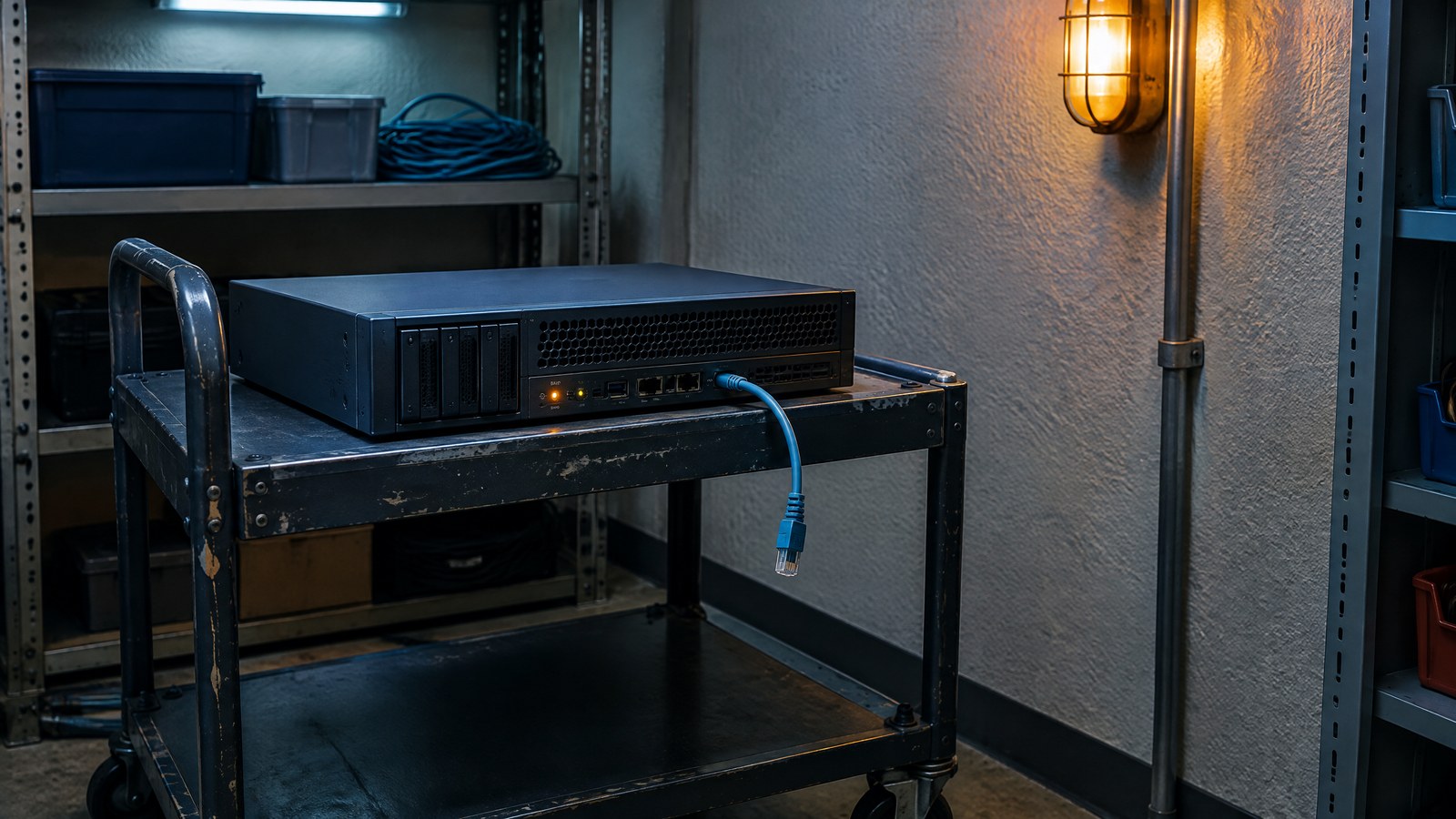
A backup is not automatically a recovery capability. During ransomware response, teams must decide which systems matter first, whether recovery media remain trustworthy, and how to rebuild without carrying the compromise forward. Immutable retention can limit unwanted change to a backup copy, but it cannot prove that an application will return to service. A recovery plan earns confidence when people rehearse restoration, document dependencies, and correct what the exercise reveals.
This article is part of the cybersecurity technology guide library.
Recovery starts with a service map
A recovery service map is a maintained view of critical services, their data, identities, infrastructure, and upstream dependencies. CISA advises prioritising restoration from a predefined list that includes critical services and their dependencies. This matters because a technically successful database restore may still leave a customer-facing service unavailable if its identity, network, or configuration dependency is absent. Teams should name protected assets, authorised changes, and evidence the control still works.
To name recovery tiers before an incident and trace each tier to its data, code, infrastructure, and approval dependencies, service ownership and business continuity owners should record assumptions, dependencies, and escalation. A tier is a planning aid, not a promise about exact downtime; it must be revisited when architectures or business processes change. This approach makes restoration choices explainable and reduces improvised sequencing under pressure. It should be reviewed as systems and requirements change.
What immutability can and cannot do
Immutable backup retention is a storage control intended to prevent alteration or deletion of a retained copy for a defined period. CISA notes that accessible backups may be targeted for deletion or encryption and cautions that immutable-storage configurations can introduce compliance or cost considerations. This matters because immutability helps protect a copy against particular change paths, but it does not by itself establish isolation, correct retention, clean source data, or application recoverability. Teams should name protected assets, authorised changes, and evidence the control still works.
To define retention locks, deletion authority, and separate administrative paths in terms the recovery team can test, backup governance and access management owners should record assumptions, dependencies, and escalation. Retention rules may conflict with legal, privacy, or operational requirements, so policy owners should review them rather than assume a longer lock is always safer. This approach turns an attractive storage feature into a bounded, auditable recovery control. It should be reviewed as systems and requirements change.
Keep recovery copies out of the blast radius
Recovery isolation is the deliberate separation of backup copies and recovery administration from the systems they protect. CISA recommends offline, encrypted backups of critical data and regular testing of their availability and integrity. This matters because a copy that shares ordinary credentials, network reachability, or administrative tooling with production can inherit the same compromise path it was meant to survive. Teams should name protected assets, authorised changes, and evidence the control still works.
To review who can reach backup consoles, where credentials are held, and how an operator would use recovery material if normal identity services were unavailable, separation of duties and emergency access owners should record assumptions, dependencies, and escalation. Offline media and separate environments can make routine operations slower, which is a reason to practice the process rather than bypass the separation during a real incident. This approach improves the chance that at least one usable recovery path remains independent. It should be reviewed as systems and requirements change.
Test restores as complete service work
A restore drill is a planned exercise that rebuilds selected data or systems and verifies the service outcome. NIST's backup guidance frames useful backup planning around conducting, maintaining, and testing backup files for data-loss events. This matters because checking that a job completed or that files can be listed is weaker evidence than restoring into a controlled environment and confirming that required functions, permissions, and data relationships behave as intended. Teams should name protected assets, authorised changes, and evidence the control still works.
To choose representative services and verify data selection, infrastructure provisioning, authentication, application start-up, and a defined business check, service recovery acceptance owners should record assumptions, dependencies, and escalation. A drill should avoid production disruption and should not be described as proof of every possible failure mode; it is evidence about the scenario actually exercised. This approach exposes hidden dependencies while there is time to improve the runbook. It should be reviewed as systems and requirements change.
Rebuild cleanly before reconnecting
Clean recovery is the process of restoring services into an environment assessed and prepared to avoid reintroducing a compromise. CISA recommends restoring critical services from offline, encrypted backups on a clean network and taking care not to reinfect clean systems. This matters because restoring data before containment and reconstruction decisions are understood can preserve availability at the cost of returning harmful code, credentials, or unsafe connections to operation. Teams should name protected assets, authorised changes, and evidence the control still works.
To separate containment, investigation, rebuild, and reconnect criteria in the incident plan, technical recovery and incident command owners should record assumptions, dependencies, and escalation. Some volatile evidence can be lost when systems are powered down, so isolation choices should be coordinated with responders and follow the approved plan. This approach helps teams balance urgent service restoration with the need to avoid a second disruption. It should be reviewed as systems and requirements change.
Use exercises to improve the next recovery
Exercise evidence is records from a recovery drill showing what was attempted, what worked, what failed, and which assumptions were wrong. CISA calls for regularly exercising an incident response plan and documenting lessons learned after an incident. This matters because The most useful measure is not a flattering score but a clear account of gaps such as unavailable media, missing approvals, unclear ownership, or unexpected dependency order. Teams should name protected assets, authorised changes, and evidence the control still works.
To capture observations, assign improvement owners, retest material changes, and keep an offline version of the recovery plan, continuous recovery readiness owners should record assumptions, dependencies, and escalation. A mature programme accepts that systems change between exercises and treats results as time-bounded evidence, not a permanent certification. This approach converts a one-off drill into a sustained capability to recover more deliberately. It should be reviewed as systems and requirements change.
Source notes
Reporting record
techduopulse stores source destinations privately. Public notes remain non-clickable so every visitor journey stays on this website.
CISA ransomware recovery guidance
Primary source · Recovery preparation and responseNIST backup testing guidance
Primary source · Backup lifecycleImage updated: embedded writing removed; article content and factual claims unchanged.