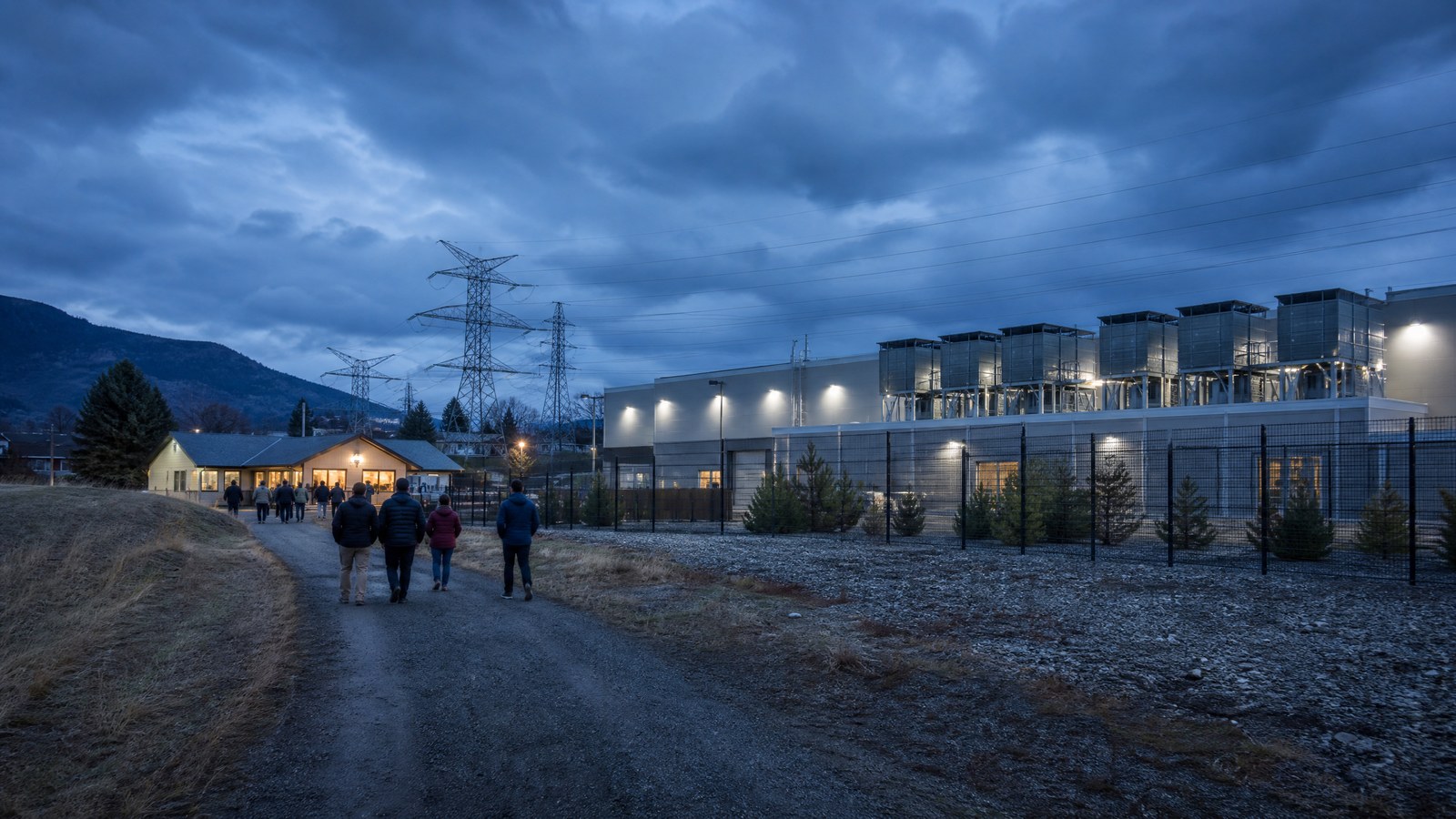
A poll released by NBC News found that 69% of respondents opposed construction of artificial-intelligence data centres in their local area, including 45% who said they strongly opposed it. The finding is evidence about stated opinion in one U.S. survey. It is not a data-centre ban, a project decision, or a forecast of what any named community will do.
This article is part of the cloud infrastructure technology guide library.
What the poll reported
NBC published the result on 6 September. Its released topline describes a national online sample of 7,105 U.S. adults aged 18 or older, fielded from 20 August through 1 September. The published error estimate is plus or minus 3.3 percentage points.
Those details belong near the headline number because they define what the result can support. The 69% and 45% figures should remain attributed to the poll rather than presented as measured behaviour or a universal public verdict.
What a national online survey measures
A survey records answers from a defined sample to defined questions during a defined field period. Sampling, weighting, wording, mode, and timing shape the estimate. A reported margin or error estimate describes uncertainty under the poll’s methodology; it does not remove every source of bias or turn an opinion measure into a prediction.
The geographic boundary is also important. These are reported views among U.S. adults in the released sample. The finding should not be assumed to describe India, another country, or every local jurisdiction inside the United States.
What it cannot decide
Local planning outcomes depend on legal rules, a particular site, project documents, utility capacity, public hearings, and the decisions of authorised bodies. A respondent can oppose the general idea of a nearby data centre while reacting differently to a specific proposal with different costs, safeguards, or benefits.
The poll also does not identify one shared reason for opposition. It cannot, by itself, establish whether an individual is concerned about electricity, water, noise, land use, public spending, employment claims, climate effects, trust, or something else.
Why siting consent is a systems issue
AI infrastructure is discussed as computing, but a data centre is also a physical system. It needs land, electricity, cooling, network links, construction access, maintenance, and an operating relationship with its surrounding area. The relevant constraints vary by design and location.
That means credible local reporting requires more than repeating national demand forecasts or survey figures. Readers need documents that connect a proposed facility to the actual grid, water system, planning framework, tax terms, and environmental controls that would apply.
A document checklist for a real proposal
Start with the proposed electrical capacity and the source of that power, including any grid upgrades and who would pay for them. Examine peak load rather than only an annual total. For cooling, identify the technology, expected water use, source, discharge arrangements, and performance assumptions under local weather conditions.
Then review acoustic studies, backup-generation plans, land and traffic documents, construction schedules, tax agreements, and emergency procedures. Employment claims should distinguish temporary construction work from long-term operations roles and should explain whether the figures are commitments, estimates, or scenarios.
Read public-process claims carefully
A public hearing record can show which concerns were raised and how the applicant or authority answered them. It does not prove that every resident agrees, and attendance is not a statistically representative poll. Conversely, a national survey cannot replace a local hearing or permit record.
Useful reporting places each piece of evidence in its lane: the NBC poll for national stated attitudes, project filings for technical and economic claims, regulators for enforceable conditions, and local records for the decision process.
Avoid the universal verdict
The released result signals that data-centre developers and policymakers may face a substantial trust and consent challenge. That is a reason to publish clearer project evidence, not a basis for declaring every proposed site acceptable or unacceptable.
The bounded conclusion is therefore two-part. The poll reports broad opposition in its stated U.S. sample, and any real siting decision still requires project-specific evidence that the poll does not contain.
Source notes
Reporting record
techduopulse stores source destinations privately. Public notes remain non-clickable so every visitor journey stays on this website.
NBC News reporting dated 6 September 2026 on its AI data-centre opinion poll and the reported local-opposition results.
Primary source · Reported poll resultThe released NBC News Decision Desk topline describing the sample, field dates, online mode and reported error estimate.
Primary source · Methodology and toplineIndependent reporting that corroborates the poll’s central 69% and 45% results.
Secondary source · Independent result corroborationUpdated publication references to techduopulse.