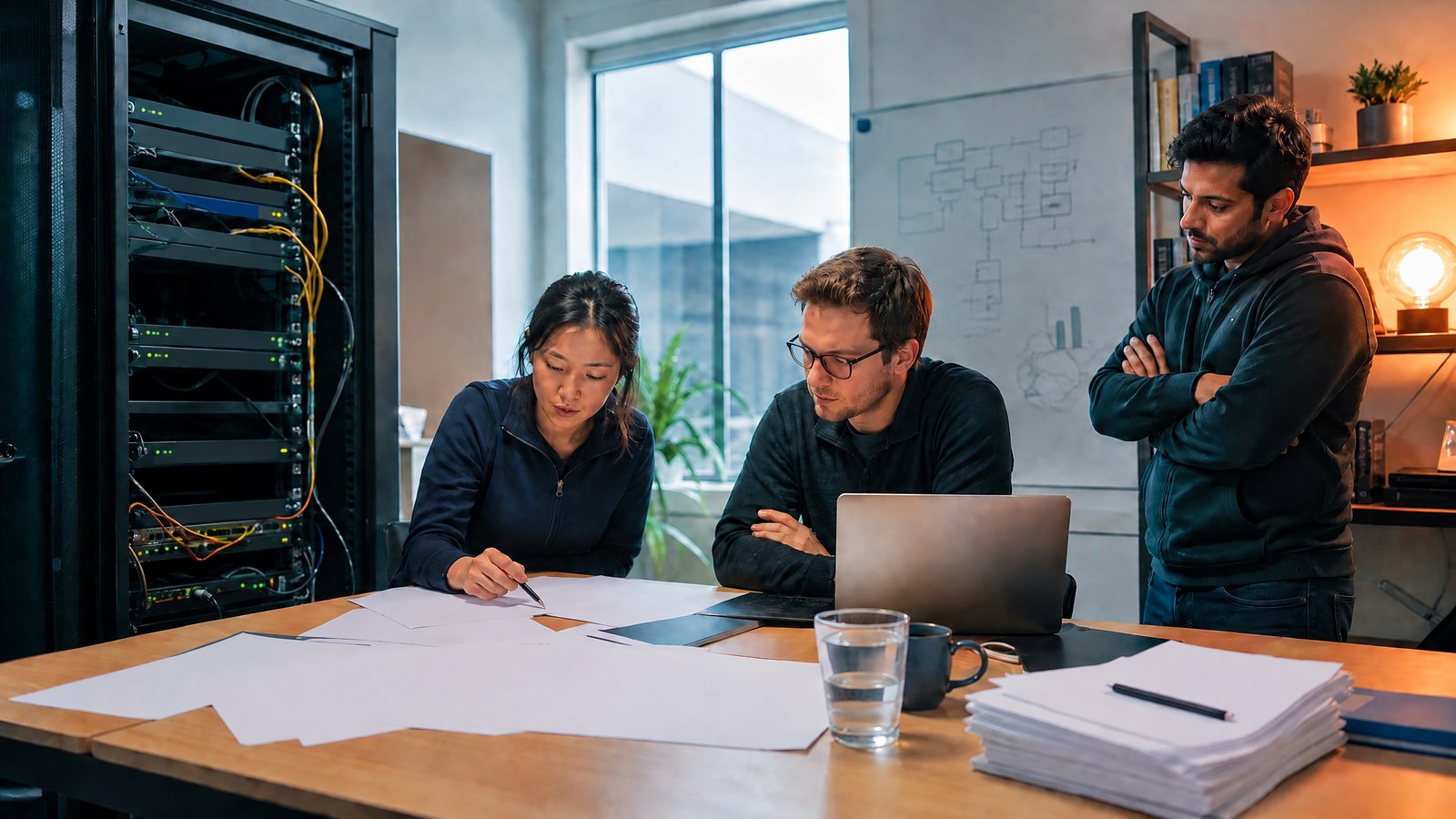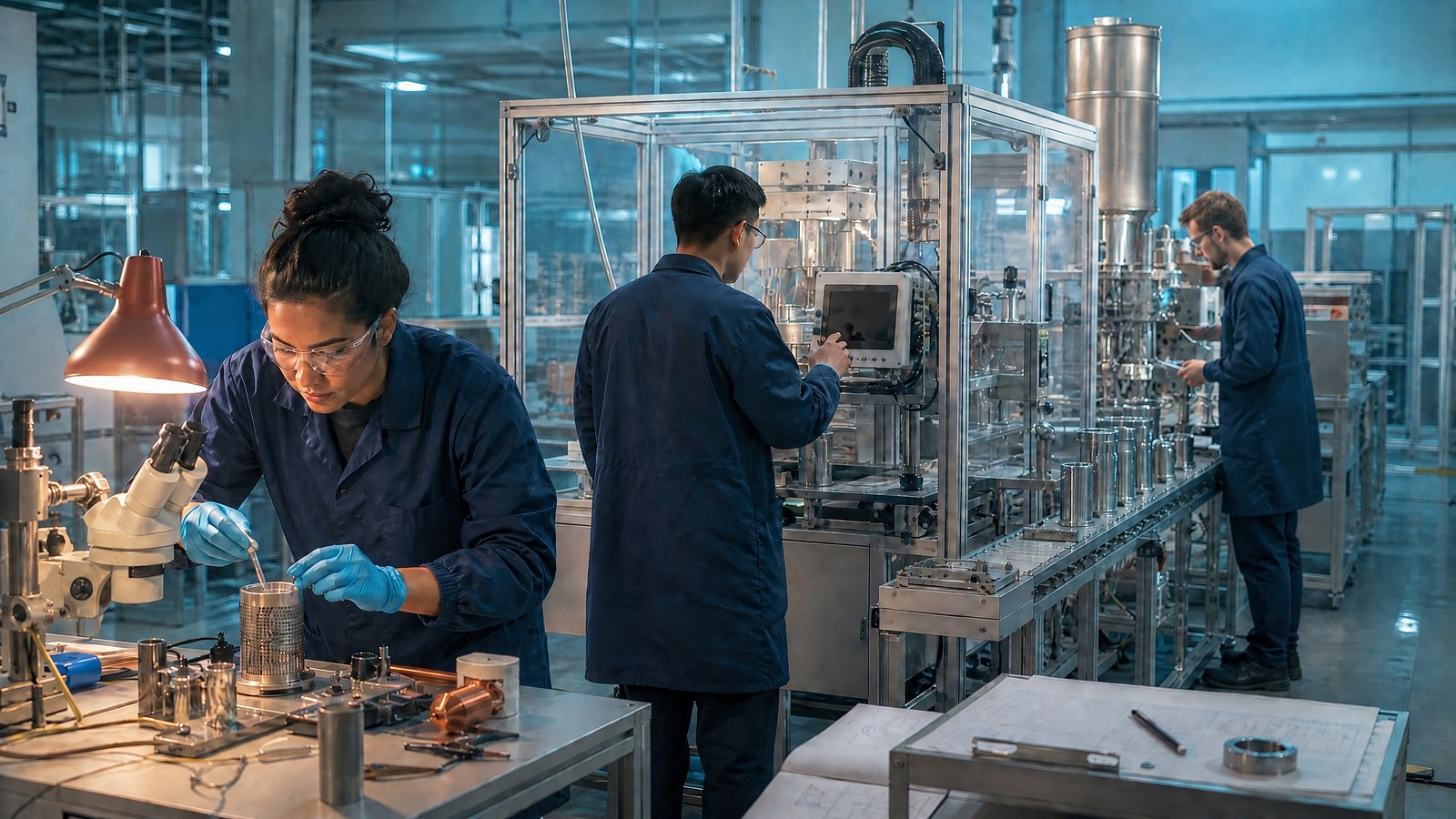
Laboratory performance can establish that a scientific or engineering principle is promising, but it does not by itself establish that a product can be made repeatedly under production-like constraints. A deep-tech pilot is a structured opportunity to learn about the process as well as the artifact. Its value comes from making assumptions visible: materials, equipment, operator steps, quality checks, yield, maintenance, safety, and supply dependencies all shape the path from a working prototype to a manufacturable system.
This article is part of the technology startups guide library.
Separate technology maturity from manufacturing maturity
Technology readiness describes the maturity of a technology itself, from basic principles through demonstration and operational use. NASA's Technology Readiness Levels distinguish laboratory work, increasingly realistic testing, functional prototypes, and proven operation. This is valuable language for discussing whether a function has been demonstrated. It should not be treated as a complete statement about whether the same function can be produced consistently, economically, and safely at the intended scale.
Manufacturability concerns the capability to make a product or process with repeatable quality under defined conditions. It includes equipment capability, process control, material availability, inspection, documentation, and human work design. The two forms of maturity interact, but neither replaces the other. A team can have a compelling prototype while still facing open manufacturing questions, or a stable process for a component that does not yet meet the final product's technical requirements.
Define what the pilot must learn
A pilot should begin with learning objectives that are concrete enough to guide observation. Examples include whether a process step is repeatable, whether a supplier material behaves within an expected range, whether a quality check detects a relevant defect, or whether an operator can complete a sequence safely. These objectives are not performance claims. They are questions that determine what evidence the team needs and what a meaningful result would look like.
Link every objective to a decision. If the result would not change a design, supplier, equipment choice, control method, or next experiment, the activity may be demonstration rather than a pilot learning task. Include conditions and limitations in the plan: the batch, configuration, environment, inputs, and operator context can affect interpretation. This discipline helps prevent a single favorable run from being read as proof that a process will behave identically in a different facility or volume.
Map the process before optimizing it
A process map describes the sequence that turns inputs into an output, including transformations, inspections, queues, rework, storage, and handoffs. It should identify the material or information that enters each step, the expected condition afterward, the equipment used, and the person or system responsible. Mapping early often reveals that a laboratory procedure depends on tacit judgment, custom adjustment, or a material condition that has not yet been specified for broader use.
Do not start by optimizing a local step while the overall process remains ambiguous. A fast operation can still create delay or variability downstream if it increases handling, inspection, or rework. Instead, record where variation can enter and which conditions are controlled, measured, or unknown. The map becomes a shared reference for engineers, operators, quality specialists, and suppliers. It also makes change impacts easier to discuss without confusing an individual experiment with the defined process.
Build quality into the learning loop
Quality is the degree to which an output meets defined requirements; it is not simply a final inspection result. For a pilot, define the characteristics that matter, how they will be checked, who reviews exceptions, and what happens to nonconforming material. The appropriate methods depend on the technology and risk. The essential point is traceability: observations should connect an output to relevant inputs, process conditions, configuration, and disposition so patterns can be investigated later.
A quality check can be useful even when it is provisional. Label its current purpose and limitations rather than presenting it as a finalized production specification. Where measurement capability is uncertain, make that uncertainty a pilot question. This distinction matters because an apparent process improvement may reflect a changed measurement method or sample selection. A transparent learning loop records what was observed, what changed, why it changed, and what needs confirmation in a subsequent run.
Include people, equipment, and supply conditions
Manufacturing is a socio-technical system: people, equipment, materials, instructions, and facilities influence one another. A pilot should therefore consider training, ergonomic constraints, maintenance needs, setup time, cleaning or calibration requirements, and the availability of replacement parts. These conditions can affect repeatability even when the core technical mechanism is sound. Documenting them does not imply that every issue is solved; it identifies what the process currently depends on.
Supply questions should be specific about the material or component attributes that matter, not just the name of a vendor. Ask what specification is required, how variation is detected, what lead-time assumptions exist, and what alternate sources would need to demonstrate. This is not an argument for redundant supply in every case. It is a way to avoid discovering late that laboratory inputs were unusually selected, manually prepared, or unavailable at the quantity and consistency required for the next stage.
Report evidence with its boundaries
A pilot report is stronger when it states the configuration, conditions, sample selection, observations, deviations, and interpretation together. Report results as evidence under those conditions, rather than as a universal guarantee about future volume or cost. NASA's readiness framework illustrates why maturity is staged: more realistic demonstration changes the question being answered. A pilot can advance confidence while also exposing new constraints that were invisible in a controlled laboratory setting.
The next decision should follow from the remaining uncertainty. It may be a design revision, a process-control study, supplier qualification work, equipment modification, or a more representative pilot run. No single template will fit every material science, hardware, biotechnology, or industrial technology context. The useful pattern is disciplined learning across the whole process. Readers can continue within techduopulse's Startups coverage for related analysis of technical diligence and evidence-based operating claims.
Source notes
Reporting record
techduopulse stores source destinations privately. Public notes remain non-clickable so every visitor journey stays on this website.
NASA Technology Readiness Levels
Primary source · Technology maturityNIST SP 800-160 Vol. 1 Rev. 1
Primary source · Evidence and life-cycle engineeringImage updated: embedded writing removed; article content and factual claims unchanged.